 书单
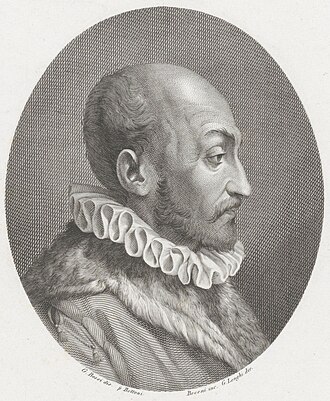
吉安巴蒂斯塔·德拉·波尔塔
- 生卒
- 1535 – 1615
- 外文名
- Giambattista della Porta
照片:Rijksmuseum,CC0,来自维基共享资源「Portret van Giovanni Battista della Porta Portretten van beroemde Italianen in ovalen (serietitel), RP-P-1909-4734 (cropped).jpg」(经缩小)。
生平与创作
吉安巴蒂斯塔·德拉·波尔塔(英语:Giambattista della Porta,1535年—1615年),文艺复兴时期欧洲学者之一。出生于那不勒斯。由于受新柏拉图主义影响,他研究原因不明的自然现象,包括光的折射。他关于该主题的著作《论折射》出版于1593年。在1560年,他创建了文艺复兴时期的科学研究院,即自然秘密研究院。他对光的研究同时也成为了对摄影术最早的理论分析。
以上文字摘自维基百科「吉安巴蒂斯塔·德拉·波尔塔」(去掉了参考文献等尾部小节),按 CC BY-SA 4.0 使用,作者为维基百科的各位编者。
中文维基百科的条目比较短,下面附上英文维基百科的内容(英文原文):
Giambattista della Porta (Italian: [dʒambatˈtista della ˈpɔrta]; 1535 – 4 February 1615), also known as Giovanni Battista Della Porta, was an Italian scholar, polymath and playwright who lived in Naples at the time of the Renaissance, Scientific Revolution and Counter-Reformation.
Giambattista della Porta spent the majority of his life on scientific endeavours. He benefited from an informal education of tutors and visits from renowned scholars. His most famous work, first published in 1558, is entitled Magia Naturalis (Natural Magic). In this book he covered a variety of the subjects he had investigated, including occult philosophy, astrology, alchemy, mathematics, meteorology, and natural philosophy. He was also referred to as "professor of secrets".
Childhood
Giambattista della Porta was born at Vico Equense, near Naples, to the nobleman Nardo Antonio della Porta. He was the third of four sons and the second to survive childhood, having an older brother Gian Vincenzo and a younger brother Gian Ferrante. Della Porta had a privileged childhood including his education. His father had a thirst for learning, a trait he would pass on to all of his children. He surrounded himself with distinguished people and entertained the likes of philosophers, mathematicians, poets, and musicians. The atmosphere of the house resembled an academy for his sons. The members of the learned circle of friends stimulated the boys, tutoring and mentoring them, under the strict guidance of their father.
In addition to having talents for the sciences and mathematics, all the brothers were also extremely interested in the arts, music in particular. Despite their interest, none of them possessed any sort of talent for it, but they did not allow that to stifle their progress in learning theory. They were all accepted into the Scuola di Pitagora, a highly exclusive academy of musicians.
More aware of their social position than the idea that his sons could have professions in science, Nardo Antonio raised the boys more as gentlemen than as scholars. Therefore, the boys struggled to learn to sing, as that was considered a courtly accomplishment of gentlemen. They were taught to dance, ride, perform well in tournaments and games, and dress well. The training gave della Porta, at least earlier in his life, a taste for the finer aspects of privileged living.
"From approximately 1563 to 1566 Della Porta travels to other parts of Italy, France and Spain, collecting secrets and meeting with learned men. Indeed he presented to Philip II his book on ciphers De Furtivis Literarum Notis (1563). The second edition of his Magia Naturalis (1561) also contains a brief dedication to the Spanish Philip"
Scientific disciplines
In 1563, della Porta published De Furtivis Literarum Notis, a work about cryptography. In it, he described the first known digraphic substitution cipher. Charles J. Mendelsohn commented:
He was, in my opinion, the outstanding cryptographer of the Renaissance. Some unknown who worked in a hidden room behind closed doors may possibly have surpassed him in general grasp of the subject, but among those whose work can be studied he towers like a giant.
Della Porta invented a method which allowed him to write secret messages on the inside of eggs. Some of his friends were imprisoned by the Inquisition. At the gate of the prison, everything was checked except for eggs. Della Porta wrote messages on the eggshell using a mixture made of plant pigments and alum. The ink penetrated the eggshell which is semi-porous. When the eggshell was dry, he boiled the egg in hot water and the ink on the outside of the egg was washed away. When the recipient in prison peeled off the shell, the message was revealed once again on the egg white. De Furtivis Literarum Notis also contains one of the earliest known examples of music substitution ciphers.
以上文字摘自英文维基百科「Giambattista della Porta」(有删节,去掉了参考文献等尾部小节),按 CC BY-SA 4.0 使用,作者为维基百科的各位编者。
资料卡
- 母语名
- Giambattista della Porta
- 出生
- 1535 年 11 月 1 日
- 出生地
- 维科埃昆塞
- 逝世
- 1615 年 2 月 4 日
- 逝世地
- 那不勒斯
- 职业
- 密码学家、数学家、物理学家、化学家、发明家、剧作家、占星家、哲学家 等 11 项
- 使用语言
- 拉丁语
- 领域
- 炼金术
- 代表作
- Magia Naturalis、De Furtivis Literarum Notis、Phytognomonica
资料卡来自 Wikidata Q334154(CC0),众包数据,个别字段可能不全。
本站收录的作品(1)
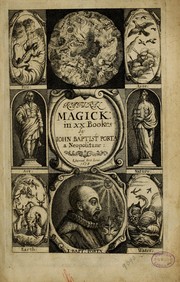
作品年表(1 本)
本站书库里署名吉安巴蒂斯塔·德拉·波尔塔的书(Open Library 上至少 10 人加过书架的才收),按首版年份排(有本站书页的用 Wikidata 记的首版年,其余用 Open Library 的);年份偶尔记成后来的版本或译本,以原书为准。全部作品见 Open Library。
- 1584Natural magick书架 57