 书单
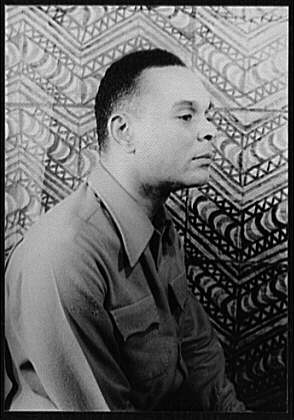
却斯特·海姆斯
- 生卒
- 1909 – 1984
- 国籍
- 美国、法国
- 外文名
- Chester Himes
照片:Carl Van Vechten,公有领域,来自维基共享资源「Portrait of Chester Himes LCCN2004663009.jpg」(经缩小)。
生平与创作
这个词条暂时没有中文维基百科条目,下面是英文维基百科的内容(英文原文):
Chester Bomar Himes (July 29, 1909 – November 12, 1984) was an American writer. His works, some of which have been filmed, include If He Hollers Let Him Go, published in 1945, and the Harlem Detective series of novels for which he is best known, set in the 1950s and early 1960s and featuring two black policemen called Grave Digger Jones and Coffin Ed Johnson. In 1958, Himes won France's Grand Prix de Littérature Policière.
Life
Early life
Chester Himes was born in Jefferson City, Missouri, on July 29, 1909, to Joseph Sandy Himes and Estelle Bomar Himes; his father was a professor of industrial trades at a black college, and his mother, prior to getting married, was a teacher at Scotia Seminary. Chester Himes grew up in a middle-class home in Missouri. When he was about 12 years old, his father took a teaching job in the Arkansas Delta at Branch Normal College (now University of Arkansas at Pine Bluff), and soon a tragedy took place that would profoundly shape Himes's view of race relations. He had misbehaved and his mother made him sit out a gunpowder demonstration that he and his brother, Joseph Jr., were supposed to conduct during a school assembly. Working alone, Joseph mixed the chemicals; they exploded in his face. Rushed to the nearest hospital, the blinded boy was refused treatment because of Jim Crow laws. "That one moment in my life hurt me as much as all the others put together", Himes wrote in his autobiography The Quality of Hurt.
I loved my brother. I had never been separated from him and that moment was shocking, shattering, and terrifying....We pulled into the emergency entrance of a white people's hospital. White clad doctors and attendants appeared. I remember sitting in the back seat with Joe watching the pantomime being enacted in the car's bright lights. A white man was refusing; my father was pleading. Dejectedly my father turned away; he was crying like a baby. My mother was fumbling in her handbag for a handkerchief; I hoped it was for a pistol.
The family later settled in Cleveland, Ohio. His parents' marriage was unhappy and eventually ended in divorce.
Prison and literary beginnings
In 1925, Himes's family left Pine Bluff and relocated to Cleveland, Ohio, where he attended East High School. He attended Ohio State University where he became a member of Alpha Phi Alpha fraternity, but was expelled for playing a prank. In late 1928, he was arrested and sentenced to jail and hard labor for 20 to 25 years for armed robbery and sent to Ohio Penitentiary. In prison, he wrote short stories and had them published in national magazines. He stated that writing in prison and being published was a way to earn respect from guards and fellow inmates, as well as to avoid violence.
His first stories appeared in 1931 in The Bronzeman and, starting in 1934, in Esquire. His story "To What Red Hell" (published in Esquire in 1934) as well as to his novel Cast the First Stone – only much later republished unabridged as Yesterday Will Make You Cry (1998) – dealt with the catastrophic prison fire Himes witnessed at Ohio Penitentiary in 1930.
In 1934, Himes was transferred to London Prison Farm and in April 1936 was released on parole into his mother's custody. Following his release, he worked at part-time jobs while continuing to write. During this period, he came into contact with Langston Hughes, who facilitated Himes's entree into the world of literature and publishing.
In 1937, Himes married Jean Johnson.
First books
In the 1940s, Himes spent time in Los Angeles, working as a screenwriter but also producing two novels, If He Hollers Let Him Go (1945) and Lonely Crusade (1947), which charted the experiences of the great migration, drawn by the city's defense industries, and their dealings with the established black community, fellow workers, unions and management. He also provided an analysis of the Zoot Suit Riots for The Crisis, the magazine of the NAACP.
Mike Davis in City of Quartz: Excavating the Future of Los Angeles, describing the prevalence of racism in Hollywood in the 1940s and '50s, cites Himes' brief career as a screenwriter for Warner Brothers, terminated when Jack L. Warner heard about him and said: "I don't want no niggers on this lot." Himes later wrote in his autobiography:
Up to the age of thirty-one I had been hurt emotionally, spiritually and physically as much as thirty-one years can bear. I had lived in the South, I had fallen down an elevator shaft, I had been kicked out of college, I had served seven and one half years in prison, I had survived the humiliating last five years of Depression in Cleveland; and still I was entire, complete, functional; my mind was sharp, my reflexes were good, and I was not bitter. But under the mental corrosion of race prejudice in Los Angeles I became bitter and saturated with hate.
Back on the East Coast Himes received a scholarship at the Yaddo artists' community, where he stayed and worked in May and June 1948, in a room opposite Patricia Highsmith's.
Emigration to France
Himes separated from his wife, Jean, in 1952, and the following year he began a period of travels by boarding a ship to France. By the 1950s, he had decided to settle permanently in France, a country he liked in part due to his popularity in literary circles. In Paris, Himes was friends with his contemporaries; the political cartoonist Oliver Harrington and fellow expatriate writers Richard Wright, James Baldwin and William Gardner Smith.
以上文字摘自英文维基百科「Chester Himes」(有删节,去掉了参考文献等尾部小节),按 CC BY-SA 4.0 使用,作者为维基百科的各位编者。
资料卡
- 出生
- 1909 年 7 月 29 日
- 出生地
- 杰斐逊城
- 逝世
- 1984 年 11 月 12 日
- 逝世地
- Moraira
- 职业
- 作家、小说家、编剧、自传作者、短篇故事作家
- 使用语言
- 英语
- 就读学校
- 俄亥俄州立大学
- 所属团体
- 阿尔法·菲·阿尔法
- 代表作
- If He Hollers Let Him Go、The Real Cool Killers、棉花闯哈林、Blind Man with a Pistol、Plan B、Run Man Run
资料卡来自 Wikidata Q550521(CC0),众包数据,个别字段可能不全。
本站收录的作品(3)
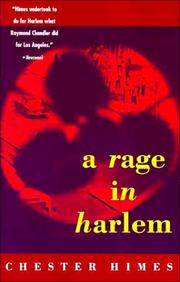
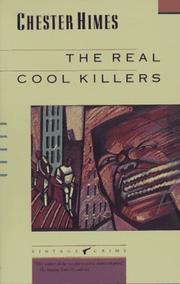
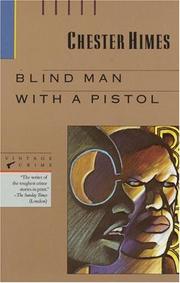
作品年表(6 本)
本站书库里署名却斯特·海姆斯的书(Open Library 上至少 10 人加过书架的才收),按首版年份排(有本站书页的用 Wikidata 记的首版年,其余用 Open Library 的);年份偶尔记成后来的版本或译本,以原书为准。全部作品见 Open Library。
- 1945If He Hollers Let Him Go书架 81
- 1957For love of Imabelle书架 15
- 1959The Real Cool Killers书架 12
- 1969Blind man with a pistol书架 10
- 1985A rage in Harlem书架 15
- 1997The Harlem Cycle书架 11