 书单
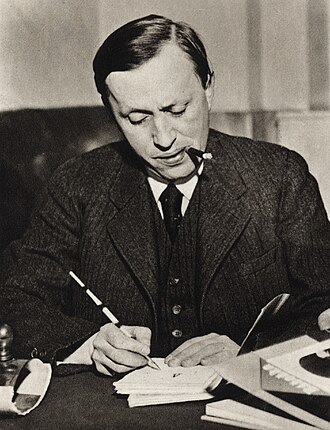
卡雷尔·恰佩克
- 生卒
- 1890 – 1938
- 国籍
- 内莱塔尼亚、捷克斯洛伐克
- 外文名
- Karel Čapek
照片:作者不详,公有领域,来自维基共享资源「Karel Čapek podepisuje první výtisky Povětroně, Pestrý týden 27.1.1934.jpg」(经缩小)。
生平与创作
卡雷尔·恰佩克(捷克语:Karel Čapek,1890年1月9日—1938年12月25日),20世纪捷克最有影响力的作家之一。
他生于马奈·斯瓦托罗维采的乡村医生家庭。十四岁即开始发表作品。曾在布拉格、柏林和巴黎等地学习哲学。1917年起住在布拉格,任新闻记者,并从事文学创作。1907年至二十年代的许多作品都是同其兄约瑟夫·恰佩克合写的。1921年,卡雷尔出版了《罗梭的万能工人》(Rossum's Universal Robots),书中首次引入了“机器人(Robota,后演化为robot)”一词。卡雷尔称是其兄弟约瑟夫·恰佩克发明了该词。其他科学幻想作品有小说《专制工厂》(1922年)、《原子狂想》(1924年)、《大战蝾螈》等。还写有一些揭露和讽刺法西斯制度的作品。
卡雷尔和约瑟夫都是著名的反法西斯人士。2005年6月捷克票选“最伟大的捷克人”(Největší Čech)中,他排名第九。
以上文字摘自维基百科「卡雷尔·恰佩克」(去掉了参考文献等尾部小节),按 CC BY-SA 4.0 使用,作者为维基百科的各位编者。
中文维基百科的条目比较短,下面附上英文维基百科的内容(英文原文):
Karel Čapek (Czech: [ˈkarɛl ˈtʃapɛk] ; 9 January 1890 – 25 December 1938) was a Czech writer, playwright, critic and journalist. He has become best known for his science fiction, including his novel War with the Newts (1936) and play R.U.R. (Rossum's Universal Robots, 1920), which introduced the word robot. He also wrote many politically charged works dealing with the social turmoil of his time. Influenced by American pragmatic liberalism, he campaigned in favor of free expression and strongly opposed the rise of both fascism and communism in Europe.
Though nominated for the Nobel Prize in Literature seven times, Čapek never received it. However, several awards commemorate his name, such as the Karel Čapek Prize, awarded every other year by the Czech PEN Club for literary work that contributes to reinforcing or maintaining democratic and humanist values in society. He also played a key role in establishing the Czechoslovak PEN Club as part of International PEN.
Čapek died on the brink of World War II as the result of a lifelong medical condition.
His legacy as a literary figure became well established after the war.
Life
Early life and education
Karel Čapek was born in 1890 in the village of Malé Svatoňovice in the Bohemian mountains. However, six months after his birth, the Čapek family moved to their own house in Úpice. Karel Čapek's father, Antonín Čapek, worked as a doctor at the local textile factory. Antonín was a very active person; apart from his work as a doctor, he also co-funded the local museum and was a member of the town council.
Despite opposing his father's materialist and positivist views, Karel Čapek loved and admired his father, later calling him "a good example ... of the generation of national awakeners". Karel's mother, Božena Čapková, was a homemaker. Unlike her husband, she did not like life in the country, and she suffered from long-term depression. Despite that, she assiduously collected and recorded local folklore, such as legends, songs and stories. Karel was the youngest of three siblings. He would maintain an especially close relationship with his brother Josef, a highly successful painter, living and working with him throughout his adult life. His sister, Helena, was a talented pianist who later become a writer and published several memoirs about Karel and Josef.
After finishing elementary school in Úpice, Karel moved with his grandmother to Hradec Králové, where he started attending high school. Two years later the school expelled him for taking part in an illegal students' club. Čapek later described the club as a "very non-murderous anarchist society".
After this incident he moved to Brno with his sister and attempted to finish high school there, but two years later he moved again, to Prague, where he finished high school at the Academic Grammar School in 1909. During his teenage years Čapek became enamored with the visual arts, especially Cubism, which influenced his later writing.
After graduating from high school, he studied philosophy and aesthetics in Prague at Charles University, but he also spent some time at the Friedrich Wilhelm University in Berlin and at the University of Paris. While still a university student he wrote some works on contemporary art and literature. He graduated with a doctorate in philosophy in 1915 from Charles University.
以上文字摘自英文维基百科「Karel Čapek」(有删节,去掉了参考文献等尾部小节),按 CC BY-SA 4.0 使用,作者为维基百科的各位编者。
资料卡
- 母语名
- Karel Čapek
- 笔名
- K. Č.、B. Č.、Karel Plocek、Karel Vašek
- 出生
- 1890 年 1 月 9 日
- 出生地
- 小施瓦顿诺维采
- 逝世
- 1938 年 12 月 25 日
- 逝世地
- 维诺赫拉迪
- 职业
- 译者、小说家、导演、摄影师、剧作家、新闻工作者、科幻作家、儿童文学作家 等 18 项
- 使用语言
- 捷克语、法语
- 写作语言
- 法语
- 就读学校
- 布拉格查理大学文学院、柏林洪堡大学
- 创作体裁
- 科学幻想
- 领域
- 年轻成人小说、新闻学、儿童文学、剧作
- 配偶
- 奥尔加·沙因普鲁戈娃(1935)
- 代表作
- Krakatit
资料卡来自 Wikidata Q155855(CC0),众包数据,个别字段可能不全。
本站收录的作品(2)
作品年表(4 本)
本站书库里署名卡雷尔·恰佩克的书(Open Library 上至少 10 人加过书架的才收),按首版年份排(有本站书页的用 Wikidata 记的首版年,其余用 Open Library 的);年份偶尔记成后来的版本或译本,以原书为准。全部作品见 Open Library。
- 1920R.U.R. and The insect play书架 118
- 1922Továrna na absolutno书架 28
- 1936山椒鱼战争Válka s mloky书架 77
- 1937Bílá nemoc书架 28