 书单
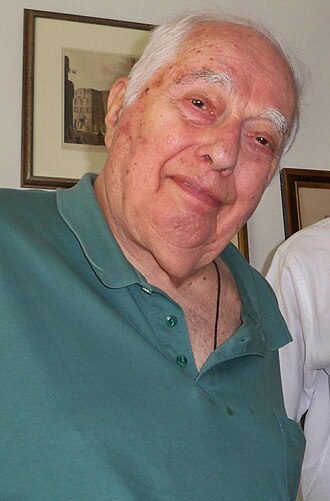
伯纳德·刘易斯
- 生卒
- 1916 – 2018
- 国籍
- 英国
- 外文名
- Bernard Lewis
照片:Nataev,CC BY-SA 4.0,来自维基共享资源「Bernard Lewis in 2012 (1).JPG」(经缩小)。
生平与创作
伯纳德·刘易斯(英语:Bernard Lewis,1916年5月31日—2018年5月19日),英裔美国犹太历史学者、东方研究家及政治评论家,专门研究伊斯兰教史及伊斯兰教跟西方的互动,尤以关于奥斯曼土耳其帝国历史的著作于学术圈闻名。
中译著作
《现代土耳其的兴起》(The Emergence of Modern Turkey)
《穆斯林发现欧洲:天下大国的视野转换》(The Muslim Discovery of Europe)
《历史上的阿拉伯人》(The Arabs in History )
《中东:自基督教兴起至二十世纪末》(The Middle East: 2000 Years of History from the Rise of Christianity to the Present Day)
《哪里出了错?论西方与伊斯兰世界的冲突》(What Went Wrong? The Clash Between Islam and Modernity in the Middle East)
以上文字摘自维基百科「伯納德·劉易斯」(去掉了参考文献等尾部小节),按 CC BY-SA 4.0 使用,作者为维基百科的各位编者。
中文维基百科的条目比较短,下面附上英文维基百科的内容(英文原文):
Bernard Lewis (31 May 1916 – 19 May 2018) was a British-American historian who specialized in Oriental studies. He was also known as a public intellectual and political commentator. Lewis was the Cleveland E. Dodge Professor Emeritus of Near Eastern Studies at Princeton University. Lewis's expertise was in the history of Islam and the interaction between Islam and the West.
Lewis served as a soldier in the British Army in the Royal Armoured Corps and Intelligence Corps during the Second World War before being seconded to the Foreign Office. After the war, he returned to the School of Oriental and African Studies at the University of London and was appointed to the new chair in Near and Middle Eastern history.
In 2007, Lewis was called "the West's leading interpreter of the Middle East". Others have said Lewis's approach is essentialist and generalizing to the Muslim world, as well as his tendency to restate hypotheses that were challenged by more recent research. On a political level, Lewis's detractors say he revived the image of the cultural inferiority of Islam and of emphasizing the dangers of jihad. His advice was frequently sought by neoconservative policymakers, including the Bush administration. His active support of the Iraq War and neoconservative ideals have since come under scrutiny.
He was notable for his public debates with Edward Said, who said Lewis was a Zionist apologist and an Orientalist who "demeaned" Arabs, misrepresented Islam, and promoted Western imperialism, to which Lewis responded by saying Orientalism was a facet of humanism and that Said was politicizing the subject.
Lewis was also known for denying the Armenian genocide. His argument that there was no evidence of a deliberate genocide carried out against the Armenian people by the Ottoman Empire is rejected by other historians. He said that the mass killings resulted from a mutual struggle between two nationalistic movements, a view that has been criticized as "ahistorical".
Early life, family and education
Bernard Lewis was born on 31 May 1916 to middle-class British Jewish parents, Harry and Jane (née Levy) Lewis, in Stoke Newington, London. He became interested in languages and history while preparing for his bar mitzvah.
In 1936, Lewis graduated from the University of London's School of Oriental Studies, the predecessor of School of Oriental and African Studies (SOAS), with a BA in history with special reference to the Near and Middle East. He received his PhD three years later at SOAS, specializing in the history of Islam. Lewis also studied law, going part of the way toward becoming a solicitor, but returned to study Middle Eastern history. He undertook post-graduate studies at the University of Paris, where he studied with the orientalist Louis Massignon and earned his Diplôme des Études Sémitiques in 1937.
Career
Lewis worked at his alma mater the University of London's School of Oriental Studies, the predecessor of School of Oriental and African Studies (SOAS), in 1938 as an assistant lecturer in Islamic History.
During the Second World War, he served in the British Army in the Royal Armoured Corps and as a corporal in the Intelligence Corps in 1940–41 before being seconded to the Foreign Office.
After the war, he returned to SOAS, where he would remain for the next 25 years. In 1949, at the age of 33, he was appointed to the new chair in Near and Middle Eastern History. In 1963, Lewis was granted fellowship of the British Academy.
以上文字摘自英文维基百科「Bernard Lewis」(有删节,去掉了参考文献等尾部小节),按 CC BY-SA 4.0 使用,作者为维基百科的各位编者。
资料卡
- 母语名
- Bernard Lewis
- 出生
- 1916 年 5 月 31 日
- 出生地
- 伦敦
- 逝世
- 2018 年 5 月 19 日
- 逝世地
- 沃尔希斯镇区
- 职业
- 历史学家、大学教师、东方学家、伊斯兰学者
- 使用语言
- 英语
- 就读学校
- 巴黎文学院、伦敦大学亚非学院
- 领域
- 历史、政治史、伊斯兰教历史、东方学
- 所属团体
- 英国科学院、美国文理科学院、美国哲学会(1973)
- 获奖
- 美国国家人文奖章(2006)、哈维奖(1978)、杰斐逊讲座(1990)、欧文·克里斯托奖(2007)、耶路撒冷希伯来大学荣誉博士、英国科学院院士;另有 4 项只有外文名
资料卡来自 Wikidata Q501880(CC0),众包数据,个别字段可能不全。
本站收录的作品(1)
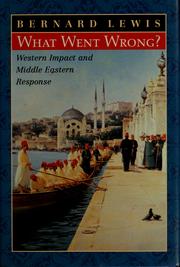
作品年表(4 本)
本站书库里署名伯纳德·刘易斯的书(Open Library 上至少 10 人加过书架的才收),按首版年份排(有本站书页的用 Wikidata 记的首版年,其余用 Open Library 的);年份偶尔记成后来的版本或译本,以原书为准。全部作品见 Open Library。
- 1950The Arabs in history书架 20
- 1995The Middle East书架 17
- 2002What went wrong?书架 30
- 2003The Crisis of Islam书架 21