 书单
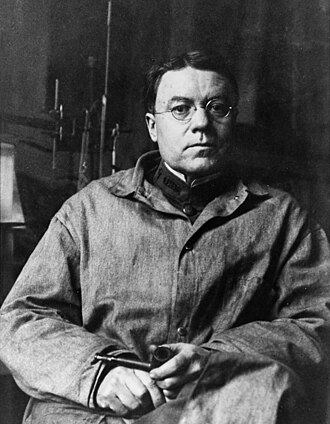
沃尔特·布拉福德·坎农
- 生卒
- 1871 – 1945
- 国籍
- 美国
- 外文名
- Walter Bradford Cannon
照片:作者不详,CC BY 4.0,来自维基共享资源「Walter Bradford Cannon.jpg」(经缩小)。
生平与创作
沃尔特·布拉德福·坎农(英语:Walter Bradford Cannon,1871年10月19日—1945年10月1日)是一位美国生理学家,哈佛医学院荣誉退休教授,提出了“战斗或逃跑”的概念,主要作品有《一个研究员的处世之道》(The Way of an Investigator: a scientist's experiences in medical research)、 《身体的智慧》(The Wisdom of the Body)等。
以上文字摘自维基百科「沃尔特·布拉德福·坎农」(去掉了参考文献等尾部小节),按 CC BY-SA 4.0 使用,作者为维基百科的各位编者。
中文维基百科的条目比较短,下面附上英文维基百科的内容(英文原文):
Walter Bradford Cannon (October 19, 1871 – October 1, 1945) was an American physiologist, professor and chairman of the Department of Physiology at Harvard Medical School. He coined the term "fight or flight response", and developed the theory of homeostasis. He popularized his theories in his book The Wisdom of the Body, first published in 1932.
Life and career
Cannon was born on October 19, 1871, in Prairie du Chien, Wisconsin, the son of Colbert Hanchett Cannon and his wife Wilma Denio. His sister Ida Maud Cannon (1877-1960) became a noted hospital social worker at Massachusetts General Hospital.
In his autobiography The Way of an Investigator, Cannon counts himself among the descendants of Jacques de Noyon, a French Canadian explorer and coureur des bois. His Calvinist family was intellectually active, including readings from James Martineau, John Fiske (philosopher), and James Freeman Clarke. Cannon's curiosity also led him to Thomas Henry Huxley, John Tyndall, George Henry Lewes, and William Kingdon Clifford. A high school teacher, Mary Jeannette Newson, became his mentor. "Miss May" Newson motivated him and helped him take his academic skills into Harvard University in 1892.
Upon finishing his undergraduate studies in 1896, Cannon entered Harvard Medical School. He started using X-rays to study the physiology of digestion while working with Henry P. Bowditch. In 1900 he received his medical degree.
After graduation, Cannon was hired by William Townsend Porter at Harvard as an instructor in the Department of Physiology while continuing his digestion study. Cannon was promoted to an assistant professor of physiology in 1902. He was a close friend of the physicist, G. W. Pierce, and together they founded the Wicht Club with other young instructors for social and professional purposes. In 1906, Cannon succeeded Bowditch as the Higginson Professor and chairman of the Department of Physiology at Harvard Medical School until 1942. From 1914 to 1916, Cannon was also President of the American Physiological Society.
Cannon was married to Cornelia James Cannon, a best-selling author and feminist reformer. On July 19, 1901, during their honeymoon in Montana, they were the first people to reach the summit of the unclimbed southwest peak (2657 m or 8716 ft) of Goat Mountain, between Lake McDonald and Logan Pass. That area is now Glacier National Park. The peak was subsequently named, Mount Cannon, by the United States Geological Survey The couple had five children; A son, Dr. Bradford Cannon, a military plastic surgeon and radiation researcher. The daughters were Wilma Cannon Fairbank (who was married to John K. Fairbank), Linda Cannon Burgess, Helen Cannon Bond, and Marian Cannon Schlesinger, a painter and author living in Cambridge, Massachusetts.
Cannon's actions and his statements may infer his philosophy of life. Born into a Calvinistic family, he broke away from religious authoritarianism and became independent from his prior dogma. Later in life, he states that naturally occurring events are what makes for a useful end. He took on the role of a naturalist where believed that the body and mind are inseparable as an organismic unit. The explanations of his work should enable man to live more wisely, happily, and intelligently without the interjection of supernatural interference.
E. Digby Baltzell said that Cannon was once offered a job at the Mayo Clinic for twice his Harvard salary. Cannon declined, saying "I don't need twice as much money. All I need is fifty cents for a haircut once a month, and fifty cents a day to get lunch."
Cannon was elected to the American Academy of Arts and Sciences in 1906, the American Philosophical Society in 1908, and the United States National Academy of Sciences in 1914.
Cannon supported animal experimentation and opposed the arguments of anti-vivisectionists. In 1911, he authored a booklet for the American Medical Association criticizing the arguments of anti-vivisectionists.
以上文字摘自英文维基百科「Walter Bradford Cannon」(有删节,去掉了参考文献等尾部小节),按 CC BY-SA 4.0 使用,作者为维基百科的各位编者。
资料卡
- 出生
- 1871 年 10 月 19 日
- 出生地
- 普雷里德欣
- 逝世
- 1945 年 10 月 1 日
- 逝世地
- 富兰克林
- 职业
- 生理学家、非虚构文学作家、大学教师
- 使用语言
- 英语
- 写作语言
- 英语
- 就读学校
- 哈佛医学院、哈佛学院
- 领域
- 生理学
- 所属团体
- 英国皇家学会(1939)、利奥波第那科学院、苏联科学院(1942)、美国文理科学院、美国国家科学院(1914) 等 8 项
- 配偶
- Cornelia James Cannon
- 获奖
- 克鲁内演讲(1918)、英国皇家学会外籍会员(1939)、贝利奖章(1931);另有 3 项只有外文名
资料卡来自 Wikidata Q503192(CC0),众包数据,个别字段可能不全。
本站收录的作品(1)
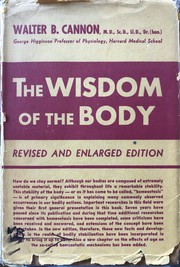
作品年表(3 本)
本站书库里署名沃尔特·布拉福德·坎农的书(Open Library 上至少 10 人加过书架的才收),按首版年份排(有本站书页的用 Wikidata 记的首版年,其余用 Open Library 的);年份偶尔记成后来的版本或译本,以原书为准。全部作品见 Open Library。
- 1915Bodily changes in pain, hunger, fear and rage书架 22
- 1932The wisdom of the body书架 21
- 1941La sabiduría del cuerpo书架 18