 书单
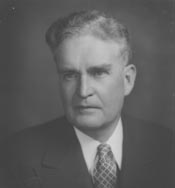
布鲁斯·弗莱查尔德·巴顿
- 生卒
- 1886 – 1967
- 国籍
- 美国
- 外文名
- Bruce Fairchild Barton
照片:the Library of Congress,公有领域,来自维基共享资源「Bruce Barton.jpg」(经缩小)。
生平与创作
这个词条暂时没有中文维基百科条目,下面是英文维基百科的内容(英文原文):
Bruce Fairchild Barton (August 5, 1886 – July 5, 1967) was an American author, advertising executive, and Republican politician. He represented Manhattan in the U.S. House of Representatives from 1937 to 1941. In 1940, he ran for election to the U.S. Senate, but was defeated by incumbent Senator James M. Mead. During the 1940 campaign, Barton became a high-profile target of President Franklin D. Roosevelt, who was running for re-election to a third term and identified his opposition with the epithet "Martin, Barton, and Fish!"
Biography
Barton was born in Robbins, Tennessee in 1886, the son of a Congregational clergyman. He grew up in various places throughout the U.S., including the metro Chicago area. Barton was raised in Oak Park, Illinois, ten miles from downtown Chicago on the rail line.
Bruce Barton's father, William E. Barton, was a prolific writer and a devout Christian pastor serving the First Congregational Church for over 20 years. Barton's mother, Esther Treat Bushnell, was an elementary school teacher who was descended from a number of colonial Connecticut leaders including Francis Bushnell, Robert Treat, and John Davenport. Barton's siblings were Charles William Barton (b. 1887), Helen (b. 1889), and Robert Shawmut Barton (b. 1894). Barton's parents also took in a boy by the name of Webster Betty, in addition to an African-American girl named Rebecca, whose mother had asked Barton's parents to take care of her.
Journalism appealed to Barton even as a child and he sold newspapers in his free time when he was just nine. Later on during his teenage years he served as the editor for his high school newspaper, and became a reporter for a local newspaper called the Oak Park Weekly. Barton also helped run his uncle's maple syrup business, which became successful with his contributions.
Barton first enrolled in Berea College (where his father attended college) during 1903 and later transferred to Amherst College in Massachusetts, where he graduated in 1907.
Ad man
Barton worked as a publicist and magazine editor before co-founding the Barton, Durstine & Osborn (BDO) advertising agency in 1919. Nine years later the agency merged with the George Batten agency to become Batten, Barton, Durstine & Osborn (BBDO). Barton replaced Roy S. Durstine as president of BBDO during 1939 and then headed the BBDO agency until 1961, all while helping his business partners and employees toward establishing Madison Avenue in New York City as the Mecca for the advertising industry, advancing institutional advertising for American corporations, and developing BBDO into one of the major creative advertising firms operating in the United States.
Among other famous BBDO campaigns, Barton created the character of Betty Crocker. He is also credited with naming General Motors and General Electric (and creating an early design of the circular GE corporate logo and catch phrase). Barton was also a member of the Peabody Awards Board of Jurors from 1940 to 1942.
Republican politician
Initially supporting progressive political policies as a young man, Barton later became an active supporter of the Republican Party in 1919, and he later served as an advisor for both the Republican Party and several Republican presidential candidates from the time of Calvin Coolidge during the 1920s to that of Dwight Eisenhower during the 1950s. As a staunch opponent of U.S. President Franklin D. Roosevelt and the New Deal, Barton offered his public relations services to many Republican candidates over the years. Barton won a special election to fill the unexpired term of U.S. Representative Democrat Theodore A. Peyser, who died on August 8, 1937. Barton eventually served two terms (1937–1941) in the U.S. House of Representatives, representing the Manhattan house district and he later ran an unsuccessful 1940 campaign for election as U.S. Senator from New York. During his time in Congress, Barton was a staunch opponent of Franklin Roosevelt.
Writer
As the author of many bestselling guidebooks, Barton also wrote literally hundreds of popular magazines articles and syndicated newspaper columns, offering his readers advice and inspiration for attaining Barton's own idealization of the American Dream, based largely upon Barton's meshing of his own life as a "small town boy" and sectarian Christian beliefs in with his admiration of certain American business and industry leaders ("Service").
The Man Nobody Knows - Christian apologetics for wealthy businessmen
Barton had projected many Christian Biblical themes throughout his works completed within his varied writing career, due in part to his own strong religious convictions. One historian writes: "Barton believed incurably in material progress, in self-improvement, in individualism, and in the Judeo-Christian ethic, and none of the profound crises through which his generation lived appreciably changed the tenor of his writings or their capacity to reflect what masses of Americans, optimists in the progressive tradition, apparently continued to want to hear."
Barton's most famous book was, The Man Nobody Knows (1925), a "boosterish melding of religion with business" that coupled with "new communication and advertising media", provided the "cultural shift that encouraged the public display of spiritual allegiances that once belonged to the realm of private life", while amplifying the widely perceived public adoration of American business during the 1920s. In this book, Barton envisions Jesus as if he were alive as a man's man in the present day of the 1920s while criticizing the overly meek Jesus that people were used to during that time. Barton also depicts Jesus as a "strong magnetic" executive businessman, similar to himself.
In the 1925 edition of The Man Nobody Knows Barton incorporated controversial chapter titles leading into the exploration of Barton's Jesus-as-businessman themes, such as calling Jesus a modern "Executive", postulating that Jesus communicated effectively by "His Advertisements", and hailing Jesus as "The Founder of Modern Business" among others.
以上文字摘自英文维基百科「Bruce Fairchild Barton」(有删节,去掉了参考文献等尾部小节),按 CC BY-SA 4.0 使用,作者为维基百科的各位编者。
资料卡
- 母语名
- Bruce Fairchild Barton
- 出生
- 1886 年 8 月 5 日
- 出生地
- Robbins
- 逝世
- 1967 年 7 月 5 日
- 逝世地
- 纽约
- 职业
- 政治人物、作家、散文家、企业家、议员、慈善家
- 使用语言
- 英语
- 写作语言
- 英语
- 就读学校
- 阿默斯特学院
资料卡来自 Wikidata Q4078700(CC0),众包数据,个别字段可能不全。
本站收录的作品(1)
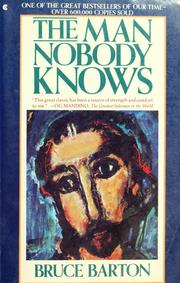
作品年表(1 本)
本站书库里署名布鲁斯·弗莱查尔德·巴顿的书(Open Library 上至少 10 人加过书架的才收),按首版年份排(有本站书页的用 Wikidata 记的首版年,其余用 Open Library 的);年份偶尔记成后来的版本或译本,以原书为准。全部作品见 Open Library。
- 1925The Man Nobody Knows书架 12