 书单
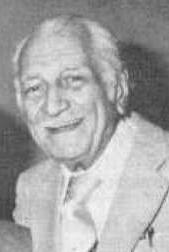
吉尔贝托·弗雷雷
- 生卒
- 1900 – 1987
- 国籍
- 巴西
- 外文名
- Gilberto Freyre
照片:User:R.uri,CC BY-SA 3.0,来自维基共享资源「Gilberto Freyre.JPG」(经缩小)。
生平与创作
吉尔贝托·德·梅洛·弗雷雷(葡萄牙语:Gilberto de Mello Freyre,1900年—1987年),巴西文化人类学家,社会学家,历史学家,记者,国会议员。
生平
弗雷雷出生于伯南布哥州首府累西腓,累西腓/瓜拉拉皮斯吉尔贝托·弗雷雷国际机场即以他的名字命名。
他曾受教于著名的美国人类学家法兰兹·鲍亚士,其人类学家生涯亦受到鲍亚士的重要影响。他对巴西社会与文化的发展均做出了自己的贡献。这些贡献是与其人类学的关怀分不开的。
以上文字摘自维基百科「吉尔贝托·弗雷雷」(去掉了参考文献等尾部小节),按 CC BY-SA 4.0 使用,作者为维基百科的各位编者。
中文维基百科的条目比较短,下面附上英文维基百科的内容(英文原文):
Gilberto de Mello Freyre (March 15, 1900 – July 18, 1987) was a Brazilian sociologist, anthropologist, historian, writer, painter, journalist and congressman born in Recife. Considered one of the most important sociologists of the 20th century, his best-known work is a sociological treatise named Casa-Grande & Senzala (literally, "The main house and the slave quarters", usually translated into English as The Masters and the Slaves).
Life and work
Freyre had an internationalist academic career, having studied at Baylor University, Texas from the age of eighteen and then at Columbia University, where he got his master's degree under the tutelage of William Shepperd. At Columbia, Freyre was a student of the anthropologist Franz Boas. After coming back to Recife in 1923, Freyre spearheaded a handful of writers in a Brazilian regionalist movement. After working extensively as a journalist, he was made head of cabinet of the Governor of the State of Pernambuco, Estácio Coimbra. With the 1930 revolution and the rise of Getúlio Vargas, both Coimbra and Freyre went into exile. Freyre went first to Portugal and then to the US, where he worked as visiting professor at Stanford. By 1932, Freyre had returned to Brazil. In 1933, Freyre's best-known work, The Masters and the Slaves was published and was well received. In 1946, Freyre was elected to the federal Congress. At various times, Freyre also served as director of the newspapers A Província and Diário de Pernambuco.
In 1962, Freyre was awarded the Prêmio Machado de Assis by the Brazilian Academy of Letters, one of the most prestigious awards in the field of Brazilian literature. That same year, he was elected to the American Philosophical Society. Over the course of his long career, Freyre received numerous other awards, honorary degrees, and other honors both in Brazil and internationally. Examples include admission to L'ordre des Arts et Lettres (France), investiture as Grand Officier de La Légion d'Honneur (France), the Gran-Cruz of the Ordem do Infante Dom Henrique (Portugal), and honorary doctorates at Columbia University and the Sorbonne.
Freyre's most widely known work is The Masters and the Slaves (1933). At the time, this was a revolutionary work for the study of races and cultures in Brazil. As Lucia Lippi Oliveira notes, "In the 1930s and 1940s, Freyre was praised as being the creator of a new, positive self-image of Brazil, one that overcame the racism present in authors like Sílvio Romero, Euclides da Cunha, and Oliveira Viana." The book misrepresents slavery in Brazil as a mild form of servitude and has served to consolidate the Brazilian myth of racial democracy. Freyre’s romanticization of racial mixture and disavowal of his society’s racism is comparable to the approach of other Latin American eugenicists, such as Fernando Ortiz in Cuba (Contrapunteo Cubano de Tobacco y Azúcar, 1940), and José Vasconcelos in Mexico (La Raza Cosmica, 1926). Since its publication and initial reception, this work has also been criticized for how its "focus on a single identity in modern Brazil resulted not only in factual inaccuracies and distortions of reality but also in a larger societal refusal to acknowledge racism in modern Brazil."
The Masters and the Slaves is the first of a series of three books, which also included The Mansions and the Shanties: The Making of Modern Brazil (1938) and Order and Progress: Brazil from Monarchy to Republic (1957). The trilogy is generally considered a classic of modern cultural anthropology and social history. Other very important contributions of Freyre's were The Northeast (1937) and The English in Brazil (1948).
以上文字摘自英文维基百科「Gilberto Freyre」(有删节,去掉了参考文献等尾部小节),按 CC BY-SA 4.0 使用,作者为维基百科的各位编者。
资料卡
- 母语名
- Gilberto Freyre
- 出生
- 1900 年 3 月 15 日
- 出生地
- 累西腓
- 逝世
- 1987 年 7 月 18 日
- 逝世地
- 累西腓
- 职业
- 人类学家、社会学家、作家、诗人、画家、新闻工作者、政治人物、历史学家 等 9 项
- 使用语言
- 葡萄牙语
- 就读学校
- 哥伦比亚大学、贝勒大学
- 领域
- 人类学、社会学
- 所属团体
- 美国文理科学院、法国海外科学研究院、美国哲学会(1962)
- 代表作
- Casa-Grande & Senzala
- 获奖
- 安斯非德-禾夫图书奖(1957)、大英帝国爵级司令勋章、荣誉军团大军官勋章;另有 9 项只有外文名
资料卡来自 Wikidata Q677769(CC0),众包数据,个别字段可能不全。
本站收录的作品(1)
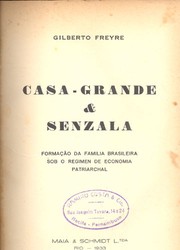
作品年表(1 本)
本站书库里署名吉尔贝托·弗雷雷的书(Open Library 上至少 10 人加过书架的才收),按首版年份排(有本站书页的用 Wikidata 记的首版年,其余用 Open Library 的);年份偶尔记成后来的版本或译本,以原书为准。全部作品见 Open Library。
- 1933Casa-grande & senzala书架 28