 书单
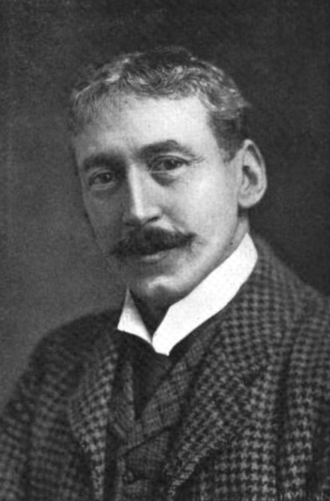
亨利·德维尔·斯塔克普尔
- 生卒
- 1863 – 1951
- 国籍
- 爱尔兰
- 外文名
- Henry de Vere Stacpoole
照片:Elliott & Fry (no individual credited),公有领域,来自维基共享资源「Henry De Vere Stacpoole (1863–1951).png」(经缩小)。
生平与创作
这个词条暂时没有中文维基百科条目,下面是英文维基百科的内容(英文原文):
Henry de Vere Stacpoole (9 April 1863 – 12 April 1951) was an Irish author. His 1908 romance novel The Blue Lagoon has been adapted into multiple films. He published using his own name and sometimes the pseudonym Tyler de Saix.
Biography
Stacpoole was born in Kingstown —today's Dún Laoghaire— in Dublin, on 9 April 1863; he was the last son of the Reverend William Church Stacpoole, a theologian and principal of Kingstown School, and Charlotte Augusta (née Mountjoy). He had three older sisters: the eldest was Florence Stacpoole, who wrote books and pamphlets on health and medicine. Henry attributed his love for nature; which characterized his entire existence, to the influence of his mother. She was of Irish origin but had spent her childhood until the age of twelve in the wildest and most wooded regions of Canada. Reverend William died prematurely in 1870 and the mother decided to return to Ireland where she raised her four children alone. Due to breathing problems that were misdiagnosed, in the winter of 1871, the family moved for a long stay in Southern France, at Nice.
At Portarlington Boarding School in Ireland, 100 miles from Kingstown, he received his education. It was not a joyful experience; in the autobiographical Men and Mice he wrote about the fact that his noisy and rough companions abused him physically and mentally, making him feel like "a little [King] Arthur in a cage of baboons." One night he fled through an adjacent girls' school, but his older sister dragged him back to boarding school.
After moving his family to London, he enrolled at Malvern College in Worcestershire, a progressive school that finally met his expectations. Despite being more drawn to literature than anatomy classes, he studied medicine at St George's and St Mary's hospitals and became a doctor in 1891. He practised only sporadically, initially as a doctor aboard a layout ship.
As a young man he befriended Pearl Craigie (known as John Oliver Hobbes) and this facilitated his first publication, a poem about Belgravia. In 1890 he met Aubrey Beardsley, Alfred Noyes, and other writers and artists of the Yellow Book group. This environment influenced his first novel, The Intended (1894), a tragic novel about two look-alikes, one rich and the other poor, who exchange places for fun; but it had very little success. Years later, Stacpoole retold this story in The Man Who Lost Himself (1918); a penniless American who impersonates his rich lookalike in England; and this time it was a commercial success.
His second, Pierrot! (1896), is set during the Franco-Prussian War and deals with an ambiguous relationship between a French boy and his look-alike psychic double, in the form of a Prussian officer; all through a story of "family curses" from which it appears that the young Frenchman may be a parricide. Hobbes recommended a lighter approach to the subject.
Pierrot was followed by Death, the Knight, and the Lady (1897), a powerful mix of reincarnation, disguise, and uxoricide. The originality of the themes and the development was beyond doubt, but the audience was certainly not prepared. These novels, and The Rapin (1899), all failed commercially.
In these early works Stacpoole develops his vision of existence for which the body is a "shell" – "chrysalis" he often says in these texts – waiting for a potential "charmer" that allows him to "divide", so that this existence can be shared by several bodies.
In the summer of 1898, Stacpoole practised as a country doctor in Somerset and wrote The Doctor (1899), a novel about English village life centred on an old doctor and a niece French who comes to upset his routine. Stacpoole considered this his best work, but at this time his public and critical success was very modest.
By the early 1900s, Stacpoole had become a permanent professional writer; in an interview, he claimed that he wrote 2000 words a day and that his main sources of inspiration were Edgar Allan Poe, Victor Hugo, Eugène Sue, and Robert Louis Stevenson.
He would be spared the "storm of success" for another seven years, during which time he published seven books, including a collection of children's stories and two novels in collaboration with his friend William Alexander Bryce. In 1904 he enlisted the assistance of the Royal Literary Fund based on the fact that sciatica and depression prevented him from writing.
Public success came, however, in 1905 with a comic-romantic novel, Fanny Lambert, and in 1907 with a sea adventure, Crimson Azaleas; in the latter two rude sailors adopt a Japanese orphan. He also wrote articles and novels for periodicals, particularly for the Daily Express.
Still practising as a doctor, on 17 December 1907 he married Margaret Ann Robson, at St Stephen's Church, Westbourne Park. At that time he lived at Eden Vue, Langtivathby, Cumberland, where he practised medicine. After the wedding, the couple moved to Stebbing, Essex, where Stacpoole met H.G. Wells and served as a magistrate.
以上文字摘自英文维基百科「Henry de Vere Stacpoole」(有删节,去掉了参考文献等尾部小节),按 CC BY-SA 4.0 使用,作者为维基百科的各位编者。
资料卡
- 笔名
- Tyler de Saix
- 出生
- 1863 年 4 月 9 日
- 出生地
- 邓莱里
- 逝世
- 1951 年 4 月 12 日
- 逝世地
- 夏克林
- 职业
- 作家、编剧、儿童文学作家、译者
- 使用语言
- 英国英语、爱尔兰语
- 配偶
- Margaret Robson(1907)、Florence Robson(1938)
资料卡来自 Wikidata Q1392055(CC0),众包数据,个别字段可能不全。
本站收录的作品(1)
作品年表(1 本)
本站书库里署名亨利·德维尔·斯塔克普尔的书(Open Library 上至少 10 人加过书架的才收),按首版年份排(有本站书页的用 Wikidata 记的首版年,其余用 Open Library 的);年份偶尔记成后来的版本或译本,以原书为准。全部作品见 Open Library。
- 1908蓝色珊瑚礁The Blue Lagoon书架 26