 书单
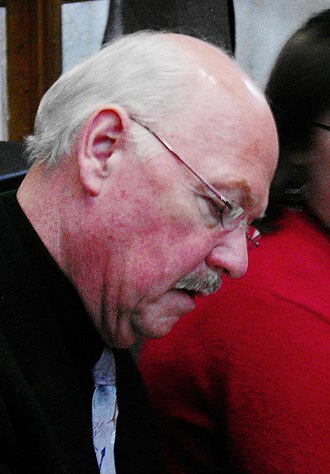
詹姆斯·班福德
- 生卒
- 1946 –
- 国籍
- 美国
- 外文名
- James Bamford
照片:Joe Mabel,CC BY-SA 3.0,来自维基共享资源「James Bamford 16A.jpg」(经缩小)。
生平与创作
这个词条暂时没有中文维基百科条目,下面是英文维基百科的内容(英文原文):
James Bamford (born September 15, 1946) is an American author, journalist and documentary producer noted for his writing about United States intelligence agencies, especially the National Security Agency (NSA). The New York Times has called him "the nation's premier journalist on the subject of the National Security Agency" and The New Yorker named him "the NSA's chief chronicler."
In 2006, he won the National Magazine Award for Reporting for his writing on the war in Iraq published in Rolling Stone.
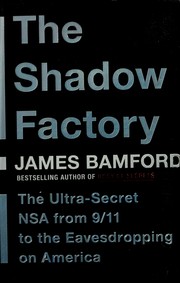
In 2015 he became the national security columnist for Foreign Policy magazine and he also writes for The New Republic. His book, The Shadow Factory: The Ultra-Secret NSA From 9/11 to the Eavesdropping on America, became a New York Times bestseller and was named by The Washington Post as one of "The Best Books of the Year."
Early life
Bamford was born on September 15, 1946, in Atlantic City, New Jersey, and raised in Natick, Massachusetts. During the Vietnam War, he spent three years in the United States Navy as an intelligence analyst assigned to a National Security Agency unit in Hawaii. Following the Navy, he earned a Juris Doctor Degree in International Law from Suffolk University Law School in Boston, Massachusetts; a post graduate diploma from the Institute on International and Comparative Law, University of Paris I Panthéon Sorbonne; and was awarded a fellowship at Yale Law School.
While in law school as a Navy reservist, Bamford blew the whistle on the NSA when he learned about a program that involved illegally eavesdropping on US citizens. He testified about the program in a closed hearing before the Church Committee, the congressional investigation that led to sweeping reforms of US intelligence abuses in the 1970s.
The Puzzle Palace and threat of prosecution
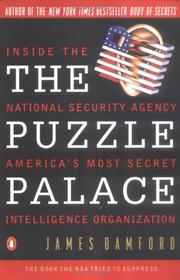
In 1982, following graduation, he wrote The Puzzle Palace: A Report on NSA, America's Most Secret Intelligence Agency (Houghton Mifflin) which became a national bestseller and won the top book award from Investigative Reporters and Editors, the professional association of investigative journalists. Washingtonian magazine called it "a monument to investigative journalism" and The New York Times Book Review said, "Mr. Bamford has uncovered everything except the combination to the director's safe."
During the course of writing the book, Bamford discovered that the Justice Department in 1976 began a secret criminal investigation into widespread illegal domestic eavesdropping by the NSA. As a result, he filed a request under the Freedom of Information Act (FOIA) for documents dealing with the investigation and several hundred pages were eventually released to him by the Carter administration. However, when President Ronald Reagan took office, the Justice Department sought to stop publication of the book and demanded return of the documents, claiming they had been "reclassified" as top secret. When Bamford refused, he was threatened with prosecution under the Espionage Act. In response, Bamford cited the presidential executive order on secrecy, which stated that once a document had been declassified it cannot be reclassified. As a result, President Reagan changed the executive order to indicate that once a document has been declassified it can be reclassified. However, due to ex post facto restrictions in the US Constitution, the new executive order could not be applied to Bamford and the information was subsequently published in The Puzzle Palace.
NSA raid on the Marshall Library
Following publication, however, the NSA continued its efforts against Bamford. While writing The Puzzle Palace, the author made extensive use of documents from the George C. Marshall Research Library in Virginia. These included the private correspondence of William F. Friedman, one of the founders of the NSA. Although none of the documents was classified, following the book's release the NSA sent agents to the library to order their removal. The action led to a lawsuit (631 F.Supp. 416 (1986)) by the American Library Association (ALA) against the NSA, charging that the agency had no right to enter a private library and classify and remove Friedman's private papers. Although the court criticized NSA, saying it "does not condone by any means NSA's cavalier attitude toward its classification determination," it nevertheless found in the agency's favor and dismissed the suit. The ALA appealed the dismissal to the U.S. Court of Appeals but Ruth Bader Ginsburg, who was at that time a judge on that court, ruled that the ALA lacked standing in the case. At the library, Bamford also had access to the private papers of Marshall S. Carter, a former director of the NSA whom he had interviewed. But after the book was published, agency officials met with Carter at a secure location in Colorado, where he was in retirement, and threatened him with prosecution if he did not immediately close his collection and refrain from further interviews. Carter reluctantly agreed to the demands.
Body of Secrets and A Pretext for War
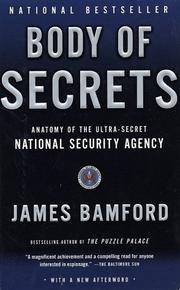
In 2001, Bamford released Body of Secrets: Anatomy of the Ultra-Secret NSA, From the Cold War to the Dawn of a New Century (Doubleday). The second in his trilogy, it also became a national bestseller. A cover review in The New York Times Book Review called it "an extraordinary work of investigative journalism" and it won the Investigative Reporters and Editors Gold Medal, the highest award given by the association.
以上文字摘自英文维基百科「James Bamford」(有删节,去掉了参考文献等尾部小节),按 CC BY-SA 4.0 使用,作者为维基百科的各位编者。
资料卡
- 出生
- 1946 年 9 月 15 日
- 出生地
- 大西洋城
- 职业
- 历史学家、作者、新闻工作者、非虚构文学作家
- 使用语言
- 英语
- 写作语言
- 英语
- 就读学校
- 萨福克大学法学院、萨福克大学
资料卡来自 Wikidata Q1680004(CC0),众包数据,个别字段可能不全。
本站收录的作品(3)
作品年表(3 本)
本站书库里署名詹姆斯·班福德的书(Open Library 上至少 10 人加过书架的才收),按首版年份排(有本站书页的用 Wikidata 记的首版年,其余用 Open Library 的);年份偶尔记成后来的版本或译本,以原书为准。全部作品见 Open Library。
- 1982The Puzzle Palace书架 29
- 2001Body of Secrets书架 20
- 2008The Shadow Factory书架 24