 书单
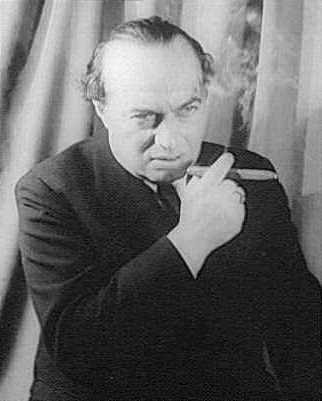
弗兰茨·维尔费尔
- 生卒
- 1890 – 1945
- 国籍
- 奥匈帝国、美国
- 外文名
- Franz Werfel
照片:Carl Van Vechten,公有领域,来自维基共享资源「Werfel.jpg」(经缩小)。
生平与创作
弗朗茨·韦费尔(德语:Franz Werfel,1890年9月10日—1945年8月26日)是奥地利小说家、剧作家、诗人,代表作是描写亚美尼亚大屠杀的《摩西山的四十日》(Die vierzig Tage des Musa Dagh)。
著作
摩西山的四十日
圣女之歌
以上文字摘自维基百科「弗朗茨·韦费尔」(去掉了参考文献等尾部小节),按 CC BY-SA 4.0 使用,作者为维基百科的各位编者。
中文维基百科的条目比较短,下面附上英文维基百科的内容(英文原文):
Franz Viktor Werfel (German: [fʁant͡s ˈvɛʁfl̩] ; 10 September 1890 – 26 August 1945) was a Czech novelist, playwright, and poet whose career spanned World War I, the Interwar period, and World War II. He is primarily known as the author of The Forty Days of Musa Dagh (1933, English tr. 1934, 2012), a novel based on events that took place during the Armenian genocide of 1915, and The Song of Bernadette (1941), a novel about the life and visions of the French Catholic saint Bernadette Soubirous, which was made into a Hollywood film of the same name.
Early life
Born in Prague, then in Kingdom of Bohemia, which was part of Austria-Hungary, Werfel was the first of three children of a wealthy manufacturer of gloves and leather goods, Rudolf Werfel. His mother, Albine Kussi, was the daughter of a mill owner. His two sisters were Hanna Fuchs-Robettin (born 1896) and Marianne Amalie (born 1899). His family was Jewish. As a child, Werfel was raised by his Czech Catholic governess, Barbara Šimůnková, who often took him to mass in Prague's main cathedral.
Like the children of other progressive German-speaking Jews in Prague, Werfel was educated at a Catholic school run by the Piarists, a teaching order that allowed for a rabbi to instruct Jewish students for their bnei mitzvah. This, along with his governess's influence, gave Werfel an early interest (and expertise) in Catholicism, which soon branched out to other faiths, including Theosophy and Islam, such that his fiction, as well as his nonfiction, provides some insight into comparative religion.
Career
Werfel began writing at an early age and, by 1911, had published his first book of poems, Der Weltfreund, which can be translated as "the friend to the world" as well as philanthropist, humanitarian, and the like. By this time, Werfel had befriended other German Jewish writers who frequented Prague's Café Arco, chief among them Max Brod and Franz Kafka, and his poetry was praised by such critics as Karl Kraus, who published Werfel's early poems in Kraus's journal, Die Fackel (The Torch). In 1912, Werfel moved to Leipzig, where he became an editor for Kurt Wolff's new publishing firm, where Werfel championed and edited Georg Trakl's first book of poetry. While he lived in Germany, Werfel's milieu grew to include Else Lasker-Schüler, Martin Buber, Rainer Maria Rilke, among other German-language writers, poets, and intellectuals in the first decades of the twentieth century.
With the outbreak of World War I, Werfel served in the Austro-Hungarian Army on the Russian front as a telephone operator. His duties both exposed him to the vicissitudes of total war as well as provided him with enough of a haven to continue writing Expressionist poems, ambitious plays, and letters voluminously. His eclectic mix of humanism, confessionalism, autobiography, as well as mythology and religiosity developed further during this time. His poems and plays ranged from scenes of ancient Egypt (notably the potentially monotheistic religion of Akhenaton) to occult allusions (Werfel had participated in séances with his friends Brod and Kafka) and incorporate a parable from the Baháʼí Faith in the poem "Jesus and the Carrion Path". His bias for Christian subjects, as well as his antipathy for Zionism, eventually alienated many of his Jewish friends and readers, including early champions such as Karl Kraus. Others, however, stood by him, including Martin Buber, who published a sequence of poems from Werfel's wartime manuscript, Der Gerichtstag (Judgment Day, published in 1919) in his monthly journal, Der Jude (The Jew). and wrote of Werfel in his prefatory remark:
以上文字摘自英文维基百科「Franz Werfel」(有删节,去掉了参考文献等尾部小节),按 CC BY-SA 4.0 使用,作者为维基百科的各位编者。
资料卡
- 母语名
- Franz Werfel
- 出生
- 1890 年 9 月 10 日
- 出生地
- 布拉格
- 逝世
- 1945 年 8 月 26 日
- 逝世地
- 贝弗利山庄
- 职业
- 作家、诗人、剧作家、编剧、科幻作家、剧本作者、演讲者、译者 等 9 项
- 使用语言
- 德语
- 写作语言
- 德语
- 配偶
- 阿尔玛·马勒(1929)
- 代表作
- The Man Who Conquered Death、Die vierzig Tage des Musa Dagh、The Song of Bernadette、Star of the Unborn
资料卡来自 Wikidata Q78514(CC0),众包数据,个别字段可能不全。
本站收录的作品(1)
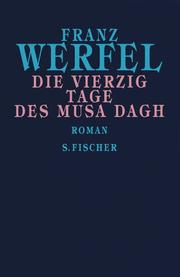
作品年表(3 本)
本站书库里署名弗兰茨·维尔费尔的书(Open Library 上至少 10 人加过书架的才收),按首版年份排(有本站书页的用 Wikidata 记的首版年,其余用 Open Library 的);年份偶尔记成后来的版本或译本,以原书为准。全部作品见 Open Library。
- 1933Die vierzig Tage des Musa Dagh书架 37
- 1946Star of the unborn书架 26
- 1976Star of the Unborn书架 11