 书单
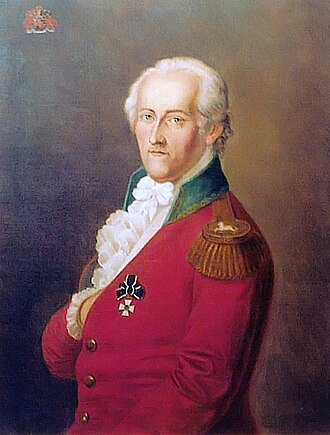
阿道夫·克尼格
- 生卒
- 1752 – 1796
- 国籍
- 德国、布伦瑞克-吕讷堡选帝侯国
- 外文名
- Adolph Freiherr Knigge
照片:Users Webmaster@sgovd.org, AxelHH on de.wikipedia,公有领域,来自维基共享资源「Knigge Freiherr.jpg」(经缩小)。
生平与创作
阿道夫·弗朗茨·弗雷德里克·路德维希·克尼格男爵(德语:Freiherr Adolph Franz Friedrich Ludwig Knigge;1752年10月16日—1796年5月6日)是18世纪的一位德国作家、共济会和光照派主要成员。
生平
克尼格出生于不伦瑞克-吕讷堡选侯国的布雷登贝克(Bredenbeck ,今文尼希森)的一个下层贵族家庭,11岁丧母,三年后丧父,并给他留下了一大笔债务。债主拿走了他家的大多数财产,只给他留下了500泰勒。
1769年至1772年间他在哥廷根学习法律,在那里加入了汉诺威陆军。1772年在卡塞尔加入共济会,1777年他在魏玛的宫廷里担任管家。1780年加入亚当·魏萨普的光照派,他为光照派写作的文章使得该组织名噪一时。但1783年他和魏萨普发生矛盾,最终克尼格退出光照派。因为参加光照派、支持人权运动和个人身体健康问题,他失去了贵族的支持,导致个人的经济危机。1790年他在不来梅找到一份工作,1796年在不来梅去世。
以上文字摘自维基百科「阿道夫·克尼格」(去掉了参考文献等尾部小节),按 CC BY-SA 4.0 使用,作者为维基百科的各位编者。
中文维基百科的条目比较短,下面附上英文维基百科的内容(英文原文):
Adolph Franz Friedrich Ludwig Freiherr Knigge (16 October 1752 – 6 May 1796) was a German writer, Freemason, and a leading member of the Order of the Illuminati.
Biography
Adolph Freiherr von Knigge was born in Bredenbeck (now a part of Wennigsen, Lower Saxony) in the Electorate of Hanover as a member of the Knigge family, an old German nobility dating back to 13th century. He was the only son of Carl Philipp Freiherr Knigge (1723–1766) and his wife, Louise Wilhelmine Baroness Knigge (1730–1763), member of the same family from Weimar. When he was barely eleven, his mother died, and when his father died three years later the teenager inherited a large debt. His creditors took possession of the family property and assigned the boy a meagre pension of 500 thalers.
He studied law from 1769 to 1772 in Göttingen where he became a member of Corps Hannovera. He was allegedly initiated into Freemasonry in 1772 in Kassel, where he held a position as Court Squire (hofjunker) and Assessor of the War and Domains Exchequer. In 1777 he became Chamberlain at the Weimar court.
In 1780 Knigge joined Adam Weishaupt's Bavarian Illuminati and his work with the Illuminati gave the group a great deal of publicity and influence of Masonic chapters. But in 1783 dissensions arose between Knigge and Weishaupt, which resulted in Knigge's final withdrawal from the group on 1 July 1784. Knigge stated that he could no longer endure Weishaupt's pedantic domineering, which frequently assumed offensive forms. He accused Weishaupt of "Jesuitism", and suspected him of being "a Jesuit in disguise" (Nachtr., I, 129). "And was I", he adds, "to labour under his banner for mankind, to lead men under the yoke of so stiff-necked a fellow?—Never!"
Knigge's involvement with the Illuminati, support of the advancement of human rights, and a period of serious illness led to the loss of support of his aristocratic sponsors and finally his fortune. Knigge found a measure of financial stability again with a position in Bremen in 1790. He died in Bremen in 1796.
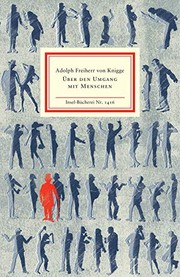
In Germany, Knigge is best remembered for his book Über den Umgang mit Menschen (On Human Relations), a treatise on the fundamental principles of human relations that has the reputation of being the authoritative guide to behaviour, politeness, and etiquette. The work is more of a sociological and philosophical treatise on the basis of human relations than a how-to guide on etiquette, but the German word “Knigge” has come to mean “good manners” or books on etiquette.
Works
Allgemeines System für das Volk zur Grundlage aller Erkenntnisse für Menschen aus allen Nationen, Ständen und Religionen (General System for the Public, Towards a Foundation of all Knowledge of People of all Nations, Conditions, and Religions), 1778
Der Roman meines Lebens (The Story of my Life), 1781
On the Jesuits, Freemasons, and Rosicrucians, 1781
Sechs Predigten gegen Despotismus, Dummheit, Aberglauben, Ungerechtigkeit, Untreue und Müßiggang (Six Sermons against Despotism, Stupidity, Superstition, Injustice, Mistruth, and Idleness), 1783
Geschichte Peter Clausens (The History of Peter Clausen), 1783–85
Gesammelte politische und prosaische kleinere Schriften (Collected Political and Prosaic Lesser Writings), 1784
Essay on Freemasonry, 1784
Contribution towards the latest history of the Order of Freemasons, 1786
Bekenntnisse (Übersetzung des Rousseauschen Werks aus dem Französischen) (Confessions–Translation of the Works of Rousseau from the French), 1786–90
Die Verirrungen des Philosophen oder Geschichte Ludwigs von Seelbergs (The Errors of the Philosopher, or Story of Ludwig von Seelberg), 1787
Philo's endliche Antwort auf verschiedene Anforderungen und Fragen, meine Verbindung mit dem Orden der Illuminaten betreffend (Philo’s Reply To Questions Concerning His Association With the Illuminati), 1788, 2012 ISBN 978-1-105-60407-2
Über den Umgang mit Menschen (On Human Relations), 1788
Geschichte des armen Herrn von Mildenberg (The Story of the Poor Herr von Mildenberg), 1789
以上文字摘自英文维基百科「Adolph Freiherr Knigge」(有删节,去掉了参考文献等尾部小节),按 CC BY-SA 4.0 使用,作者为维基百科的各位编者。
资料卡
- 母语名
- Adolph Knigge
- 本名
- Adolph Franz Friedrich Ludwig Knigge 55 Avanzado
- 笔名
- Philo、J. C. Meywerk、Joseph Aloisius Maier、Benjamin Noldmann 等 9 项
- 出生
- 1752 年 10 月 16 日
- 出生地
- Bredenbeck
- 逝世
- 1796 年 5 月 6 日
- 逝世地
- 不来梅
- 职业
- 作家、哲学家、作曲家、传记作家、剧作家、译者、宫廷侍卫长
- 使用语言
- 德语
- 写作语言
- 德语
- 就读学校
- 哥廷根大学
- 所属团体
- 光照派、共济会
资料卡来自 Wikidata Q213681(CC0),众包数据,个别字段可能不全。
本站收录的作品(1)
同时代的德国作家
Open Library 上的全部作品
正在读取…