 书单
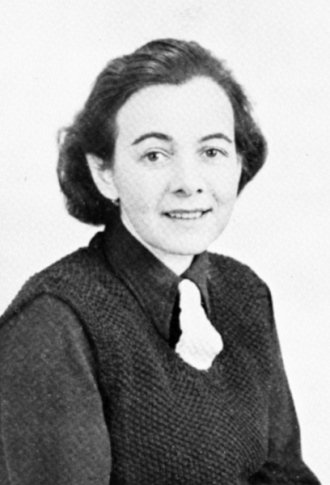
卡琳·博耶
- 生卒
- 1900 – 1941
- 国籍
- 瑞典
- 外文名
- Karin Boye
照片:Ulf Boyes family album.,公有领域,来自维基共享资源「Karin Boye, 1940s.gif」(经缩小)。
生平与创作
卡琳·博耶(1900年10月26日—1941年4月24日)是一位瑞典诗人和小说家。
早期
卡琳·博耶出生于瑞典哥德堡市,1909年与她的家人搬到斯德哥尔摩。1921年到1926年她曾就读于乌普萨拉大学。
后期
1929年和1932年间,卡琳与Leif Björck结婚。离开丈夫后,她与Gunnel Bergström保持同性恋关系。1932-1933年在柏林逗留期间,她遇到了Margot Hanel,后来她们一直生活在一起,Margot Hanel被卡琳称为“她的妻子”。
1941年4月23日,卡琳·博耶吞安眠药自杀死亡。她的尸体于4月27日被发现在大石山上,现在山上建了一个纪念碑。Margot Hanel不久后也自杀。
作品
小说:
Astarte, 1931
Merit vaknar, 1933
Kris, 1934
För lite, 1936
Kallocain, 1940
诗集:
Moln, 1922
Gömda land, 1924
Härdarna, 1927
För trädets skull, 1935
De sju dödssynderna, 1941 (not completed, posthumously published)
Complete Poems in English translation by David McDuff, Bloodaxe Books, 1994 ISBN 1852241098
以上文字摘自维基百科「卡琳·博耶」(去掉了参考文献等尾部小节),按 CC BY-SA 4.0 使用,作者为维基百科的各位编者。
中文维基百科的条目比较短,下面附上英文维基百科的内容(英文原文):
Karin Maria Boye (26 October 1900 – 24 April 1941) was a Swedish poet and novelist. In Sweden, she is acclaimed as a poet, but internationally, she is best known for the dystopian science fiction novel Kallocain (1940).
Biography
Early life
Boye was born in Gothenburg, Sweden in a wealthy family and moved with her family to Stockholm in 1909, eventually settling in a house in Huddinge. In Stockholm, she studied at the Åhlinska skolan until 1920. She then attended Södra seminariet, a teacher-training programme, in order to become a school teacher. She studied at Uppsala University from 1921 to 1926 and debuted in 1922 with a collection of poems, Moln (Clouds). During her time in Uppsala and until 1930, Boye was a member of the Swedish Clarté League, a socialist group that was strongly antifascist. She was also a member of the women's organization Nya Idun.
Literary career
Boye made her literary debut in 1922 with the collection of poems Moln ("Clouds"). Taking influence from the writings of Arthur Schopenhauer and Friedrich Nietzsche and poets such as Gustaf Fröding, Vilhelm Ekelund and Edith Södergran, her poetry dealt from the start with the individual's right to freedom in relation to Christianity, which was further developed in "Gömda land" (1924, "Hidden Lands") and Härdarna (1927, "The Hearths"). Worship of beauty, fighting spirit and dynamic movement were central elements in her poems that was concentrated into a distinctive, idiosyncratic rhythmic form.
In 1931, Boye, together with Erik Mesterton and Josef Riwkin, founded the poetry magazine Spektrum, introducing T. S. Eliot and the Surrealists to Swedish readers. She translated many of Eliot's works into Swedish; she and Mesterton translated "The Waste Land".
She was also a member of the Swedish literary institution Samfundet De Nio (The Nine Society) from 1931 until her death in 1941.
Boye is perhaps most famous for her poems, the most well-known of which are Ja visst gör det ont (Yes, of course it hurts) and I rörelse (In motion) from her collections of poems Härdarna and För trädets skull (1935, "For the tree's sake"). The latter collection, which prominently feature Boye's frequent use of tree-symbolism in her poetry, was criticized by contemporary critics for modernistic obscurity but is by later readers widely regarded as her strongest book of poems.
Boye also wrote several short story collections and novels. Her 1931 novel Astarte was a criticism of the bourgeois culture, and won a Nordic novel prize. Her 1934 novel Crisis (Kris) depicts her religious crisis and lesbianism. In her novels Merit vaknar (Merit awakens) and För lite (Too little) she explores male and female role-playing.
Her best-known and most widely read novel Kallocain was published in 1940. Inspired by her visit to Germany during the rise of Nazism, it was a portrayal of a dystopian society in the vein of George Orwell's Nineteen Eighty-Four and Aldous Huxley's Brave New World (though written almost a decade before Orwell's magnum opus). In the novel, an idealistic scientist named Leo Kall invents Kallocain, a kind of truth serum. The novel contrasts the individual's right to freedom and independence against a collective society and the state's need of organisation and control. The novel was filmed in Sweden in 1981 and was the main influence on the movie Equilibrium.
Posthumously, the uncompleted poetry collection De sju dödssynderna ("The seven deadly sins") was published in 1941. Its center-piece is a cycle of poems of the conflict between the individual's strong will to independence and the conformity of religion, which was the major theme in Boye's work.
以上文字摘自英文维基百科「Karin Boye」(有删节,去掉了参考文献等尾部小节),按 CC BY-SA 4.0 使用,作者为维基百科的各位编者。
资料卡
- 母语名
- Karin Maria Boye
- 出生
- 1900 年 10 月 26 日
- 逝世
- 1941 年 4 月 24 日
- 逝世地
- 阿灵索斯
- 职业
- 译者、诗人、小说家、文学评论家、科幻作家、作家、评论家
- 使用语言
- 瑞典语
- 写作语言
- 瑞典语
- 就读学校
- 乌普萨拉大学
- 领域
- 诗歌
- 配偶
- Leif Björk(1929)
资料卡来自 Wikidata Q237413(CC0),众包数据,个别字段可能不全。
本站收录的作品(1)
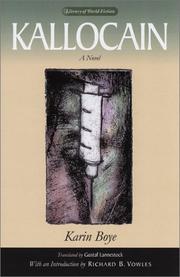
作品年表(1 本)
本站书库里署名卡琳·博耶的书(Open Library 上至少 10 人加过书架的才收),按首版年份排(有本站书页的用 Wikidata 记的首版年,其余用 Open Library 的);年份偶尔记成后来的版本或译本,以原书为准。全部作品见 Open Library。
- 1940卡拉凯思Kallocain书架 12