 书单
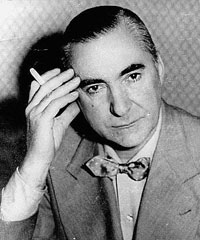
马拉帕尔泰
- 生卒
- 1898 – 1957
- 国籍
- 意大利、意大利王国
- 外文名
- Curzio Malaparte
照片:作者不详,公有领域,来自维基共享资源「Curzio Malaparte.jpg」(经缩小)。
生平与创作
库尔齐奥·马拉帕尔泰(意大利语:Curzio Malaparte,(1898年6月9日—1957年7月19日)),意大利政治记者、小说家和剧作家。原名库尔齐奥·苏克特,马拉帕尔泰为笔名。1919年担任凡尔赛和会的媒体协调人。其最著名的小说是《毁灭》(1944)和《皮肤》(1949),作品以他在第二次世界大战期间在苏联前线做战地记者以及在那不勒斯做盟军联络官的经历为素材。
他生于普拉托。第一次世界大战中从事新闻报导。战后在外交界任职,曾参加法西斯党,并在他创办的文学杂志上为法西斯辩护。后转而抨击法西斯主义。1931年写了欧洲第一本反法西斯的书《肆无忌惮》,被墨索里尼开除出党,放逐五年。第二次世界大战期间任盟军记者,并任那不勒斯联络军官,曾赴苏联采访。1944—1945年因发表两部描写战争恐怖与苦难的小说《毁灭》和《皮肤》而驰名。同时为《时代》周刊和意共周刊《新生活》写稿。1950年代曾访问中国。后在罗马逝世。遗嘱规定将加布里岛的别墅作为中国艺术家活动中心。被世界和平理事会列为1958年纪念的世界文化名人之一。主要著作还有《列宁传》《坏了》《托司康尼人咒骂》、剧本《资本论》等。逝世后出版全集。
《皮肤》发行后被罗马教廷列入禁书名单。
以上文字摘自维基百科「库尔齐奥·马拉帕尔泰」(去掉了参考文献等尾部小节),按 CC BY-SA 4.0 使用,作者为维基百科的各位编者。
中文维基百科的条目比较短,下面附上英文维基百科的内容(英文原文):
Curzio Malaparte (Italian: [ˈkurtsjo malaˈparte]; born Kurt Erich Suckert; 9 June 1898 – 19 July 1957) was an Italian writer, filmmaker, war correspondent and diplomat. Malaparte is best known outside Italy for his works Kaputt (1944) and The Skin (1949). The former is a semi-fictionalised account of the Eastern Front during the Second World War and the latter is an account focusing on morality in the immediate post-war period of Naples (it was placed on the Index Librorum Prohibitorum).
During the 1920s, Malaparte was one of the intellectuals who supported the rise of Italian fascism and Benito Mussolini, through the magazine 900. Despite this, Malaparte had a complex relationship with the National Fascist Party and was stripped of membership in 1933 for his independent streak. Arrested numerous times, he had Casa Malaparte created in Capri where he lived under house arrest. After the Second World War, he became a filmmaker and moved closer to both Togliatti's Italian Communist Party and the Catholic Church (though once a staunch atheist), reputedly becoming a member of both before his death.
Biography
Background
Born Kurt Erich Suckert in Prato, Tuscany, Malaparte was a son of a German father, Erwin Suckert, a textile-manufacturing executive, and his Lombard wife, Evelina (née Perelli). He was educated at Collegio Cicognini in Prato and at La Sapienza University of Rome. In 1918 he started his career as a journalist. Malaparte fought in the First World War, earning a captaincy in the Fifth Alpine Regiment and several decorations for valor.
His chosen surname Malaparte, which he used from 1925 onward, means "evil/wrong side" and is a play on Napoleon's family name "Bonaparte" which means, in Italian, "good side".
National Fascist Party
Malaparte joined the National Fascist Party of Benito Mussolini in September 1922. Contrary to claims he made later, he did not take part in the March on Rome that brought the Fascists to power. In 1924, he founded the Roman periodical La Conquista dello Stato ("The Conquest of the State", a title that would inspire Ramiro Ledesma Ramos' La Conquista del Estado). As a member of the Partito Nazionale Fascista, he founded several periodicals and contributed essays and articles to others, as well as writing numerous books, starting from the early 1920s, and directing two metropolitan newspapers.
In 1926, he founded with Massimo Bontempelli the literary quarterly "900". He later became a co-editor of Fiera Letteraria (1928–31), and an editor of La Stampa in Turin. His polemical war novel-essay, Viva Caporetto! (1921), criticized corrupt Rome and the Italian upper classes as the real enemy (the book was forbidden because it offended the Royal Italian Army).
Coup d'État: The Technique of Revolution
In Coup d'État: The Technique of Revolution, first published in French in 1931 as Technique du coup d`Etat, Malaparte set out a study of the tactics of coup d'état, particularly focusing on the Bolshevik Revolution and that of Italian fascism. Here he stated that "the problem of the conquest and defense of the State is not a political one ... it is a technical problem", a way of knowing when and how to occupy the vital state resources: the telephone exchanges, the water reserves and the electricity generators, etc. He taught a hard lesson that a revolution can wear itself out in strategy. He emphasizes Leon Trotsky's role in organising the October Revolution technically, while Lenin was more interested in strategy. The book emphasizes that Joseph Stalin thoroughly comprehended the technical aspects employed by Trotsky and so was able to avert Left Opposition coup attempts better than Kerensky.
以上文字摘自英文维基百科「Curzio Malaparte」(有删节,去掉了参考文献等尾部小节),按 CC BY-SA 4.0 使用,作者为维基百科的各位编者。
资料卡
- 母语名
- Curzio Malaparte
- 本名
- Kurt Erich Suckert
- 笔名
- Curzio Malaparte、Candido、for Kurt Erich Suckert
- 出生
- 1898 年 6 月 9 日
- 出生地
- 普拉托
- 逝世
- 1957 年 7 月 19 日
- 逝世地
- 罗马
- 职业
- 电影导演、编剧、新闻工作者、外交官、作家、战地记者、小说家、散文家 等 10 项
- 使用语言
- 意大利语
- 写作语言
- 意大利语
- 就读学校
- 罗马大学、Convitto Nazionale Cicognini
- 领域
- 新闻学、舆论新闻业
- 获奖
- 战争英勇十字勋章
资料卡来自 Wikidata Q312637(CC0),众包数据,个别字段可能不全。
本站收录的作品(1)
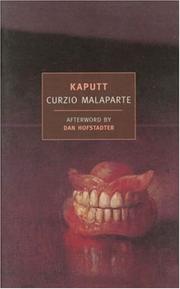
作品年表(1 本)
本站书库里署名马拉帕尔泰的书(Open Library 上至少 10 人加过书架的才收),按首版年份排(有本站书页的用 Wikidata 记的首版年,其余用 Open Library 的);年份偶尔记成后来的版本或译本,以原书为准。全部作品见 Open Library。
- 1944Kaputt书架 38