 书单
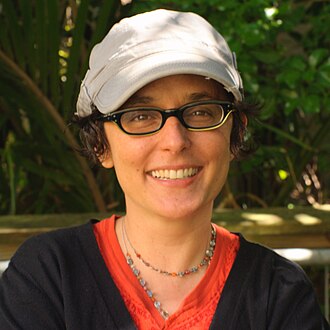
加布里埃拉·科尔曼
- 生卒
- 1973 –
- 国籍
- 美国
- 外文名
- Gabriella Coleman
照片:Karora,公有领域,来自维基共享资源「Gabriella Coleman, Feb 2012.jpg」(经缩小)。
生平与创作
这个词条暂时没有中文维基百科条目,下面是英文维基百科的内容(英文原文):
Enid Gabriella Coleman (usually known as Gabriella Coleman or Biella; born 1973) is an anthropologist, academic and author whose work focuses on politics, cultures of hacking and online activism, and has covered distinct hacker communities, such as hackers of free and open-source software, Anonymous and security hackers. She holds the rank of full professor at Harvard University's Department of Anthropology.
Education
After completing her high school education at St. John's School in San Juan, Puerto Rico, Coleman graduated with a Bachelor of Arts in religious studies from Columbia University in May 1996. She moved to the University of Chicago where she completed a Master of Arts in socio-cultural anthropology in August 1999. She was awarded her PhD in socio-cultural anthropology for her dissertation The Social Construction of Freedom in Free and Open Source Software: Hackers, Ethics, and the Liberal Tradition in 2005.
Academic career
Coleman held positions including a postdoctoral fellowship at the Center for Cultural Analysis, Rutgers University and the Izaak Walton Killam Memorial Postdoctoral Fellowship, Program in Science, Technology & Society, University of Alberta before being appointed assistant professor of media, culture and communication at New York University in September 2007.
During 2010–2011, Coleman spent some time working at the Institute for Advanced Study in Princeton as the recipient of the "2010–11 Ginny and Robert Loughlin Founders' Circle Member in the School of Social Science".
In January 2012, she moved to Montreal, Quebec, Canada to take up the Wolfe Chair in Scientific & Technological Literacy at McGill University. The same year, she also spoke at Webstock 2012 in Wellington, New Zealand.
Study of hackers and hacking
While Coleman is best known for her popular ethnography on the hacktivist collective Anonymous, she has published widely on the ethics and politics of computer hacking. Contesting the idea that hackers have a singular ethic, her publications theorize hacker diversity, through the concept of hacker genres, which refers to the multiple historical genealogies from which hackers hail today, as well as the distinct ethical lessons that emerge from these lineages. Along with emphasizing differences among hackers, her work considers the elements that also bind hackers of distinct traditions together, especially through a commitment to what she calls the craft and craftiness of hacking. While hackers, she argues, cultivate the social conditions to produce high quality work (the craft ethic), they also embrace a crafty sensibility, which she characterizes as follows:What is unique to hackers is how an outward display of craftiness has surpassed mere instrumentality to take on its own, robust life; craftiness and its associated attributes, such as wit and guile, are revered as much for their form as for their function.Coleman is committed to making her scholarship more widely accessible through various experimental and traditional avenues. In 2019, she launched Hack_Curio—Decoding the Cultures of Hacking, an online museum featuring short video clips on computer hacking, each accompanied by expert-written expository pieces. The goal of the site is to challenge hacker stereotypes and highlight hacking's significance in global culture and politics. She has also appeared in many documentaries on hacker-related topics, and, in 2021, she co-produced and hosted a 10-part series podcast on hackers for BBC Radio 4, entitled The Hackers.
Her inaugural book Coding Freedom: The Ethics and Aesthetics of Hacking, released with a creative commons license, interrogates the principles and paradoxes at the heart of contemporary liberalism from the vantage point of a community dedicated to creating free and open-source software. The book explores how hackers champion what Coleman defines as “productive freedom” in the face of Neo-liberal transformations in intellectual property legislation. This concept encompasses the engineering traditions, licensing mechanisms, and ethical guidelines that hackers have devised to ensure their autonomy. The book also examines what Coleman calls “codes of values” and includes an in-depth examination of the poetics of hacker humor, along with the complex forms of political governance created by hackers that help enable the virtual development of software.
Study of Anonymous
Coleman's work on Anonymous has led to her becoming a regular media commentator in addition to her academic publications. In July 2010, Coleman made reference to the Anonymous "project" or "operation" Chanology against the Church of Scientology and uses what would become a central motif in her descriptions of the group, the "trickster archetype", which she argues is "often not being a very clean and savory character, but perhaps vital for social renewal". Coleman states that she had "been thinking about the linkages between the trickster and hackers" for "a few years" before a stay in hospital led her to read Trickster Makes This World: Mischief, Myth, and Art by Lewis Hyde:
Within the first few pages, it was undeniable: there are many links to be made between the trickster and hacking. Many of these figures, push boundaries of all sorts: they upset ideas of propriety and property; they use their sharpened wits sometimes for play, sometimes for political ends; they get trapped by their cunning (which happens ALL the time with tricksters! That is how they learn); and they remake the world, technically, socially, and legally and includes software, licensing and even forms of literature.
以上文字摘自英文维基百科「Gabriella Coleman」(有删节,去掉了参考文献等尾部小节),按 CC BY-SA 4.0 使用,作者为维基百科的各位编者。
资料卡
- 出生
- 1973 年 9 月 17 日
- 出生地
- 圣胡安
- 职业
- 作者、人类学家
- 就读学校
- 芝加哥大学、哥伦比亚大学、麦吉尔大学、罗格斯大学
资料卡来自 Wikidata Q5516035(CC0),众包数据,个别字段可能不全。
本站收录的作品(1)
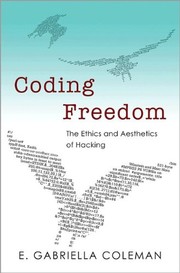
同时代的美国作家
Open Library 上的全部作品
正在读取…