 书单
韩邦庆
- 生卒
- 1856 – 1894
- 国籍
- 清朝
- 外文名
- Han Bangqing
生平与创作
韩邦庆 (1856年—1894年)曾用名寄,字子云,别署太仙、大一山人、花也怜侬、三庆,江苏娄县(今上海市松江区)人。幼随父居于北京,后多次科举落第,遂于上海为《申报》撰写文稿。1892年,他开办了中国第一份小说期刊《海上奇书》,并在此书上连载了他的小说《海上花列传》。而他在《海上花列传》成书出版后不久便病逝,年仅三十八岁。
跟韩认识的同业中人孙家振日后在其《退醒庐笔记》里曾为文提到韩的《海上花列传》。
以上文字摘自维基百科「韩邦庆」(去掉了参考文献等尾部小节),按 CC BY-SA 4.0 使用,作者为维基百科的各位编者。
中文维基百科的条目比较短,下面附上英文维基百科的内容(英文原文):
Han Bangqing (Chinese: 韓邦慶; pinyin: Hán Bāngqìng; Wade–Giles: Han Pang-ch'ing; 1856–1894), also known by the given name Ji (寄), courtesy name Ziyun (子雲), and pseudonyms Taixian (太仙), Dayi Shanren (大一山人), Hua Ye Lian Nong (花也憐儂), and Sanqing (三慶), was a late-Qing dynasty Chinese writer from Lou County, Songjiang Prefecture, Jiangsu (now a district of Shanghai).
Biography
As a child he went with his father to live in Beijing. He failed at the imperial examinations many times, even though he had a reputation as a prodigy in his childhood, and eventually wrote for the newspaper Shen Bao in Shanghai.
In 1892, he started what can be considered China's first for-profit literary magazine, the Wonderbook of Shanghai (海上奇書; Haishang qishu), which lasted eight months, and in which he published his novel Shanghai Hua in instalments. The novel has been widely acclaimed as a classic (particularly by Lu Xun, Hu Shih, and Eileen Chang) but is little read today, likely due to its being written entirely in Wu Chinese, unintelligible to Mandarin speakers.
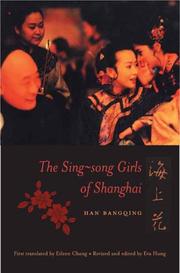
It was translated into Mandarin and English by Eileen Chang. After Chang's death in 1995, the translation was discovered among her papers and published in English as The Sing-song Girls of Shanghai in 2005 after revision by Eva Hung.
Not long after publication of the novel, in 1894, Han Bangqing died, age 38.
以上文字摘自英文维基百科「Han Bangqing」(去掉了参考文献等尾部小节),按 CC BY-SA 4.0 使用,作者为维基百科的各位编者。
资料卡
- 出生
- 1856 年
- 出生地
- 上海市
- 逝世
- 1894 年
- 逝世地
- 上海市
- 职业
- 作家
资料卡来自 Wikidata Q5787518(CC0),众包数据,个别字段可能不全。
本站收录的作品(1)
同时代的清朝作家
Open Library 上的全部作品
正在读取…