 书单
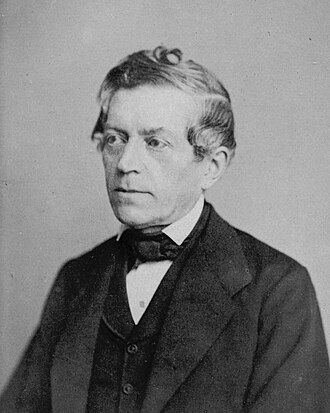
大卫·弗里德里希·施特劳斯
- 生卒
- 1808 – 1874
- 国籍
- 符腾堡王国、瑞士
- 外文名
- David Strauss
照片:Hermann Günther,公有领域,来自维基共享资源「David Friedrich Strauss BW.jpg」(经缩小)。
生平与创作
大卫·弗里德里希·施特劳斯(德语:David Friedrich Strauß;1808年1月27日—1874年2月8日),德国自由新教神学家、作家。他对“历史中的耶稣”的描写,对其神性的否认,对当时普遍信奉基督教的欧洲产生影响。他与蒂宾根学派有关联,该学派对《新约》、早期基督教和古代宗教的研究产生革命性影响。他是对历史中耶稣的探索的先驱。
以上文字摘自维基百科「大卫·施特劳斯」(去掉了参考文献等尾部小节),按 CC BY-SA 4.0 使用,作者为维基百科的各位编者。
中文维基百科的条目比较短,下面附上英文维基百科的内容(英文原文):
David Friedrich Strauss (German: Strauß; 27 January 1808 – 8 February 1874) was a German liberal Protestant theologian and writer who influenced Christian Europe with his portrayal of the "historical Jesus", whose divine nature he explored via myth.
Strauss argued that many Gospel narratives are myths, where "myth" means not mere falsity but the imaginative expression of religious truth; however, he rejected orthodox supernatural claims about Jesus and did not simply affirm Jesus' divine nature in the traditional doctrinal sense.
His work was connected to the Tübingen School, which revolutionized study of the New Testament, early Christianity, and ancient religions. Strauss was a pioneer in the historical investigation of Jesus.
Early life
He was born in Ludwigsburg, near Stuttgart. At age 12 he was sent to the evangelical seminary at Blaubeuren, near Ulm, to be prepared for the study of theology. Two of the principal masters in the school were Friedrich Heinrich Kern and Ferdinand Christian Baur, who instilled in their pupils a deep appreciation for the ancient classics and the principles of textual criticism, which could be applied to texts in the sacred tradition as well as to classical ones.
In 1825, Strauss entered the Tübinger Stift. The professors of philosophy there failed to interest him, but the theories of Friedrich Wilhelm Joseph Schelling, Jakob Böhme, Friedrich Schleiermacher and Georg Wilhelm Friedrich Hegel successively claimed his allegiance. In 1830, he became an assistant to a country clergyman, and nine months later, he accepted the post of professor in the Evangelical Seminaries of Maulbronn and Blaubeuren, where he would teach Latin, history and Hebrew.
In October 1831, Strauss resigned his office to study under Schleiermacher and Hegel in Berlin. Hegel died just as he arrived, and though Strauss regularly attended Schleiermacher's lectures, it was only those on the life of Jesus that interested him. Strauss tried to find kindred spirits among the followers of Hegel but was not successful. While under the influence of Hegel's distinction between Vorstellung and Begriff, Strauss had already conceived the ideas found in his two principal theological works: Das Leben Jesu (Life of Jesus) and Christliche Glaubenslehre (Christian Dogma). Hegelians generally would not accept his conclusions. In 1832, Strauss returned to Tübingen, lecturing on logic, Plato, the history of philosophy and ethics with great success. However, in the fall of 1833, he resigned, to devote all his time to the completion of his Das Leben Jesu, published when he was 27 years old. The full original title of this work is Das Leben Jesu kritisch bearbeitet (Tübingen: 1835–1836), and it was translated from the fourth German edition into English by George Eliot (Marian Evans) (1819–1880) and published under the title The Life of Jesus, Critically Examined (3 vols., London, 1846).
Since the Hegelians in general rejected his Life of Jesus, Strauss defended his work in a booklet, Streitschriften zur Verteidigung meiner Schrift über das Leben Jesu und zur Charakteristik der gegenwärtigen Theologie (Tübingen: E. F. Osiander, 1837), which was finally translated into English by Marilyn Chapin Massey and published under the title In Defense of My 'Life of Jesus' Against the Hegelians (Hamden, CT: Archon Books, 1983). The famous scholar Bruno Bauer led the attack of the Hegelians on Strauss, and Bauer continued to attack Strauss in academic journals for years. When young Friedrich Wilhelm Nietzsche began criticizing Strauss, Bauer gave Nietzsche every support that he could afford. In the third edition (1839) of Das Leben Jesu, and in Zwei friedliche Blätter (Two Peaceful Letters), Strauss made important concessions to his critics, some of which he withdrew, however, in the fourth edition (1840) of Das Leben Jesu.
以上文字摘自英文维基百科「David Strauss」(有删节,去掉了参考文献等尾部小节),按 CC BY-SA 4.0 使用,作者为维基百科的各位编者。
资料卡
- 母语名
- David Friedrich Strauß
- 出生
- 1808 年 1 月 27 日
- 出生地
- 路德维希堡
- 逝世
- 1874 年 2 月 8 日
- 逝世地
- 路德维希堡
- 职业
- 哲学家、传记作家、作家
- 使用语言
- 德语
- 写作语言
- 德语
- 就读学校
- 蒂宾根大学、图宾根神学院
- 配偶
- Agnese Schebest(1842)
- 代表作
- The Life of Jesus Critically Examined
资料卡来自 Wikidata Q57219(CC0),众包数据,个别字段可能不全。
本站收录的作品(1)
Open Library 上的全部作品
正在读取…