 书单
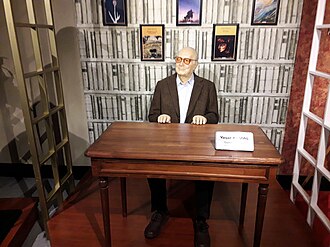
亚沙尔·凯末尔
- 生卒
- 1923 – 2015
- 国籍
- 土耳其
- 外文名
- Yaşar Kemal
照片:Nedim Ardoğa,CC BY-SA 4.0,来自维基共享资源「Yılmaz Büyükerşen wax Museum (Yaşar Kemal).jpg」(经缩小)。
生平与创作
亚沙尔·凯末尔(Yaşar Kemal,1923年106日—2015年2月28日),原名凯末尔·萨迪克·戈克切利(Kemal Sadık Gökçeli),土耳其20世纪代表作家,有库尔德族血统。
亚沙尔·凯末尔其代表作为《İnce Memed》,并曾入围诺贝尔奖。由于亚沙尔·凯末尔在敏感问题上直言不讳,曾以鼓吹分裂的罪名判刑20个月。
以上文字摘自维基百科「亚沙尔·凯末尔」(去掉了参考文献等尾部小节),按 CC BY-SA 4.0 使用,作者为维基百科的各位编者。
中文维基百科的条目比较短,下面附上英文维基百科的内容(英文原文):
Yaşar Kemal (Turkish pronunciation: [ˈjaʃaɾ ceˈmal]; born Kemal Sadık Gökçeli; 6 October 1923 – 28 February 2015) was a leading Turkish writer of Kurdish descent and a human rights activist. He received 38 awards during his lifetime and had been a candidate for the Nobel Prize in Literature on the strength of his 1955 novel Memed, My Hawk.
An outspoken intellectual, he often did not hesitate to speak about sensitive issues, especially those concerning the oppression of the Kurdish people. He was tried in 1995 under anti-terror laws for an article he wrote for Der Spiegel highlighting the Turkish Army's destruction of Kurdish villages during the Turkish–Kurdish conflict. He was released but later received a suspended 20-month jail sentence for another article he wrote criticising racism in Turkey, especially against the Kurds.
Early life and education
Yaşar Kemal was born Kemal Sadık Gökçeli to Sadık and Nigâr on 6 October 1923 in Hemite (now Gökçedam), a Turkmen hamlet in the province of Osmaniye in southern Turkey. He was born into the only Kurdish family in the village but didn't face discrimination despite his ethnic difference. Kemal had a difficult childhood, and his family had to flee from Van province to Diyarbakır province. From there, they were deported to Adana province. He lost his right eye in a knife accident while his father was slaughtering a sheep for Eid al-Adha. When he was five years old he witnessed his father being stabbed to death by his adoptive son Yusuf while praying in a mosque. These traumatic experiences left Kemal with a speech impediment, which lasted until he was twelve years old. At nine, Kemal began school in a neighbouring village; he continued his formal education in Kadirli in Osmaniye province.
Kemal was a locally noted bard even before he began school but was unappreciated by his widowed mother until he composed an elegy on the death of one of her eight brothers, all of whom were bandits. He became interested in writing as a means to record his work after talking to an itinerant peddler, who was doing his accounts. His village paid his way to university in Istanbul.
He worked for a while for rich farmers as a labourer in the Çukurova cotton fields, ostensibly guarding river water against poor farmers' unauthorised use for irrigation. However, he actually taught the poor farmers how to steal the water undetected, by taking it at night. Later he worked as a letter-writer, then as a journalist, and finally as a novelist. The Turkish police confiscated his first two novels. In 1950, Kemal was imprisoned for alleged communist activities. He visited Akdamar Island in 1951, where he saw the beginning of the planned demolition of the island's Holy Cross Church. Using his contacts, he helped stop the demolition (the church was restored by the Turkish government in 2005).
Professional and political career
He then moved to Istanbul to work for the Cumhuriyet newspaper, where he adopted his pen name.
In 1962, Kemal joined the Workers Party of Turkey (TİP) and "served as one of its leaders until quitting after the Soviet invasion of Czechoslovakia in 1968". In 1967, Kemal established the Marxist magazine Ant together with Dogan Özgüden and Fethi Naci. The magazine published articles about Engels, Marx, Ho Chi Minh and Che Guevara. In the aftermath of the military coup in 1971, the magazine was closed during the crackdown on left-wing politicians. Because of the spate of political assassinations during the 1976–1980 political violence in Turkey, Kemal moved to Sweden for a time. He was often arrested for his political activities. In 1995, he was prosecuted for making separatist propaganda after writing an article for Index on Censorship, because of his support for Kurdish dissidents. He was sentenced to 20 months and received a suspended sentence in March 1996. In December 2000, he was involved in negotiations over the hunger strikes against the F-Type prisons.
以上文字摘自英文维基百科「Yaşar Kemal」(有删节,去掉了参考文献等尾部小节),按 CC BY-SA 4.0 使用,作者为维基百科的各位编者。
资料卡
- 母语名
- Yaşar Kemal
- 本名
- Kemal Sadık
- 出生
- 1923 年 10 月 6 日
- 出生地
- Gökçedam
- 逝世
- 2015 年 2 月 28 日
- 逝世地
- 伊斯坦布尔
- 职业
- 编剧、小说家、新闻工作者、诗人、短篇故事作家、作家、译者
- 使用语言
- 土耳其语
- 写作语言
- 土耳其语
- 配偶
- Tilda Kemal(1952)
- 代表作
- Memed, My Hawk、Teneke、Sarı Sıcak、Ağrıdağı Efsanesi
- 获奖
- 最佳外文书奖——小说或诗歌(1978)、西诺·德尔·杜卡世界奖(1982)、加泰罗尼亚国际奖(1996)、诺尼诺奖(1997)、德国书商和平奖(1997)、荣誉军团大军官勋章、荣誉军团司令;另有 9 项只有外文名
资料卡来自 Wikidata Q327142(CC0),众包数据,个别字段可能不全。
本站收录的作品(1)
作品年表(4 本)
本站书库里署名亚沙尔·凯末尔的书(Open Library 上至少 10 人加过书架的才收),其中 1 本记的年份比作者去世晚 50 年以上或者早于他出生(多半是后世的版本、译本或占位年份),不列年份,按首版年份排(有本站书页的用 Wikidata 记的首版年,其余用 Open Library 的);年份偶尔记成后来的版本或译本,以原书为准。全部作品见 Open Library。
- 1961Ince Memed书架 13
- 1975Ince Memed书架 15
- 2004Ince Memed I.书架 12
- 年份不详İnce Memed书架 22