 书单
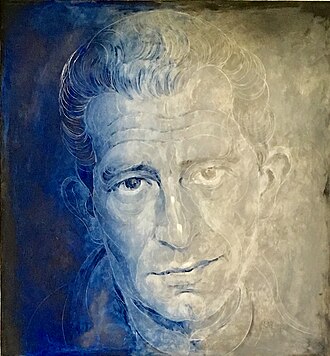
Jean Améry
- 生卒
- 1912 – 1978
- 国籍
- 奥地利、内莱塔尼亚
照片:Peintre Félix De Boeck (1898-1995),CC BY-SA 4.0,来自维基共享资源「Jean Améry par Félix De Boeck 1951.jpg」(经缩小)。
生平与创作
这个词条暂时没有中文维基百科条目,下面是英文维基百科的内容(英文原文):
Jean Améry (31 October 1912 – 17 October 1978), born Hans Chaim Maier, was an Austrian-born essayist who wrote about his experiences surviving the Holocaust. His most celebrated work, At the Mind's Limits: Contemplations by a Survivor on Auschwitz and Its Realities (1966), suggests that torture was "the essence" of the Third Reich. Other notable works included On Aging (1968) and On Suicide: A Discourse on Voluntary Death (1976). He adopted the pseudonym Jean Améry after 1945. Améry died by suicide in 1978.
Formerly a philosophy and literature student in Vienna, Améry's participation in organized resistance against the Nazi occupation of Belgium resulted in his detainment and torture by the German Gestapo at Fort Breendonk, and several years of imprisonment in concentration camps. Améry survived internments in Auschwitz and Buchenwald, and was finally liberated at Bergen-Belsen in 1945. After the war he settled in Belgium.
Early life
Jean Améry was born as Hans Chaim Maier in Vienna, Austria, in 1912, to a Jewish father and a Catholic mother. Améry himself typically gave his birth name as Hans Mayer; some sources from his early childhood give the name Johann Mayer or Hanns Mayer. His father was killed in action in World War I in 1916. Améry was raised as a Catholic by his mother.
After his father’s death, his mother became the central figure in his upbringing. He attended school first in Vienna, then grew up for a time in Bad Ischl in the Salzkammergut in a predominantly Catholic milieu. In the 1923–24 school year he was admitted as a private student to the gymnasium in Gmunden, which he left in January 1925. In 1926 he and his mother returned to Vienna.
Eventually, Améry and his mother returned to Vienna, where he enrolled in university to study literature and philosophy, but economic necessity kept him from regular pursuit of studies there. He trained as a bookseller and from 1930 to 1938 worked in the bookshop of the Volkshochschule Leopoldstadt. Although largely an autodidact, he also attended lectures at the University of Vienna as an auditor and came into contact with writers including Hermann Broch, Robert Musil, and Elias Canetti. The thought of the Vienna Circle also left a lasting mark on his intellectual development.
Religion
While Améry's family was "estranged from its Jewish origins, assimilated and intermarried", this alienation itself, in the context of Nazi occupation, informed much of his thought: "I wanted by all means to be an anti-Nazi, that most certainly, but of my own accord."
His ambivalent relation to Judaism also had an institutional dimension: he left the Jewish community in 1933 and re-entered it in 1937, apparently in connection with his impending marriage. This tension between assimilation, distance, and inescapable imposed Jewishness would later become central to his reflections on identity.
In 1934 he co-edited the literary journal Die Brücke with Ernst Theodor Mayer. The German article also notes that he was probably involved as a courier of weapons during the failed uprising of the Republikanischer Schutzbund in February 1934.
The Nuremberg Laws of 1935, the text of which he soon came to know by heart, convinced Améry that Germany had essentially passed a sentence of death on all Jews, and that included himself. His The Necessity and Impossibility of Being a Jew speaks to this inner conflict as to his identity. He suggests that while his personal identity, the identity of his own childhood past, is distinctly Christian, he feels himself nonetheless a Jew in another sense, the sense of a Jewishness "without God, without history, without messianic-national hope".
[F]or me, being a Jew means feeling the tragedy of yesterday as an inner oppression. On my left forearm I bear the Auschwitz number; it reads more briefly than the Pentateuch or the Talmud and yet provides more thorough information. It is also more binding than basic formulas of Jewish existence. If to myself and the world, including the religious and nationally minded Jews, who do not regard me as one of their own, I say: I am a Jew, then I mean by that those realities and possibilities that are summed up in the Auschwitz number.
During Nazi rule
In 1938, when the Nazis were welcomed into Austria and the country joined with Germany into a "Greater Reich", Améry fled to France, and then to Belgium with his Jewish wife, Regina, whom he had chosen in opposition to his mother's wishes.
According to the German article, he left Vienna with Regina on 31 December 1938, travelled via Cologne and Kalterherberg, and reached Belgium with the help of a smuggler. Arriving almost penniless, he received support from a Jewish relief committee in Antwerp. To survive in exile, he worked occasionally as a furniture mover and as a teacher at the École Moyenne Juive de Bruxelles.
His wife later died of heart disease while hiding in Brussels.
Améry was initially deported by the Belgian authorities to France as a German national and interned in the south of the country.
After escaping from the camp at Gurs, he returned to Belgium where he joined the Resistance movement.
After his arrest in 1943, he was first imprisoned at Saint-Gilles before being transferred to Fort Breendonk, where he was tortured. The German article specifies that this torture included whipping and suspension by the arms, which dislocated his shoulders.
Involved in the distribution of anti-military propaganda to the German occupying forces, Améry was captured by the Nazis in July 1943 and routinely tortured at the Belgian Gestapo center at Fort Breendonk. When it was established that there was no information to be extracted from him, he was "demoted" from political prisoner to Jew, and shipped to Auschwitz.
以上文字摘自英文维基百科「Jean Améry」(有删节,去掉了参考文献等尾部小节),按 CC BY-SA 4.0 使用,作者为维基百科的各位编者。
资料卡
- 本名
- Hans Maier
- 出生
- 1912 年 10 月 31 日
- 出生地
- 维也纳
- 逝世
- 1978 年 10 月 17 日
- 逝世地
- 萨尔茨堡
- 职业
- 作家、哲学家、抵抗运动成员、舆论记者
- 使用语言
- 德语、法语
- 写作语言
- 德语
- 领域
- 文学、哲学
- 所属团体
- 德国语言文学科学院
资料卡来自 Wikidata Q15969(CC0),众包数据,个别字段可能不全。
本站收录的作品(1)
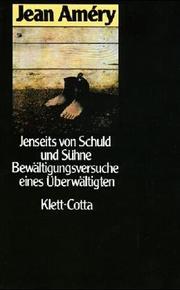
作品年表(1 本)
本站书库里署名Jean Améry的书(Open Library 上至少 10 人加过书架的才收),按首版年份排(有本站书页的用 Wikidata 记的首版年,其余用 Open Library 的);年份偶尔记成后来的版本或译本,以原书为准。全部作品见 Open Library。
- 1966Jenseits von Schuld und Sühne书架 16