 书单
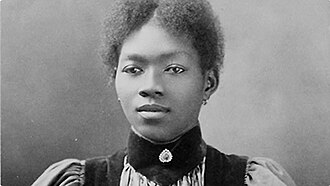
Harriet E. Wilson
- 生卒
- 1825 – 1900
- 国籍
- 美国
照片:作者不详,公有领域,来自维基共享资源「Portrait of Harriet E. WIlson.jpg」(经缩小)。
生平与创作
这个词条暂时没有中文维基百科条目,下面是英文维基百科的内容(英文原文):
Harriet E. Wilson (March 15, 1825 – June 28, 1900) was an African-American novelist. She was the first African American to publish a novel in North America.
Her novel Our Nig, or Sketches from the Life of a Free Black was published anonymously in 1859 in Boston, Massachusetts, and was not widely known. The novel was discovered in 1982 by the scholar Henry Louis Gates Jr., who documented it as the first African-American novel published in the United States.
Born a free person of color (free Negro) in New Hampshire, Wilson was orphaned when young and bound until the age of 18 as an indentured servant. She struggled to make a living after that, marrying twice. Her only son George died at the age of seven in the poor house, where she had placed him while trying to survive as a widow. She wrote one novel. Wilson later was associated with the Spiritualist church, was paid on the public lecture circuit for her lectures about her life, and worked as a housekeeper in a boarding house.
Biography
Born Harriet E. "Hattie" Adams in Milford, New Hampshire, she was the mixed-race daughter of Margaret Ann (or Adams) Smith, a washerwoman of Irish ancestry, and Joshua Green, an African-American "hooper of barrels" of mixed African and Indian ancestry. After her father died when Hattie was young, her mother abandoned Hattie at the farm of Nehemiah Hayward Jr., a wealthy Milford farmer "connected to the Hutchinson Family Singers". As an orphan, Adams was bound by the courts as an indentured servant to the Hayward family, a customary way for society at the time to arrange support and education for orphans. The intention was that, in exchange for labor, the orphan child would be given room, board and training in life skills, so that she could later make her way in society.
From their documentary research, the scholars P. Gabrielle Foreman and Reginald H. Pitts believe that the Hayward family were the inspiration for the "Bellmont" family depicted in Our Nig. (This was the family who held the young "Frado" in indentured servitude, abusing her physically and mentally from the age of six to 18. Foreman and Pitts' research material was incorporated in supporting sections of the 2004 edition of Our Nig.)
After the end of her indentured servitude at the age of 18, Hattie Adams (as she was then known) worked as a house servant and a seamstress in households in southern New Hampshire.
Marriage and family
Adams married Thomas Wilson in Milford on October 6, 1851. An escaped slave, Wilson had been traveling around New England giving lectures based on his life. Although he continued to lecture periodically in churches and town squares, he told Hattie that he had never been a slave and that he had created the story to gain support from abolitionists.
Wilson abandoned Harriet soon after they married. Pregnant and ill, Harriet Wilson was sent to the Hillsborough County, New Hampshire Poor Farm in Goffstown, where her only son, George Mason Wilson, was born. His probable birth date was June 15, 1852. Soon after George's birth, Wilson reappeared and took the two away from the Poor Farm. He returned to sea, where he served as a sailor, and died soon after.
As a widow, Harriet Wilson returned her son George to the care of the Poor Farm, as she could not make enough money to support them both and provide for his care while she worked. However, George died at the age of seven on February 16, 1860, of bilious fever.
After that, Wilson moved to Boston, hoping for more work opportunities. On September 29, 1870, Wilson married again, to John Gallatin Robinson in Boston. An apothecary, he was either a native of Sherbrooke, Quebec or of Woodbury, Connecticut. Robinson was of English and German ancestry; he was nearly 18 years younger than Wilson. From 1870 to 1877, they resided at 46 Carver Street, after which they appear to have separated. After that date, city directories list Wilson and Robinson in separate lodgings in Boston's South End. No record has been found of a divorce, but divorces were infrequent at the time.
Writing a novel
While living in Boston, Wilson wrote Our Nig. On August 14, 1859, she copyrighted it, and deposited a copy of the novel in the Office of the Clerk of the U.S. District Court of Massachusetts. On September 5, 1859, the novel was published anonymously by George C. Rand and Avery, a publishing firm in Boston. Wilson writes in the book's preface that she wrote the novel to raise money to help care for her sick child, George.
In 1863, Harriet Wilson appeared on the "Report of the Overseers of the Poor" for the town of Milford, New Hampshire. After 1863, she disappeared from records until 1867, when she was listed in the Boston Spiritualist newspaper, Banner of Light, as living in East Cambridge, Massachusetts. She subsequently moved across the Charles River to the city of Boston, where she became known in Spiritualist circles as "the colored medium." From 1867 to 1897, "Mrs. Hattie E. Wilson" was listed in the Banner of Light as a trance reader and lecturer. She was active in the local Spiritualist community, and she would give "lectures," either while entranced, or speaking normally, wherever she was wanted. She spoke at camp meetings, in theaters and meeting houses and in private homes throughout New England; she shared the podium with speakers such as Victoria Woodhull, Cora L. V. Scott and Andrew Jackson Davis. In 1870, Wilson traveled as far as Chicago, Illinois as a delegate to the American Association of Spiritualists convention. Wilson delivered lectures on labor reform and children's education. Although the texts of her talks have not survived, newspaper reports imply that she often spoke about her life experiences, providing sometimes trenchant and often humorous commentary.
以上文字摘自英文维基百科「Harriet E. Wilson」(有删节,去掉了参考文献等尾部小节),按 CC BY-SA 4.0 使用,作者为维基百科的各位编者。
资料卡
- 本名
- Harriet Adams
- 出生
- 1825 年 3 月 15 日
- 出生地
- 米尔福德
- 逝世
- 1900 年 6 月 28 日
- 逝世地
- 昆西
- 职业
- 小说家、作家、诗人
- 使用语言
- 英语
- 写作语言
- 英语
- 代表作
- Our Nig
资料卡来自 Wikidata Q3376165(CC0),众包数据,个别字段可能不全。
本站收录的作品(1)
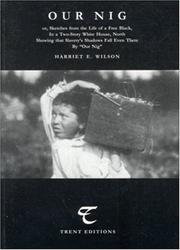
作品年表(1 本)
本站书库里署名Harriet E. Wilson的书(Open Library 上至少 10 人加过书架的才收),按首版年份排(有本站书页的用 Wikidata 记的首版年,其余用 Open Library 的);年份偶尔记成后来的版本或译本,以原书为准。全部作品见 Open Library。