 书单
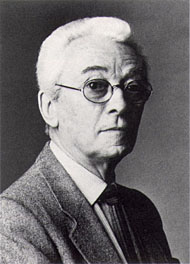
Bruno Munari
- 生卒
- 1907 – 1998
- 国籍
- 意大利、意大利王国
照片:作者不详,CC BY-SA 2.5,来自维基共享资源「Bruno Munari 1.jpg」(经缩小)。
生平与创作
这个词条暂时没有中文维基百科条目,下面是英文维基百科的内容(英文原文):
Bruno Munari (24 October 1907 – 29 September 1998) was "one of the greatest actors of 20th-century art, design and graphics". He was an Italian artist, designer, and inventor who contributed fundamentals to many fields of visual arts (painting, sculpture, film, industrial design, graphic design) in modernism, futurism, and concrete art, and in non-visual arts (literature, poetry) with his research on games, didactic method, movement, tactile learning, kinesthetic learning, and creativity. On the utility of art, Munari once said, "Art shall not be separated from life: things that are good to look at, and bad to be used, should not exist".
Early life
Bruno Munari was born in Milan but spent his childhood and teenage years in Badia Polesine, where his family had relocated to run a hotel. In 1926, he returned to Milan, where he started to work with his uncle, who was an engineer. In 1927, he started to follow Marinetti and the Futurist movement, displaying his work in many exhibitions. Three years later, he associated with Riccardo Castagnedi (Ricas), with whom he worked as a graphic designer until 1938. During a trip to Paris, in 1933, he met Louis Aragon and André Breton. From 1938 to September 1943, he worked as a press graphic designer for Mondadori, and as art director of Tempo Magazine and Grazia, two magazines owned by Mondadori. At the same time, he began designing books for children, originally created for his son Alberto.
Futurism
Bruno Munari joined the 'Second' Italian Futurist movement in Italy led by Filippo Tommaso Marinetti in the late 1920s. During this period, Munari contributed collages to Italian magazines, some of them highly propagandist, and created sculptural works which would unfold in the coming decades, including his useless machines, and his abstract-geometrical works. After World War II Munari disassociated himself with Italian Futurism because of its proto-Fascist connotations.
Later life
In 1948, Munari, Gillo Dorfles, Gianni Monnet and Atanasio Soldati founded Movimento Arte Concreta (MAC), the Italian movement for concrete art. During the 1940s and 1950s, Munari produced many objects for the Italian design industry, including light fixtures, ashtrays, televisions, espresso machines, and toys, among other objects.
In his later life, Munari, worried by the incorrect perception of his artistic work, which is still confused with the other genres of his activity (didactics, design, graphics), selected art historian Miroslava Hajek as curator of a selection of his most important works in 1969. This collection, structured chronologically, shows his continuous creativity, thematic coherence and the evolution of his aesthetic philosophy throughout his artistic life.
Munari was also a significant contributor in the field of children's books and toys, later in his life, though he had been producing books for children since the 1930s. He used textured, tactile surfaces and cut-outs to create books that teach about touch, movement, and colour through kinesthetic learning.
Munari died in Milan on 29 September 1998.
Bruno Munari's estate is represented by Andrew Kreps Gallery, New York.
Design and visual communication works
Munari, Bruno; Scheiwiller, Giovanni (1963). Good design. Milan: All'insegna del pesce d'oro (later Scheiwiller Editore)
Munari, Bruno (1966). Arte come mestiere [Design as Art (literally: Art as Craft]. ISBN 978-0-14-103581-9.
Munari, Bruno (1968). Design e comunicazione visiva. Contributo a una metodologia didattica (Design and Visual Communication. Contributions to a Teaching Method). Roma-Bari: Laterza
Munari, Bruno (1971). Artista e designer [Artist and Designer]. Roma-Bari: Laterza
Munari, Bruno (1971). Codice ovvio [Obvious Code]. Turin: Einaudi
Supplemento al Dizionario Italiano. Mantova, Italy: Corraini. 2014
The following are included in Design as Art. They have also been published individually:
The Triangle. Mantova, Italy: Corraini. 2007.
The Discovery of the Circle. New York: G. Wittenborn. (English translation by Marcello and Edna Maestro.) 1965.
Discovery of the Square. New York: George Wittenborn. (English translation by Desmond O'Grady.) 1965.
Educational games and workshops
From 1988 to 1992, Munari collaborated personally in the educational workshops of the Luigi Pecci Centre for Contemporary Art in Prato, training the internal staff, namely Barbara Conti and Riccardo Farinelli, who will continue and coordinate the museum workshops on an ongoing basis until 2014.
Le costruzioni in legno "Scatola di architettura" for Castelletti (1945)
I giocattoli Gatto Meo (1949) and Scimmietta Zizì (1953) for Pirelli
From 1959 to 1976, various games for Danese (Proiezioni dirette, ABC, Labirinto, Più e meno, Metti le foglie, Strutture, Trasformazioni, Dillo coi segni, Immagini della realtà)
Le mani guardano (1979), Milano
Primo laboratorio per bambini at Accademia di Belle Arti di Brera in Milano (1977)
Laboratorio "Giocare con l'arte" at Museo internazionale delle ceramiche in Faenza (1981) in collaboration with Gian Carlo Bojani.
I laboratori per bambini del Kodomo no shiro (Castello dei bambini) in Tokyo (1985)
Giocare con l'arte (1987) Palazzo Reale, Milano
Giocare con la natura (1988) Museo civico di storia naturale, Milano
Giocare con l'arte (1988) Centro per l'arte contemporanea Luigi Pecci, Prato, laboratori permanenti
Ritrovare l'infanzia (1989) Fiera Milano, Workshops dedicated to the elderly, Milano
Un fiore con amore (1991) Giocare con Munari at Workshop of Beba Restelli
Giocare con la fotocopiatrice (1991) Giocare con Munari at Workshop of Beba Restelli
Il "Libro letto", trapunta scritta che è sia libro che letto (1993) for Interflex
Lab-Lib (1992) Giocare con Munari at Workshop of Beba Restelli
Giocare con la puntatrice (1994) Giocare con Munari at Workshop of Beba Restelli
Tavole Tattili (1995) Giocare con Munari at Workshop of Beba Restelli
Munari's books for children
The Elephant's Wish. The World Publishing Company. 1945.
Bruno Munari's Zoo. Cleveland: World Pub. Co. 1963.
In the dark of the night. (Nella notte buia) New York: G. Wittenborn. 1961.
以上文字摘自英文维基百科「Bruno Munari」(有删节,去掉了参考文献等尾部小节),按 CC BY-SA 4.0 使用,作者为维基百科的各位编者。
资料卡
- 出生
- 1907 年 10 月 24 日
- 出生地
- 米兰
- 逝世
- 1998 年 9 月 29 日
- 逝世地
- 米兰
- 职业
- 设计师、雕塑家、摄影师、画家、平面设计师、插画家、工业设计师、装置艺术家
- 使用语言
- 意大利语
- 写作语言
- 意大利语
- 文学运动 / 流派
- 未来主义、具体艺术
资料卡来自 Wikidata Q708028(CC0),众包数据,个别字段可能不全。
本站收录的作品(1)
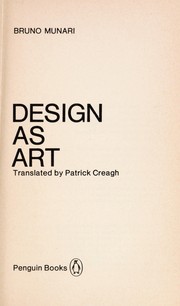
作品年表(5 本)
本站书库里署名Bruno Munari的书(Open Library 上至少 10 人加过书架的才收),按首版年份排(有本站书页的用 Wikidata 记的首版年,其余用 Open Library 的);年份偶尔记成后来的版本或译本,以原书为准。全部作品见 Open Library。
- 1960ABC书架 14
- 1971Design as art书架 80
- 1972From afar it is an island书架 11
- 1981Da cosa nasce cosa书架 16
- 2010Da cosa nasce cosa. Appunti per una metodologia progettuale书架 13