 书单
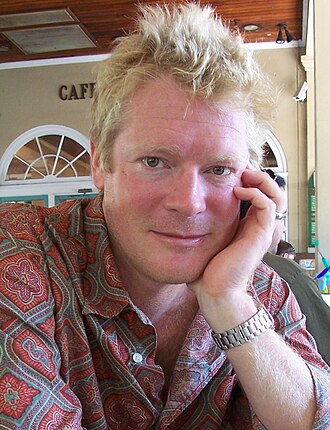
斯宾塞·韦尔斯
- 生卒
- 1969 –
- 国籍
- 美国
- 外文名
- Spencer Wells
照片:Jane Gitschier,CC BY 2.5,来自维基共享资源「Spencer Wells.jpg」(经缩小)。
生平与创作
斯宾塞·韦尔斯(英语:Rush Spencer Wells IV,1969年4月6日—)是一位美国遗传学家和科普作家,主要科普作品有《人类的旅程:基因的奥德赛之旅》(The Journey of Man: A Genetic Odyssey)等。
以上文字摘自维基百科「斯宾塞·韦尔斯」(去掉了参考文献等尾部小节),按 CC BY-SA 4.0 使用,作者为维基百科的各位编者。
中文维基百科的条目比较短,下面附上英文维基百科的内容(英文原文):
Rush Spencer Wells (born April 6, 1969) is an American geneticist, anthropologist, author and entrepreneur. He co-hosts The Insight podcast with Razib Khan. Wells led The Genographic Project from 2005 to 2015, as an Explorer-in-Residence at the National Geographic Society.
Biography
Youth and education
Wells was born in Marietta, Georgia and grew up in Lubbock, Texas. He attended both All Saints School and Lubbock High School, and received a National Merit Scholarship. He obtained a Bachelor of Science in biology from the University of Texas at Austin in 1988 and a Ph.D. in biology from Harvard University in 1994. He was a postdoctoral fellow at Stanford University between 1994 and 1998, and a research fellow at the University of Oxford from 1999 to 2000.
Career
Wells did his Ph.D. work under Richard Lewontin, and later did postdoctoral research with Luigi Luca Cavalli-Sforza and Sir Walter Bodmer. His work, which has helped to establish the critical role played by Central Asia in the peopling of the world, has been published in journals such as Science, American Journal of Human Genetics, and the Proceedings of the National Academy of Sciences.
Wells is renowned for his logistically complex sample-collecting expeditions in remote parts of the world. EurAsia98, which in 1998 took him and his team from London to the Altai Mountains on the Mongolian border, via an overland route through the Caucasus, Iran and the -stans of Central Asia, was sponsored by Land Rover. In 2005 he led a team of Genographic scientists on the first modern expedition to the Tibesti Mountains in northern Chad, and in 2006 he led a team to the Wakhan Corridor on the Tajik-Afghan border. His work has taken him to more than 100 countries.
He wrote the book The Journey of Man: A Genetic Odyssey (2002), which explains how genetic data has been used to trace human migrations over the past 50,000 years, when modern humans first migrated outside of Africa. According to Wells, one group took a southern route and populated southern India and southeast Asia, then Australia. The other group, accounting for 90% of the world's non-African population (some 5.4 billion people as of 2014), took a northern route, eventually peopling most of Eurasia (largely displacing the aboriginals in southern India, Sri Lanka and Southeast Asia in the process), North Africa and the Americas. Wells also wrote and presented the 2003 PBS/National Geographic documentary of the same name. Wells has contributed to efforts to determine the date of Y-chromosomal Adam.
From 2005-2015, Wells led the Genographic Project, undertaken by the National Geographic Society, IBM, and the Waitt Foundation, which aimed to create a picture of how our ancestors populated the planet by analyzing DNA samples from around the world. The project is credited with creating the personal genomics industry.
He has presented the results of his work around the world, including at the 2007 TED conference, where he spoke specifically about human diversity. Wells was a keynote speaker at the Science & Technology Summit in The Hague on November 18, 2010. He also gave the keynote address at the University of Texas College of Natural Sciences commencement exercises on May 21, 2011.
Wells was one of the keynote speakers at the Southern California Genealogical Society Jamboree that was co-sponsored by the International Society of Genetic Genealogy on June 3, 2013. The focus was on Family History and DNA: Genetic Genealogy in 2013, where he was quoted as saying: Since 2005, the Genographic Project has used the latest genetic technology to expand our knowledge of the human story, and its pioneering use of DNA testing to engage and involve the public in the research effort has helped to create a new breed of "citizen scientist." Geno 2.0 expands the scope for citizen science, harnessing the power of the crowd to discover new details of human population history.
以上文字摘自英文维基百科「Spencer Wells」(有删节,去掉了参考文献等尾部小节),按 CC BY-SA 4.0 使用,作者为维基百科的各位编者。
资料卡
- 出生
- 1969 年 4 月 6 日
- 出生地
- 玛丽埃塔
- 职业
- 遗传学家、研究者
- 使用语言
- 英语
- 就读学校
- 哈佛大学、得克萨斯大学奥斯汀分校、All Saints Episcopal School of Lubbock、Lubbock High School
- 领域
- 遗传学
资料卡来自 Wikidata Q3595861(CC0),众包数据,个别字段可能不全。
本站收录的作品(1)
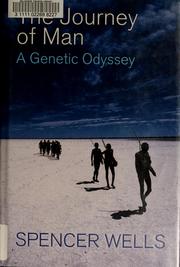
作品年表(1 本)
本站书库里署名斯宾塞·韦尔斯的书(Open Library 上至少 10 人加过书架的才收),按首版年份排(有本站书页的用 Wikidata 记的首版年,其余用 Open Library 的);年份偶尔记成后来的版本或译本,以原书为准。全部作品见 Open Library。
- 2002人类的旅程:基因的奥德赛之旅The journey of man书架 16