 书单
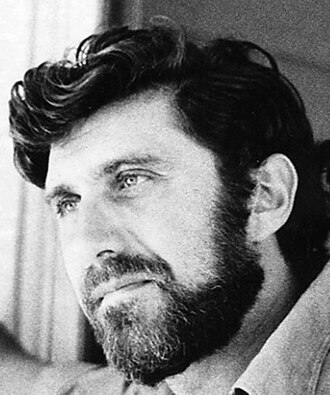
埃利奥特·阿伦森
- 生卒
- 1932 –
- 国籍
- 美国
- 外文名
- Elliot Aronson
照片:Vera Aronson,CC BY-SA 3.0,来自维基共享资源「Elliot Aronson 1972.jpg」(经缩小)。
生平与创作
这个词条暂时没有中文维基百科条目,下面是英文维基百科的内容(英文原文):
Elliot Aronson (born January 9, 1932) is an American psychologist who has carried out experiments on the theory of cognitive dissonance, and invented the Jigsaw Classroom, a cooperative teaching technique that facilitates learning while reducing interethnic hostility and prejudice. In his 1972 social psychology textbook, The Social Animal, he stated Aronson's First Law: "People who do crazy things are not necessarily crazy", thus asserting the importance of situational factors in bizarre behavior.
He is the only person in the 120-year history of the American Psychological Association to have won all three of its major awards: for writing, for teaching, and for research. In 2007, he received the William James Award for Lifetime Achievement from the Association for Psychological Science, in which he was cited as the scientist who "fundamentally changed the way we look at everyday life". A Review of General Psychology survey, published in 2002, ranked Aronson as the 78th most cited psychologist of the 20th century. He officially retired in 1994 but continues to teach and write.
Early life and education
Aronson grew up in extreme poverty in Revere, Massachusetts, during the Great Depression. His was the only Jewish family in the neighborhood, and it was not rare for Aronson to be bullied on the way home from Hebrew school by anti-Semitic gangs. He believes that every life's progress is based on a combination of luck, opportunity, talent, and intuition. Although his high school grades were mediocre, his SAT scores were high enough to earn him a work-study scholarship at Brandeis University.
Influenced by his father, he began his college career majoring in economics. However, he promptly changed his major to psychology after accidentally wandering into an introductory psychology lecture taught by Abraham Maslow. After attending this lecture, he realized that there was an entire science devoted to exploring the kinds of questions that had intrigued him as a child. His undergraduate years at Brandeis brought him closer to a number of respected psychologists, but Maslow was his primary mentor and had the biggest impact on his early academic career.
Aronson earned his bachelor's degree from Brandeis in 1954. He went on to earn a master's degree from Wesleyan University in 1956, where he worked with David McClelland, and a Ph.D. in psychology from Stanford University in 1959, where his doctoral advisor and mentor was the experimental social psychologist Leon Festinger.
Professional history
Aronson has taught at Harvard University, the University of Minnesota, the University of Texas, and the University of California, Santa Cruz. He also served as distinguished visiting professor at Stanford University. He was included in a list of the 100 most influential psychologists of the 20th century published by the Review of General Psychology. He was elected to the American Academy of Arts and Sciences and won the William James Award from the Association for Psychological Science for his lifetime achievements. His honors include distinguished research awards from the American Psychological Association, the American Association for the Advancement of Science and the Society of Experimental Social Psychology. He also won the Gordon Allport Prize for his work on reducing prejudice. In 1981 he was one of five academics awarded "Professor of the Year" by the Council for the Advancement and Support of Education.
Research topics
Cognitive dissonance
Aronson's interests and research have paid particular attention to the theory of cognitive dissonance. Aronson refined the theory, which posits that when attitudes and behaviors are inconsistent (dissonant), psychological discomfort results. This discomfort motivates the person experiencing it to either change the behavior or the attitude so that consonance is restored. In a classic experiment, Aronson demonstrated that people who undergo an embarrassing initiation to gain admission to a group develop more favorable evaluations of the group than people who are admitted after a mild or easy initiation. In Aronson's Theories of Cognitive Consistency (1973), he states: "Dissonance theory does not rest upon the assumption that man is a rational animal; rather, it suggests that man is a rationalizing animal – that he attempts to appear rational, both to others and to himself."
Jigsaw Classroom
Aronson led the development of a classroom technique for defusing inter-group tension and promoting self-esteem. It was discovered that it is rare for classrooms of students to cooperate towards a common goal.
In 1971 the newly desegregated schools of Austin, Texas faced a crisis of violence between ethnic groups.
Aronson, then at the University of Texas, was called in as a consultant by a school administrator who was also a former student.
Aronson noticed that the schools' highly competitive atmosphere was exacerbating the already tense ethnic rivalry.
Together with his graduate students, he developed a model of teaching practice to encourage a culture of shared goals and mutual support.
In the jigsaw classroom approach, pupils are divided into small groups, mixed by race and by ability, to work co-operatively on a task.
The classroom material—for example a biography of a historical figure—is broken into sections, and one member of each group is responsible for reading each section. Members with the same role from each group gather in "expert groups" to discuss their sections. They then return to their own groups and take turns to present what they have learned. They are then assessed individually on all sections of the material. This division of responsibilities means that students are motivated to listen to each other and each of them experiences a role in which they are valuable to others.
Comparisons with traditional classroom environments showed that the jigsaw classroom has positive effects on academic performance, self-esteem and attitudes towards other ethnic groups.
以上文字摘自英文维基百科「Elliot Aronson」(有删节,去掉了参考文献等尾部小节),按 CC BY-SA 4.0 使用,作者为维基百科的各位编者。
资料卡
- 出生
- 1932 年 1 月 9 日
- 出生地
- 切尔西
- 职业
- 心理学家、社会学家、大学教师、作家、心理学教师
- 使用语言
- 英语
- 就读学校
- 维思大学、布兰戴斯大学
- 领域
- 社会心理学
- 所属团体
- 美国文理科学院
- 受谁影响
- 利昂·费斯廷格
- 获奖
- 古根海姆学者奖(1981)、心理学杰出科学贡献奖(1998)、美国文理科学院院士;另有 3 项只有外文名
资料卡来自 Wikidata Q449733(CC0),众包数据,个别字段可能不全。
本站收录的作品(1)
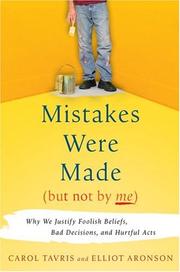
作品年表(8 本)
本站书库里署名埃利奥特·阿伦森的书(Open Library 上至少 10 人加过书架的才收),按首版年份排(有本站书页的用 Wikidata 记的首版年,其余用 Open Library 的);年份偶尔记成后来的版本或译本,以原书为准。全部作品见 Open Library。
- 1972The social animal书架 259
- 1973Social psychology书架 15
- 1991Age of propaganda书架 45
- 2001A társas lény书架 10
- 2001Social psychology书架 10
- 2007Mistakes Were Made (But Not by Me)书架 141
- 2008Mistakes Were Made书架 16
- 2018The Social Animal书架 11