 书单
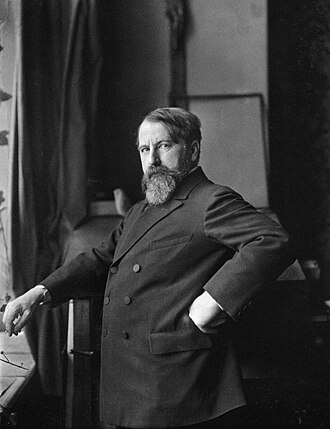
阿图尔·施尼茨勒
- 生卒
- 1862 – 1931
- 国籍
- 奥地利帝国、内莱塔尼亚
- 外文名
- Arthur Schnitzler
照片:Ferdinand Schmutzer,公有领域,来自维基共享资源「Arthur Schnitzler 1912.jpg」(经缩小)。
生平与创作
阿图尔·施尼茨勒(德语:Arthur Schnitzler;1862年5月15日—1931年10月21日)是奥地利犹太裔医师、小说家、剧作家。代表作有《绮梦春色》、《轮舞》与《伊瑟小姐》等。
作品一览
Anatol (戏曲、1893年)
Blumen 花(小说、1894年)
Liebelei 恋爱三昧(戏曲、1896年)
Die Toten schweigen (小说、1897年)
Der grüne Kakadu 绿鹦鹉(戏曲、1899年)
Sterben 死(小说、1895年)
Reigen 轮舞(戏曲、1900年)
Der blinde jeronimo und sein Bruder(小说、1900年)
Leutnant Gustl 辜司特上尉(1900年)
Der Weg ins Freie(小说、1908年)
Frau Berta Garlan
Frau Beate und ihr Sohn(小说、1913年)
Fräulein Else 伊瑟小姐(1924年)
Traumnovelle 绮梦春色(又译:梦小说、1926年)
Therese(小说、1928年)
以上文字摘自维基百科「阿图尔·施尼茨勒」(去掉了参考文献等尾部小节),按 CC BY-SA 4.0 使用,作者为维基百科的各位编者。
中文维基百科的条目比较短,下面附上英文维基百科的内容(英文原文):
Arthur Schnitzler (German: [ˈʃnɪtslɐ]; 15 May 1862 – 21 October 1931) was an Austrian author and dramatist. He is considered one of the most significant representatives of Viennese Modernism. Schnitzler's works, which include psychological dramas and narratives, dissected turn-of-the-century Viennese bourgeois life, making him a sharp and stylistically conscious chronicler of Viennese society around 1900. Schnitzler's Jewish upbringing and the sexual content of his works made them controversial or banned in his time and beyond.
Life
Arthur Schnitzler was born at Praterstrasse 16, Leopoldstadt, Vienna, capital of the Austrian Empire (as of 1867, part of the dual monarchy of Austria-Hungary). He was the son of a prominent Hungarian laryngologist, Johann Schnitzler (1835–1893), and Luise Markbreiter (1838–1911), a daughter of the Viennese doctor Philipp Markbreiter. His parents were from Jewish families. In 1879 Schnitzler began studying medicine at the University of Vienna and in 1885 he received his doctorate of medicine. He began work at Vienna's General Hospital (German: Allgemeines Krankenhaus der Stadt Wien), but ultimately abandoned the practice of medicine in favour of writing.
On 26 August 1903, Schnitzler married Olga Gussmann (1882–1970), a 21-year-old aspiring actress and singer who came from a Jewish middle-class family. They had a son, Heinrich (1902–1982), born on 9 August 1902. In 1909 they had a daughter, Lili, who committed suicide in 1928. The Schnitzlers separated in 1921. Schnitzler died on 21 October 1931 in Vienna of a brain haemorrhage. In 1938, following the Anschluss, his son Heinrich went to the United States and did not return to Austria until 1959; he is the father of the Austrian musician and conservationist Michael Schnitzler, born in 1944 in Berkeley, California, who moved to Vienna with his parents in 1959.
Literary works
Schnitzler's works were often controversial, both for their frank description of sexuality (in a letter to Schnitzler Sigmund Freud confessed "I have gained the impression that you have learned through intuition – although actually as a result of sensitive introspection – everything that I have had to unearth by laborious work on other persons") and for their strong stand against antisemitism, represented by works such as his play Professor Bernhardi and his novel Der Weg ins Freie. However, although Schnitzler was Jewish, Professor Bernhardi and Fräulein Else are among the few clearly identified Jewish protagonists in his work.
Schnitzler was branded as a pornographer after the release of his play Reigen, in which 10 pairs of characters are shown before and after the sexual act, leading and ending with a prostitute. The furor this play aroused was often couched in antisemitic terms. Reigen was made into a French language film in 1950 by the German-born director Max Ophüls as La Ronde. The film achieved considerable success in the English-speaking world, with the result that Schnitzler's play is better known there under its French title. Richard Oswald's film The Merry-Go-Round (1920), Roger Vadim's Circle of Love (1964) and Otto Schenk's Der Reigen (1973) also are based on the play. A more recent adaptation is the Fernando Meirelles' film 360.
In the novella Fräulein Else (1924) Schnitzler may be rebutting a contentious critique of the Jewish character by Otto Weininger (1903) by positioning the sexuality of the young female Jewish protagonist. The story, a first-person stream of consciousness narrative by a young aristocratic woman, reveals a moral dilemma that ends in tragedy.
以上文字摘自英文维基百科「Arthur Schnitzler」(有删节,去掉了参考文献等尾部小节),按 CC BY-SA 4.0 使用,作者为维基百科的各位编者。
资料卡
- 母语名
- Arthur Schnitzler
- 出生
- 1862 年 5 月 15 日
- 出生地
- 维也纳
- 逝世
- 1931 年 10 月 21 日
- 逝世地
- 维也纳
- 职业
- 作家、剧作家、医师作家、编剧、精神科医师、小说家、电视编剧、电影编剧 等 11 项
- 使用语言
- 德语
- 写作语言
- 德语
- 就读学校
- 维也纳大学、Akademisches Gymnasium(1871)
- 领域
- 表演艺术、散文、医学、戏剧
- 配偶
- Olga Schnitzler(1903)
- 代表作
- 绮梦春色、轮舞、Fräulein Else、Lieutenant Gustl、Flirtation
资料卡来自 Wikidata Q44331(CC0),众包数据,个别字段可能不全。
本站收录的作品(1)
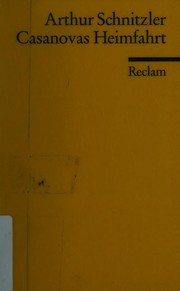
作品年表(4 本)
本站书库里署名阿图尔·施尼茨勒的书(Open Library 上至少 10 人加过书架的才收),其中 1 本记的年份比作者去世晚 50 年以上或者早于他出生(多半是后世的版本、译本或占位年份),不列年份,按首版年份排(有本站书页的用 Wikidata 记的首版年,其余用 Open Library 的);年份偶尔记成后来的版本或译本,以原书为准。全部作品见 Open Library。
- 1918Casanovas Heimfahrt书架 11
- 1926Traumnovelle书架 16
- 1926None but the brave书架 11
- 年份不详Dream story书架 27