 书单
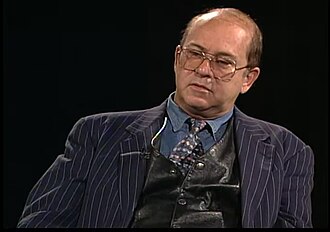
Miguel Barnet
- 生卒
- 1940 –
- 国籍
- 古巴
照片:CUNY TV; Charlando con Cervantes,CC BY-SA 4.0,来自维基共享资源「Miguel Barnet on Charlando con Cervantes (1995).jpg」(经缩小)。
生平与创作
这个词条暂时没有中文维基百科条目,下面是英文维基百科的内容(英文原文):
Miguel Ángel Barnet Lanza (born January 28, 1940) is a Cuban writer, novelist and ethnographer. Known as an expert on Afro-Cuban culture, he studied sociology at the University of Havana, under Fernando Ortiz, the pioneer of Cuban anthropology. Barnet is best known for his Biografia de un cimarrón (1966), the life of Esteban Montejo, a former slave who was 103 when they met. He had escaped and lived as a marron before slavery was abolished in Cuba.
Barnet's style of testimonial in this work became a standard for ethnography in Latin America. One of his later testimonial books, Gallego, was adapted as a 1988 film by the same name.
Early life
Miguel Angel Barnet Lanza was born on January 28, 1940, in Havana, Cuba, to a prominent Cuban family of Catalan descent. Though he had his early education in the United States, when his family lived in Atlanta, Georgia, for a time, Barnet maintained a high degree of interest in and awareness of Cuban culture. In his early years he was a regular contributor of poetry and other writings to such Cuban publications as Lunes de Revolución and Hoy.
This literary background has informed Barnet's approach and works of anthropological writing.
In college, Barnet studied anthropology and sociology at the University of Havana. Against the backdrop of the Cuban Revolution, he developed a strong relationship with Cuban anthropologist Fernando Ortíz. The professor introduced Barnet to an ethnographic model centered on indigenous religion, creole language, and the oral tradition. In rural areas of the island, religious practices influenced by African and Taino traditions, such as santería, were practiced within the syncretic framework of Catholicism. Ortiz’s view of ethnographic research focusing primarily on indigenous culture was influenced by the Cuban communist political ideology of the time, rejecting European modes of learning. It emphasized study of the socially and economically marginalized class.
Later career
Since 1995 Barnet has led the Fernando Ortiz Foundation in Havana, dedicated to the work of his professor and mentor. In 2009 Barnet was re-elected to a UNESCO committee on the study of Afro-Cuban culture. He had been a member of the executive committee of UNESCO for nine years.
Biografía de un cimarrón
In 1963, Barnet was intrigued by two newspaper articles reporting on Cubans who were more than a century old. One article described an ex-slave who was a santeria. The other reported on Esteban Montejo, also a former slave, who was 103 years old. As a young man he had escaped from slavery to live as a maroon in the Las Villas wilderness (el monte). He later served as a soldier in the Cuban War for Independence in 1898.
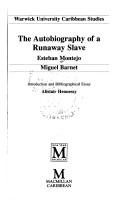
When Barnet met him, Montejo was living at the Veterans’ Home. Barnet conducted numerous interviews with him, following anthropological methods of inquiry and analysis. For example, he used an electronic voice recorder to capture the nuances and tones of Montejo’s talks, so that he could more accurately convey it in writing. In 1966, Barnet published Montejo’s story as Biografía de un cimarrón (Biography of a Maroon). It was also translated into English and published that year in the United Kingdom and Australia as Autobiography of a Runaway Slave. It was later translated and published in the United States in English in 1994 as Biography of a Runaway Slave.
Barnet initiated what is now known as a testimonial narrative tradition with his Biografía de un cimarrón. Both as anthropological study or literature, it draws its authority from the perceived authenticity of the eyewitness account. The protagonist of Barnet’s work, Esteban Montejo, comes to represent not only the collective psychology of Cuba’s former slave class, but also the collective historical conscious of the entire Cuban population. Such authenticity is complicated by the translator's own inherent bias and motives—in this case Barnet—who is from another ethnicity and class. But Barnet was a staunch supporter of the Revolution, and his work satisfies political emphases in its focus on and recognition of the former slave class of Afro-Cubans.
In the prologue to the work, Barnet says that "nuestro trabajo no es histórico. La historia aparece porque es la vida de un hombre que pasa por ella" (our work here is not history. History appears in it because it is the life of a man who passes through history). Also, “sabemos que poner a hablar a un informante es, en cierta medida, hacer literatura. Pero no intentamos creer un documento literario” (we know that referring to testimonial is, to a certain degree, creating literature. But our intentions are not to create a literary account). Barnet’s work is widely considered a synthesis of history and literature, as it is informed by the imaginative approach he demonstrates in his poetry. Some commentators classify his books as novels. He has created a unique representation of Cuban history and culture.
Representation in other media
The composer Hans Werner Henze wrote a piece, El Cimarrón, based on Barnet's book. Henze also set a poem by Barnet, "Patria," for his 1973 song-cycle Voices.
Gallego was adapted as a 1988 Cuban-Spanish film of the same name, with a screenplay by Mario Camus and directed by Manuel Octavio Gómez.
Books
1963, La piedra fina y el pavorreal (“The Gem and the Peacock”)- poetry collection
1964, Isla de güijes (“Island of Sprites”) - poetry collection
1966, Biografia de un cimarrón
1969 Canción de Rachel (Rachel’s Song), also a kind of testimonial, is based on printed sources rather than direct interviews. He created this account as a composite of individuals whom he researched. The subject is an elderly diva from a Havana burlesque show.
1981 Gallego (“Galician”). Barnet again combined elements of the lives of several people to create a first-person portrait of a young male Spanish immigrant from Galicia to Cuba in 1916.
1986, La vida real (“Real Life”). He used this technique again to re-create the lives of Cubans who immigrated to the United States as workers before the 1959 revolution.
以上文字摘自英文维基百科「Miguel Ángel Barnet Lanza」(有删节,去掉了参考文献等尾部小节),按 CC BY-SA 4.0 使用,作者为维基百科的各位编者。
资料卡
- 母语名
- Miguel Ángel Barnet Lanza
- 本名
- Miguel Ángel Barnet Lanza
- 出生
- 1940 年 1 月 28 日
- 出生地
- 哈瓦那
- 职业
- 诗人、作家、政治人物、编剧、民族学家、大学教师、散文家、电影编剧
- 使用语言
- 西班牙语
- 就读学校
- 哈瓦那大学
- 领域
- 民族学、非洲传统宗教、多元文化政策、纯文学、诗歌 等 10 项
- 代表作
- Biografía de un cimarrón
- 获奖
- 古根海姆学者奖;另有 2 项只有外文名
资料卡来自 Wikidata Q573296(CC0),众包数据,个别字段可能不全。
本站收录的作品(1)
作品年表(1 本)
本站书库里署名Miguel Barnet的书(Open Library 上至少 10 人加过书架的才收),按首版年份排(有本站书页的用 Wikidata 记的首版年,其余用 Open Library 的);年份偶尔记成后来的版本或译本,以原书为准。全部作品见 Open Library。
- 1966Biografía de un cimarrón书架 42