 书单
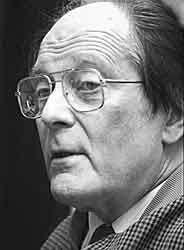
扬·克罗斯
- 生卒
- 1920 – 2007
- 国籍
- 爱沙尼亚、苏联
- 外文名
- Jaan Kross
照片:Günter Prust,CC BY 3.0,来自维基共享资源「Jaan Kross (1987) by Guenter Prust.jpg」(经缩小)。
生平与创作
扬·克罗斯(爱沙尼亚语:Jaan Kross,1920年2月19日—2007年12月27日),爱沙尼亚作家、诗人、散文家、翻译,曾获得1997年的赫尔德奖。
作品
《Kolme katku vahel》(1980年)
《Keisri hull》(1978年)
《Rakvere romaan》(1982年)
《Professor Martensi ärasõit》(1984年)
《Vastutuulelaev》(1987年)
《Wikmani poisid》(1988年)
《Väljakaevamised》(1990年)
《Tabamatus》(1993年)
《Mesmeri ring》(1995年)
《Paigallend》(1998年)
《Tahtamaa》(2001年)
以上文字摘自维基百科「扬·克罗斯」(去掉了参考文献等尾部小节),按 CC BY-SA 4.0 使用,作者为维基百科的各位编者。
中文维基百科的条目比较短,下面附上英文维基百科的内容(英文原文):
Jaan Kross (19 February 1920 – 27 December 2007) was an Estonian writer. He won the 1995 International Nonino Prize in Italy.
Early life
Born in Tallinn, Estonia, son of a skilled metal worker, Jaan Kross studied at Jakob Westholm Gymnasium, and attended the University of Tartu (1938–1945) and graduated from its School of Law. He taught there as a lecturer until 1946, and again as professor of Artes Liberales in 1998.
In 1940, when Kross was 20, the Soviet Union invaded and occupied the three Baltic countries: Estonia, Latvia and Lithuania; imprisoned and executed most of their governments. In 1941, Nazi Germany invaded and took over the country.
Kross was first arrested by the Germans for six months in 1944 during the German occupation of Estonia (1941–1944), suspected of what was termed "nationalism"; that is, promoting Estonian independence. Then, on 5 January 1946, when Estonia had been reconquered by the Soviet Union, he was arrested by the Soviet occupation authorities, who kept him a short while in the cellar of the local NKVD headquarters, then kept him in prison in Tallinn, finally in October 1947, deporting him to a Gulag camp in Vorkuta, Russia. He spent a total of eight years in this part of North Russia, six working in the mines at the Minlag labour camp in Inta, then doing easier jobs, plus two years still living as a deportee, but not in a labour camp. Upon his return to Estonia in 1954 he became a professional writer, not least because his law studies during Estonian independence were now of no value whatsoever, as Soviet law held sway.
At first, Kross wrote poetry, alluding to a number of contemporary phenomena under the guise of writing about historical figures. But he soon moved to writing prose, a genre that was to become his principal one.
Career as a writer
Recognition and translation
Kross was by far the most translated and nationally and internationally best-known Estonian writer. He received the honorary title of People's Writer of the Estonian SSR (1985) and the State Prize of the Estonian SSR (1977). He also held several honorary doctorates and international decorations, including the highest Estonian order and one of the highest German orders. In 1999 he was awarded the Baltic Assembly Prize for Literature.
In 1990 Kross won the Amnesty International Golden Flame Prize. He won the 1995 International Nonino Prize in Italy. He was reportedly nominated several times for the Nobel Prize in Literature during the early 1990s.
Because of Kross' status and visibility as a leading Estonian author, his works have been translated into many languages, but mostly into Finnish, Swedish, Russian, German, and Latvian. This is on account of geographical proximity but also a common history (for example, Estonia was a Swedish colony in the 17th century and German was the language of the upper échelons of Estonian society for hundreds of years). As can be seen from the list below by the year 2015 five books of Kross' works have been published in English translation with publishing houses in the United States and UK. But a number of shorter novels, novellas, and short stories were published during Soviet rule (i.e. 1944–1991) in English translation and published in the Soviet Union.
Translations have mostly been from the Estonian original. Sometimes translations were however done, during Soviet times by first being translated into Russian and then from Russian into English, not infrequently by native speakers of Russian or Estonian. Nowadays, Kross' works are translated into English either directly from the Estonian, or via the Finnish version. A reasonably complete list of translations of works by Jaan Kross into languages other than English can be found on the ELIC website.
以上文字摘自英文维基百科「Jaan Kross」(有删节,去掉了参考文献等尾部小节),按 CC BY-SA 4.0 使用,作者为维基百科的各位编者。
资料卡
- 母语名
- Jaan Kross
- 出生
- 1920 年 2 月 19 日
- 出生地
- 塔林
- 逝世
- 2007 年 12 月 27 日
- 逝世地
- 塔林
- 职业
- 作家、编剧、译者、教育学家、教授、小说家、诗人、政治人物
- 使用语言
- 爱沙尼亚语、德语、俄语、拉丁语 等 5 项
- 写作语言
- 爱沙尼亚语
- 就读学校
- 塔尔图大学
- 配偶
- 艾伦·尼伊特(1958)、Helga Kross(1954)
- 代表作
- Between Three Plagues、Tahtamaa、Treading Air、The Parson of Reigi、Professor Martens' Departure、The Czar's Madman、Rakvere romaan、Wikmani poisid、Cyrano de Bergerac、Sailing Against the Wind
- 获奖
- 赫尔德奖(1997)、诺尼诺奖(1995)、塔林勋章(1998)、荣誉徽章勋章、最佳外文书奖——小说或诗歌(1989)、法国荣誉军团军官勋章;另有 8 项只有外文名
资料卡来自 Wikidata Q161842(CC0),众包数据,个别字段可能不全。
本站收录的作品(1)
Open Library 上的全部作品
正在读取…