 书单
吉姆·汤普森
- 生卒
- 1906 – 1977
- 国籍
- 美国
- 外文名
- Jim Thompson
生平与创作
这个词条暂时没有中文维基百科条目,下面是英文维基百科的内容(英文原文):
James Myers Thompson (September 27, 1906 – April 7, 1977) was an American novelist and screenwriter, known for his hardboiled crime fiction.
Thompson wrote more than 30 novels, the majority of which were original paperback publications, published from the late-1940s through mid-1950s. Despite some positive critical notice—notably by Anthony Boucher in The New York Times—he was little-recognized in his lifetime. Only after death did Thompson's literary stature grow. In the late 1980s, several of his novels were re-published in the Black Lizard series of re-discovered crime fiction.
His best-regarded works include The Killer Inside Me, Savage Night, A Hell of a Woman and Pop. 1280. In these works, Thompson turned the derided crime genre into literature and art, featuring unreliable narrators, odd structure, and the quasi-surrealistic inner narratives of the last thoughts of his dying or dead characters. A number of Thompson's books were adapted as popular films, including The Getaway and The Grifters.
The writer Ronald Verlin Cassill has suggested that of all crime fiction, Thompson's was the rawest and most harrowing; that neither Dashiell Hammett nor Raymond Chandler nor Horace McCoy ever "wrote a book within miles of Thompson". Similarly, in the introduction to Now and on Earth, Stephen King says he most admires Thompson's work because "The guy was over the top. The guy was absolutely over the top. Big Jim didn't know the meaning of the word stop. There are three brave 'lets' inherent in the foregoing: He let himself see everything, he let himself write it down, then he let himself publish it."
Thompson was called a "Dimestore Dostoevsky" by writer Geoffrey O'Brien. Film director Stephen Frears, who directed an adaptation of Thompson's The Grifters in 1990, also identified elements of Greek tragedy in his themes.
Life and career
Thompson's novels were considered semi-autobiographical, or, at least, inspired by his experiences. (The theme of a once-prominent family overtaken by ill-fortune was featured in some of Thompson's works.)
Thompson's father, known as "Big Jim" Thompson, was a teacher for a decade in Burwell, Nebraska, before his son's birth; his wife and Jim's mother, Birdie Myers, was a former student. He moved the family to Anadarko, Oklahoma Territory, and was elected sheriff of Caddo County. He ran for the state legislature in 1906, but was defeated. Jim Thompson was born in 1906 in an apartment over the county jail. In 1907, Big Jim was accused of embezzlement and fled to Mexico on horseback. The rest of the family moved back to Birdie's family farm in Burwell. In 1910, they reunited in Oklahoma City and eventually moved again to Fort Worth, Texas, where Big Jim worked in the oil industry, making and losing a fortune.
Thompson's father would inspire several characters in his later fiction, including Lou Ford of The Killer Inside Me. Thompson's complicated feelings toward his father were expressed in his writing; biographer Robert Polito noted that the books which expressly name and chronicle Thompson's father, Bad Boy and King Blood, were "respectful to the point of idolatry," whereas The Killer Inside Me and Pop. 1280 "roil with Oedipal anger" and ridicule him as a psychopathic killer.
Early work
Thompson began writing early, and he published a few short pieces while still in his mid-teens. He was intelligent and well-read, but had little interest in or inclination towards formal education. For about two years during prohibition in Fort Worth, Texas, Thompson worked long and often wild nights as a bellboy while attending school in the day. He worked at the Hotel Texas. One biographical profile reports that "Thompson quickly adapted to the needs of the hotel's guests, busily catering to tastes ranging from questionable morality to directly and undeniably illegal." Bootleg liquor was ubiquitous, and Thompson's brief trips to procure heroin and marijuana for hotel patrons were not uncommon. He was soon earning up to $300 per week more than his official $15 monthly wage.
He smoked and drank heavily, and at age 19 he suffered a nervous breakdown. In 1926, Thompson began working as an oilfield laborer. In the oil fields, he met Harry McClintock, a musician, as well as a member and organizer for Industrial Workers of the World, who recruited him into the union. With his father, he began an independent oil drilling operation that was ultimately unsuccessful. Thompson returned to Fort Worth, intending to attend school and to write professionally.
Thompson's autobiographical "Oil Field Vignettes" was published in 1929 (published again in First Fiction: An Anthology of the First Published Stories by Famous Writers in 1994, and then discovered in March 2010 by history recovery specialist Lee Roy Chapman who helped bring wider attention to the story). He began attending the University of Nebraska the same year as part of a program for gifted students with "untraditional educational backgrounds". However, by 1931, he dropped out of school.
For several years, Thompson occasionally wrote short stories for various true crime magazines. Generally, he wrote about murder cases about which he had read in newspapers, but using a first person voice. In this era, he wrote other pieces for various newspapers and magazines, usually as a freelancer, but occasionally as a full-time staff writer. His 1936 "Ditch of Doom," published in Master Detective magazine, was selected by the Library of America in the early 21st century for inclusion in its two-century retrospective of American writing for true crime.
In the early 1930s, Thompson worked as the head of the Oklahoma Federal Writers' Project, one of several New Deal programs intended to provide work for Americans during the Great Depression. Louis L'Amour, among others, worked under Thompson's direction in this project. Thompson joined the Communist Party in 1935 but left the group by 1938.
以上文字摘自英文维基百科「Jim Thompson (writer)」(有删节,去掉了参考文献等尾部小节),按 CC BY-SA 4.0 使用,作者为维基百科的各位编者。
资料卡
- 母语名
- Jim Thompson
- 本名
- James Myers Thompson
- 出生
- 1906 年 9 月 27 日
- 出生地
- 阿纳达科
- 逝世
- 1977 年 4 月 7 日
- 逝世地
- 好莱坞
- 职业
- 作家、编剧、小说家、工会会员、电影演员(1975)、电视编剧
- 使用语言
- 英语
- 创作体裁
- 推理作品
- 领域
- 惊悚、推理小说
- 所属团体
- 美国西部编剧工会
- 代表作
- The Grifters、Pop. 1280、The Killer Inside Me、The Getaway、Now and on Earth
资料卡来自 Wikidata Q433800(CC0),众包数据,个别字段可能不全。
本站收录的作品(1)
作品年表(6 本)
本站书库里署名吉姆·汤普森的书(Open Library 上至少 10 人加过书架的才收),按首版年份排(有本站书页的用 Wikidata 记的首版年,其余用 Open Library 的);年份偶尔记成后来的版本或译本,以原书为准。全部作品见 Open Library。
- 1952The Killer Inside Me书架 72
- 1954A Hell of a Woman书架 10
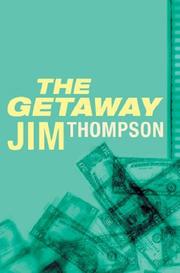
- 1958The Getaway书架 34
- 1963The Grifters书架 26
- 1984Pop. 1280书架 14
- 1997Crime novels书架 10