 书单
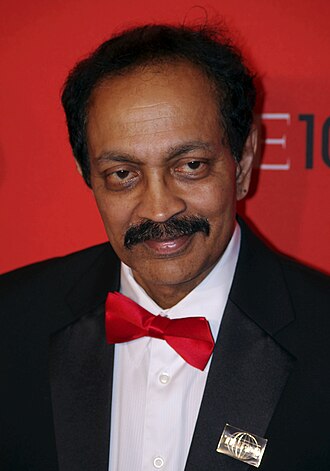
维莱亚努尔·拉马钱德兰
- 生卒
- 1951 –
- 国籍
- 印度
- 外文名
- Vilayanur S. Ramachandran
照片:David Shankbone,CC BY 3.0,来自维基共享资源「Vilayanur S Ramachandran 2011 Shankbone.JPG」(经缩小)。
生平与创作
维莱亚努尔·苏布拉马尼安·拉马钱德兰(英语:Vilayanur Subramanian Ramachandran,1951年8月10日—),美籍印度裔神经科学家,在行为神经学与视觉心理物理学等领域有杰出贡献。他任教于圣地牙哥加利福尼亚大学,是大脑与认知中心(Center for Brain and Cognition)主任。
生平
拉马钱德兰以其不太依赖于神经成像等复杂科技进行实验而知名。他曾说,“(科学中)已失去了太多维多利亚时代的冒险”。尽管拉马钱德兰的研究手段看起来很简单,但他从中得到了关于大脑的许多新成果。他被理查德·道金斯称为“神经科学界的马可·波罗”,埃里克·坎德尔则称他是“现代的保罗·布罗卡”。1997年他入选《新闻周刊》“世纪俱乐部”(The Century Club),成为21世纪“百位最值得期待的杰出人物”之一。2011年他又入选《时代》杂志百大人物。
以上文字摘自维基百科「维莱亚努尔·拉马钱德兰」(去掉了参考文献等尾部小节),按 CC BY-SA 4.0 使用,作者为维基百科的各位编者。
中文维基百科的条目比较短,下面附上英文维基百科的内容(英文原文):
Vilayanur Subramanian Ramachandran (born 10 August 1951) is an Indian-American neuroscientist. He is known for his experiments and theories in behavioral neurology, including the invention of the mirror box. Ramachandran is a distinguished professor in UCSD's Department of Psychology, where he is the director of the Center for Brain and Cognition.
After earning a medical degree in India, Ramachandran studied experimental neuroscience at Cambridge, obtaining his PhD there in 1978. Most of his research has been in the fields of behavioral neurology and visual psychophysics. After early work on human vision, Ramachandran turned to work on wider aspects of neurology including phantom limbs and phantom pain. Ramachandran also performed the world's first "phantom limb amputation" surgeries by inventing the mirror therapy, which is now widely used for reducing phantom pains (with the goal of eliminating phantom sensations altogether in long term), and also for helping to restore motor control in stroke victims with weakened limbs.
Ramachandran's books Phantoms in the Brain (1998), The Tell-Tale Brain (2010), and others describe neurological and clinical studies of people with synesthesia, Capgras syndrome, and a wide range of other unusual conditions. Ramachandran has also described his work in many public lectures, including lectures for the BBC, and two official TED talks.
Biography
Ramachandran was born in 1951 in Tamil Nadu, India. His mother had a degree in mathematics. His grandfather was Alladi Krishnaswamy Iyer, one of the framers of India's constitution.
Ramachandran's father, V. M. Subramanian, was an engineer who worked for the U.N. Industrial Development Organization and served as a diplomat in Bangkok, Thailand. Ramachandran attended schools in Madras, and British schools in Bangkok.
Ramachandran obtained an M.B.B.S. from Stanley Medical College in Chennai, India.
In 1978, Ramachandran obtained a Ph.D. from Trinity College at the University of Cambridge. Later he moved to the US, where he spent two years at Caltech as a research fellow working with Jack Pettigrew before being appointed assistant professor of psychology at the University of California, San Diego in 1983. He became a full professor there in 1988. He currently holds the rank of distinguished professor in the UCSD Psychology Department, and is the director of its Center for Brain and Cognition, where he works with graduate students and researchers from UCSD and elsewhere on emerging theories in neuroscience. As of July 2019, Ramachandran is also a professor in the UCSD Medical School's Neurosciences program. and an adjunct professor at the Salk Institute for Biological Studies.
In 1987, Ramachandran married a fellow scientist who became his frequent co-author as Diane Rogers-Ramachandran. They have two sons, Chandramani and Jaya.
Ramachandran's scientific work can be divided into two phases. From the early 1970s until the late 1980s, Ramachandran's work focused almost exclusively on human visual processing, especially on stereopsis. Ramachandran began publishing research in this area beginning in 1972, with a paper in Nature while still a student at Stanley Medical College.
In 1991, Ramachandran was inspired by Tim Pons's research on cortical plasticity. Pons demonstrated cortical reorganization in monkeys after the amputation of a finger. Ramachandran was one of the first researchers to recognize the potential of neuroimaging technology to demonstrate the plastic changes that take place in the human cortex after amputation. Ramachandran then began research on phantom limbs, but later moved on to study a wider range of neurological mysteries, including body integrity dysphoria and the Capgras delusion.
Ramachandran has encountered skepticism about some of his theories. Ramachandran has responded, "I have—for better or worse—roamed the whole landscape of visual perception, stereopsis, phantom limbs, denial of paralysis, Capgras syndrome, synaesthesia, and many others."
以上文字摘自英文维基百科「V. S. Ramachandran」(有删节,去掉了参考文献等尾部小节),按 CC BY-SA 4.0 使用,作者为维基百科的各位编者。
资料卡
- 母语名
- Vilayanur S. Ramachandran
- 出生
- 1951 年 8 月 10 日
- 出生地
- 金奈
- 职业
- 心理学家、教育学家、神经科医生、学者、作家
- 使用语言
- 英语
- 就读学校
- 马德拉斯大学、剑桥大学三一学院
- 领域
- 心理学、神经学
- 代表作
- The Tell-Tale Brain、大脑的幻象
资料卡来自 Wikidata Q380221(CC0),众包数据,个别字段可能不全。
本站收录的作品(1)
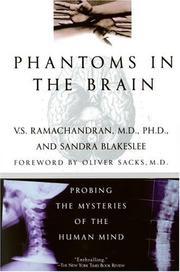
作品年表(4 本)
本站书库里署名维莱亚努尔·拉马钱德兰的书(Open Library 上至少 10 人加过书架的才收),按首版年份排(有本站书页的用 Wikidata 记的首版年,其余用 Open Library 的);年份偶尔记成后来的版本或译本,以原书为准。全部作品见 Open Library。
- 1998大脑的幻象Phantoms in the brain : probing the mysteries of the human mind书架 86
- 1998Phantoms in the brain书架 31
- 2010The Tell-Tale Brain书架 22
- 2011The Tell-Tale Brain书架 18