 书单

纳达涅·勃兰登
- 生卒
- 1930 – 2014
- 国籍
- 美国
- 外文名
- Nathaniel Branden
照片:作者不详,公有领域,来自维基共享资源「Nathaniel Branden c. 1972.jpg」(经缩小)。
生平与创作
这个词条暂时没有中文维基百科条目,下面是英文维基百科的内容(英文原文):
Nathaniel Branden (born Nathan Blumenthal; April 9, 1930 – December 3, 2014) was a Canadian–American psychotherapist and writer known for his work in the psychology of self-esteem. A former associate and romantic partner of Ayn Rand, Branden also played a prominent role in the 1960s in promoting Rand's philosophy, Objectivism. Rand and Branden split acrimoniously in 1968, after which Branden focused on developing his own psychological theories and modes of therapy.
Early life and education
Nathaniel Branden was born Nathan Blumenthal in Brampton, Ontario, to Dinah (née Copp) and Joseph Blumenthal, who were Jewish immigrants from Russia. He grew up alongside three sisters, Florence, Elayne, and Reva. A gifted student, he became impatient with his studies during his first year of high school and skipped school often in favor of the library. After getting failing grades as a result, he convinced his mother to send him to a special accelerated high school for adults, and subsequently did well in that environment.
After graduating from high school, Branden went on to earn his BA in psychology from the University of California Los Angeles, an MA from New York University, and in 1973, a Ph.D. in psychology from the California Graduate Institute (CGI), then an unaccredited, state-approved school whose graduates may be licensed by the state to practice psychology. (Graduates of unaccredited state-approved schools such as CGI are limited to associate membership in the American Psychological Association.)
Objectivist movement
In 1950, after he had read The Fountainhead and exchanged letters and phone calls with Ayn Rand, Branden and his then-girlfriend Barbara Weidman visited Rand and her husband Frank O'Connor at their Los Angeles home. The four became close friends, with Branden and Rand in particular sharing a vivid interest in philosophical exploration and development. After the publication of Rand's novel Atlas Shrugged, Branden sensed an interest on the part of Rand's readers in further philosophic education. In 1958, he created the Nathaniel Branden Lectures, later renamed the Nathaniel Branden Institute (NBI). The organization disseminated Rand's philosophy of Objectivism by offering live and taped lecture courses by a variety of Objectivist intellectuals, including Rand, Branden, and Alan Greenspan, whom Branden had brought into Rand's fold. During this time, Branden also contributed articles to Rand's newsletters on subjects ranging from economics to politics to psychology. Branden's work at NBI included translating the principles expressed by Rand in her fiction and non-fiction writing into a systematized construct that became known as Objectivism.
NBI expanded considerably over the course of its existence, ultimately offering courses in 80 cities and establishing an office in the Empire State Building. In 1968, Rand publicly broke with Branden and published an article denouncing him and accusing him of a variety of offenses, such as philosophic irrationality and unresolved psychological problems. In response, Branden sent out a letter to the NBI mailing list denying Rand's accusations and suggesting that the actual cause of Rand's denunciation of him was his unwillingness to engage in a romantic relationship with her. (Branden later explained in his memoir that he and Rand had in fact been romantically intimate for a period of time in the late 1950s; see personal life.)
After the break, Branden went on to publish The Psychology of Self-Esteem (many chapters of which he had published originally in Rand's newsletter), and then to develop his theory and mode of therapy more independently of Rand's influence. Though he remained supportive of the broad essentials of Rand's philosophy, he eventually offered criticisms of aspects of her work, naming as problems a tendency to encourage emotional repression and moralizing, a failure to understand psychology beyond its cognitive aspects, and a failure to appreciate adequately the importance of kindness in human relationships. He also apologized in an interview to "every student of Objectivism" for "perpetuating the Ayn Rand mystique" and for "contributing to that dreadful atmosphere of intellectual repressiveness that pervades the Objectivist movement."
Psychology of self-esteem
Branden argued that self-esteem is a human psychological need and that to the extent this need remains unmet, pathology (defensiveness, anxiety, depression, difficulty in relationships, etc.) tends to result. He defined self-esteem formally as "the disposition to experience oneself as competent to cope with the basic challenges of life and as worthy of happiness", and proposed that, while others (parents, teachers, friends) can nurture and support self-esteem in an individual, self-esteem also relies upon various internally generated practices. These consisted, in Branden's framework, of six "pillars" of self-esteem:
Living consciously: the practice of being aware of what one is doing while one is doing it, i.e., the practice of mindfulness.
Self-acceptance: the practice of owning truths regarding one's thoughts, emotions, and behaviors; of being kind toward oneself with respect to them; and of being "for" oneself in a basic sense.
Self-responsibility: the practice of owning one's authorship of one's actions and of owning one's capacity to be the cause of the effects one desires.
Self-assertiveness: the practice of treating one's needs and interests with respect and of expressing them in appropriate ways.
Living purposefully: the practice of formulating goals and of formulating and implementing action plans to achieve them.
Personal integrity: the practice of maintaining alignment between one's behaviors and convictions.
In his book Taking Responsibility Branden defended voluntarism as a moral concept and libertarianism as a political one; likewise, individualism and personal autonomy are seen as essential to human freedom.
以上文字摘自英文维基百科「Nathaniel Branden」(有删节,去掉了参考文献等尾部小节),按 CC BY-SA 4.0 使用,作者为维基百科的各位编者。
资料卡
- 本名
- Nathan Blumenthal
- 出生
- 1930 年 4 月 9 日
- 出生地
- 布兰普顿
- 逝世
- 2014 年 12 月 3 日
- 逝世地
- 洛杉矶
- 职业
- 心理学家、心理治疗师、学者、非虚构文学作家
- 使用语言
- 英语
- 就读学校
- 纽约大学、加州大学洛杉矶分校
- 配偶
- Barbara Branden(1953)、Patrecia Scott(1969)
资料卡来自 Wikidata Q741456(CC0),众包数据,个别字段可能不全。
本站收录的作品(2)

作品年表(17 本)
本站书库里署名纳达涅·勃兰登的书(Open Library 上至少 10 人加过书架的才收),按首版年份排(有本站书页的用 Wikidata 记的首版年,其余用 Open Library 的);年份偶尔记成后来的版本或译本,以原书为准。全部作品见 Open Library。
- 1969The psychology of self-esteem书架 142
- 1970Breaking free书架 19
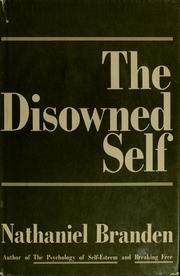
- 1972The disowned self书架 56
- 1980The psychology of romantic love书架 44
- 1983Honoring the self书架 32
- 1983"If you could hear what I cannot say"书架 20
- 1987The power of self-esteem书架 18
- 1987How to Raise Your Self-Esteem书架 17
- 1988How to raise your self-esteem书架 14
- 1994The six pillars of self-esteem书架 570
- 1996Los Seis Pilares de La Autoestima书架 37
- 1996Taking Responsibility书架 21
- 1997The art of living consciously书架 11
- 1998A woman's self-esteem书架 13
- 1998Self-esteem at work书架 11
- 1998Nathaniel Branden's self-esteem every day书架 11
- 2001The power of self-esteem书架 11