 书单
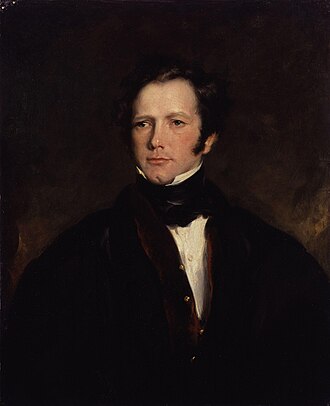
Frederick Marryat
- 生卒
- 1792 – 1848
- 国籍
- 英国、大不列颠王国
照片:John Simpson (1782-1847),公有领域,来自维基共享资源「Frederick Marryat by John Simpson.jpg」(经缩小)。
生平与创作
这个词条暂时没有中文维基百科条目,下面是英文维基百科的内容(英文原文):
Captain Frederick Marryat (10 July 1792 – 9 August 1848) was a Royal Navy officer and novelist. He is noted today as an early pioneer of nautical fiction, particularly for his semi-autobiographical novel Mr Midshipman Easy (1836). He is remembered also for his children's novel The Children of the New Forest (1847). In addition, he developed a widely used system of maritime flag signalling, known as Marryat's Code.
Early life and naval career
Marryat was born at Great George Street in Westminster, London. His father was Joseph Marryat, a "merchant prince" of Huguenot descent and member of Parliament, as well as slave owner and anti-abolitionist, and his American mother was Charlotte, née von Geyer, of Boston. As a youth, Marryat tried to run away to sea several times before he was permitted to enter the Royal Navy in 1806 as a midshipman aboard HMS Imperieuse, a frigate commanded by Lord Cochrane, who later served as inspiration for Marryat and other authors.
Marryat's time aboard the Imperieuse included action off the Gironde, the rescue of a fellow midshipman who had fallen overboard, captures of many ships off the Mediterranean coast of Spain, and capture of the castle of Montgat. The Imperieuse shifted to operations in the Scheldt in 1809, where Marryat contracted malaria; he returned to England on the 74-gun HMS Victorious. After recuperating, he returned to the Mediterranean in the 74-gun HMS Centaur and again saved a shipmate by leaping into the sea after him. He sailed as a passenger to Bermuda in the 64-gun HMS Atlas, and from there to Halifax, Nova Scotia on the schooner HMS Chubb, where he joined the 32-gun frigate HMS Aeolus on 27 April 1811.
A few months later, Marryat earned distinction again by leading the effort to cut away the Aeolus's mainyard to save the ship during a storm. He saved one of the crew from the sea. Shortly after, he moved to the frigate HMS Spartan, participating in the capture of a number of American ships during the War of 1812. On 26 December 1812, he was promoted to lieutenant, and as such served in the sloop HMS Espiegle and in HMS Newcastle. Marryat led four barges from the Newcastle on a raid against Orleans, Massachusetts on 19 December 1814, the last combat in New England during the war. Though initially, Marryat cut out an American schooner and three sloops, he managed to escape with just one sloop. The local militia avoided casualties while killing one Royal marine. Marryat was promoted to commander on 13 June 1815, just as the war ended.
After the war
Marryat turned to scientific studies after the war. He invented a lifeboat, which earned him a gold medal from the Royal Humane Society and the nickname "Lifeboat". He developed a practical, widely used system of maritime flag signalling, known as Marryat's Code, based on his experience in the Napoleonic Wars escorting merchant ships in convoys. He also described a new gastropod genus Cyclostrema with the type species Cyclostrema cancellatum.
In 1820, Marryat commanded the sloop HMS Beaver and temporarily commanded HMS Rosario in order to carry despatches to England announcing the death of Napoleon on Saint Helena. He also took the opportunity to make a sketch of Napoleon's body on his deathbed; this was later published as a lithograph. His artistic skills were modest, but he made numerous sketches of shipboard life above and below deck.
In 1823, Marryat was appointed to HMS Larne and took part in an expedition against Burma in 1824, which resulted in large losses from disease. He was promoted to command the 28-gun HMS Tees, which gave him the rank of post-captain. By 1826 he was back in England and that year donated two Burmese artifacts to the British Museum, in an unsuccessful effort to be selected as a trustee. In 1829, he was commanding the frigate HMS Ariadne on a search for shoals around the Madeira and Canary Islands. This was an uninspiring exercise. As his first novel The Naval Officer had just been published, he decided to resign his commission in November 1830 and take up writing full-time.
Literary career
From 1832 to 1835, Marryat edited The Metropolitan Magazine. Additionally, he kept writing novels; his biggest success came with Mr Midshipman Easy in 1836. He lived in Brussels for a year, travelled in Canada and the United States, and moved to London in 1839, where he was in the literary circle of Charles Dickens and others. He was in North America in 1837 when rebellion broke out in Lower Canada, and served with the expeditionary force sent to suppress it.
Marryat was named a Fellow of the Royal Society in recognition of his lifeboat, signals system and other achievements. In 1843, he moved to a farm at Manor Cottage, Langham in Norfolk. He died there in 1848. His daughter Florence Marryat later became known as a writer and actress. His son Francis Samuel Marryat completed his father's last novel, The Little Savage.
Marryat's novels are typical of their time, with concerns of family connections and social status often overshadowing the naval action. He based much of his fiction on his 25 years' experience at sea. Among those who admired his works were Mark Twain, Joseph Conrad, and Ernest Hemingway. As the first nautical novels, they served as models for 20th century works by C. S. Forester and Patrick O'Brian. These also were set in the time of Nelson and told of young men rising through the ranks due to their successes as naval officers.
Marryat was also known for short writings on nautical subjects. These short stories, plays, pieces of travel journalism, and essays were published in The Metropolitan Magazine, and many were later collected in book form as Olla Podrida.
Marryat's 1839 Gothic novel The Phantom Ship contained "The White Wolf of the Hartz Mountains". This featured the first female werewolf to appear in a short story.
以上文字摘自英文维基百科「Frederick Marryat」(有删节,去掉了参考文献等尾部小节),按 CC BY-SA 4.0 使用,作者为维基百科的各位编者。
资料卡
- 母语名
- Frederick Marryat
- 出生
- 1792 年 7 月 10 日
- 出生地
- 伦敦
- 逝世
- 1848 年 8 月 9 日
- 逝世地
- Langham
- 职业
- 作家、小说家、儿童文学作家、海军军官、海员、军官、船长
- 使用语言
- 英语
- 写作语言
- 英语
- 就读学校
- Great Ealing School
- 领域
- 英语文学、儿童与青年文学、海军
- 所属团体
- 英国皇家学会
- 配偶
- Catherine Shairp(1819)
- 代表作
- Mr Midshipman Easy、The Phantom Ship、The Children of the New Forest
- 获奖
- 英国皇家学会院士;另有 1 项只有外文名
资料卡来自 Wikidata Q467770(CC0),众包数据,个别字段可能不全。
本站收录的作品(1)
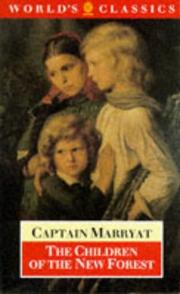
作品年表(2 本)
本站书库里署名Frederick Marryat的书(Open Library 上至少 10 人加过书架的才收),按首版年份排(有本站书页的用 Wikidata 记的首版年,其余用 Open Library 的);年份偶尔记成后来的版本或译本,以原书为准。全部作品见 Open Library。
- 1839A diary in America书架 10
- 1847The Children of the New Forest书架 21