 书单
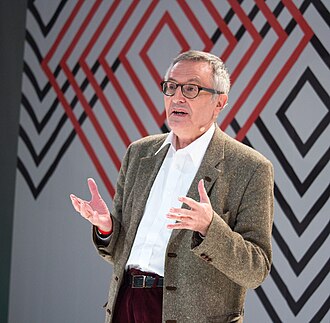
约翰·格雷
- 生卒
- 1948 –
- 国籍
- 英国
- 外文名
- John N. Gray
照片:Vera de Kok,CC BY-SA 4.0,来自维基共享资源「Brainwash Festival 2015 - John Gray (3).jpg」(经缩小)。
生平与创作
约翰·格雷(英语:John Nicholas Gray,1948年4月17日—)英国政治哲学家和作家,研究涉及分析哲学、思想史和哲学悲观主义。曾担任伦敦政治经济学院欧洲思想学院教授,2008年退休。格雷常为《卫报》、《泰晤士文学增刊》和《新政治家》杂志撰稿,他是这些刊物的主要书评人。约翰·格雷是无神论者。
以上文字摘自维基百科「约翰·格雷 (哲学家)」(去掉了参考文献等尾部小节),按 CC BY-SA 4.0 使用,作者为维基百科的各位编者。
中文维基百科的条目比较短,下面附上英文维基百科的内容(英文原文):
John Nicholas Gray (born 17 April 1948) is an English political philosopher and author with interests in analytic philosophy, the history of ideas and philosophical pessimism. He retired in 2008 as School Professor of European Thought at the London School of Economics and Political Science. Gray contributes regularly to The Guardian, UnHerd, The Times Literary Supplement and the New Statesman, where he is the lead book reviewer. He is an atheist.
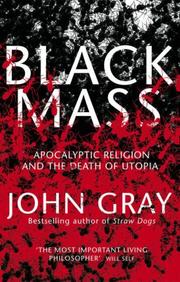
Gray has written several influential books, including False Dawn: The Delusions of Global Capitalism (1998), which argues that free market globalisation is an unstable Enlightenment project currently in the process of disintegration; Straw Dogs: Thoughts on Humans and Other Animals (2002), which attacks philosophical humanism, a worldview which Gray sees as originating in religions; and Black Mass: Apocalyptic Religion and the Death of Utopia (2007), a critique of utopian thinking in the modern world.
Gray sees volition, and hence morality, as an illusion, and portrays humanity as a ravenous species engaged in wiping out other forms of life. Gray has written that "humans ... cannot destroy the Earth, but they can easily wreck the environment that sustains them."
Academic career
Gray was born into a working-class family, with a docker-turned-carpenter father, in South Shields, County Durham. He attended South Shields Grammar-Technical School for Boys from 1959 until 1967, then studied at Exeter College, Oxford, reading philosophy, politics and economics (PPE), completing his B.A., Masters of Philosophy and Doctorate in Philosophy.
He formerly held posts as lecturer in political theory at the University of Essex, fellow and tutor in politics at Jesus College, Oxford, and lecturer and then professor of politics at the University of Oxford. He has served as a visiting professor at Harvard University (1985–86) and Stranahan Fellow at the Social Philosophy and Policy Center, Bowling Green State University (1990–1994), and has also held visiting professorships at Tulane University's Murphy Institute (1991) and Yale University (1994). He was Professor of European Thought at the London School of Economics and Political Science until his retirement from academic life in early 2008.
Political and philosophical thought
Among philosophers, he is known for his exploration of the uneasy relationship between value pluralism and liberalism in the work of Isaiah Berlin.
Gray's political thought is noted for its mobility across the political spectrum over the years. As a student, Gray was on the left and continued to vote Labour into the mid-1970s. By 1976 he had shifted towards a right-liberal New Right position, on the basis that the world was changing irrevocably through technological inventions, realigned financial markets and new economic power blocs and that the left failed to comprehend the magnitude and nature of this change. In the 1990s Gray became an advocate for environmentalism and New Labour. Gray considers the conventional (left-wing/right-wing) political spectrum of conservatism and social democracy as no longer viable.
On liberalism, Gray identified the common strands in liberal thought as being individualist, egalitarian, meliorist, and universalist. The individualist element avers the ethical primacy of the human being against the pressures of social collectivism, the egalitarian element assigns the same moral worth and status to all individuals, the meliorist element asserts that successive generations can improve their sociopolitical arrangements, and the universalist element affirms the moral unity of the human species and marginalises local cultural differences.
More recently, he has criticised neoliberalism, the global free market and some of the central currents in Western thinking, such as humanism, while moving towards aspects of green thought, drawing on the Gaia theory of James Lovelock. It is perhaps for this critique of humanism that Gray is best known.
以上文字摘自英文维基百科「John Gray (philosopher)」(有删节,去掉了参考文献等尾部小节),按 CC BY-SA 4.0 使用,作者为维基百科的各位编者。
资料卡
- 母语名
- John N. Gray
- 出生
- 1948 年 4 月 17 日
- 出生地
- 南希尔德斯
- 职业
- 哲学家、作家、大学教师、政治学家
- 使用语言
- 英语
- 就读学校
- 牛津大学艾克赛特学院
- 领域
- 哲学
- 获奖
- 名誉博士(2006)
资料卡来自 Wikidata Q522440(CC0),众包数据,个别字段可能不全。
本站收录的作品(1)
同时代的英国作家
Open Library 上的全部作品
正在读取…