 书单
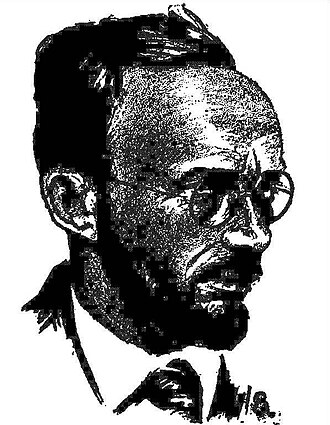
弗莱彻·布拉特
- 生卒
- 1897 – 1956
- 国籍
- 美国
- 外文名
- Fletcher Pratt
照片:uncredited staff artist,公有领域,来自维基共享资源「Fpratt sws.jpg」(经缩小)。
生平与创作
这个词条暂时没有中文维基百科条目,下面是英文维基百科的内容(英文原文):
Murray Fletcher Pratt (25 April 1897 – 10 June 1956) was an American writer of history, science fiction, and fantasy. He is best known for his works on naval history and the American Civil War and for fiction written with L. Sprague de Camp.
Life and work
According to de Camp, Pratt was born near Tonawanda, New York. The son of Robert M. and Alice Horton Pratt, he attended public schools in Buffalo and graduated from high school in 1915 at the Griffith Institute in Springville, New York, where his father operated a trucking delivery service between Springville and Buffalo.
Following high school he attended Hobart College in Geneva, New York, for one year. In February 1916 the Associated Press reported that he had been arrested for burglary in Geneva after a series of midnight cash drawer robberies that allegedly netted him less than $25. He was reported to have told police that his father did not supply him with enough funds to survive at Hobart. On February 23 the Buffalo Enquirer reported: "Pratt's father came on from Springville yesterday and it was practically decided to send the youth to the State Hospital for the Insane at Willard, pending an investigation of his case by the grand jury. It is thought that he may be mentally unsound."
In May 1918 the Washington Star reported that the staff at the camp library at the Army's Camp Meade in Maryland had been strengthened by the addition of "Murray F. Pratt, who recently came here from the Buffalo, N.Y., Public Library".
After a stint at the Buffalo Courier-Express he settled in New York City in 1920 and worked for a Staten Island newspaper before turning to freelance writing in 1923. In 1926, he married Inga Stephens, an artist. According to de Camp she was his second wife. In the late 1920s he began selling stories to pulp magazines, primarily the science fiction magazines published by Hugo Gernsback. Many of these stories were either written with a collaborator or were translations from French and German sources.
When a fire gutted his apartment in the early 1930s, according to de Camp's memoir, he used the insurance money to study at the Sorbonne for a year. After his return from France he was a staff writer for American Detective, a true crime magazine, and began writing histories. His short history of the Civil War, Ordeal by Fire, was published to critical acclaim in 1935 and became a bestseller.
Starting in the summer of 1937 Pratt became a regular at the annual Bread Loaf Writers' Conference in Vermont for the next 18 years, eventually becoming their Dean of Nonfiction.
During World War II Pratt was a military analyst for the New York Post and for Time magazine (whose obituary described him as "bearded, gnome-like" and listed "raising marmosets" among his hobbies), and later was a regular reviewer of historical nonfiction and fantasy and science fiction for the New York Times Book Review.
Following World War II the Pratts came into possession of a rambling 31-room Victorian mansion on a high bluff overlooking the Atlantic Ocean at Atlantic Highlands, New Jersey, purchased by Inga Stephens Pratt's wealthy mother for use as a summer place. Whimsically dubbed The Ipsy-Wipsy Institute, the house became a watering hole for Fletcher's literary friends at an unending succession of marathon weekend house parties. A number of writers moved into the mansion's many bedrooms and spent entire summers there. Frequent guests and residents at Ipsy-Wipsy included William Lindsay Gresham, John Ciardi, William Sloane, Basil Davenport, Lester del Rey, Ted Sturgeon, Esther Carlson, Fred Pohl, John D.
Clark, Willy Ley, Judith Merrill, Eugenie Clark, L. Sprague de Camp, and many others. Laurence Manning, Pratt's old writing partner from the 1930s, purchased part of the property and moved in next door. The Pratts simultaneously maintained a large apartment in Midtown Manhattan near Central Park, where they hosted meetings of the Hydra Club.
Pratt was the inventor of a set of rules for naval wargaming, which he created before the Second World War. This was known as the "Fletcher Pratt Naval War Game" and it involved dozens of tiny wooden ships, built on a scale of one inch to 50 feet. These were spread over the floor of Pratt's apartment and their strengths were calculated via a complex mathematical formula. Noted author and artist Jack Coggins was a frequent participant in Pratt's Navy Game, and de Camp met him through his wargaming group.
Pratt established the literary dining club known as the Trap Door Spiders in 1944. The name is a reference to the reclusive habits of the trapdoor spider, which when it enters its burrow pulls the hatch shut behind it. The club was later fictionalized as the Black Widowers in a series of mystery stories by Isaac Asimov. Pratt himself was fictionalized in one story, "To the Barest", as the Widowers’ founder, Ralph Ottur.
He was also a charter member of The Civil War Round Table of New York, organized in 1951, and served as its president from 1953 to 1954. In 1956, after his death, the Round Table's board of directors established the Fletcher Pratt Award in his honor, which is presented every May to the author or editor of the best non-fiction book on the Civil War published during the preceding calendar year.
Aside from his historical writings, Pratt is best known for his fantasy collaborations with de Camp, the most famous of which is the humorous Harold Shea series, eventually published in full as The Complete Compleat Enchanter (1989, ISBN 0-671-69809-5). His solo fantasy novels The Well of the Unicorn and The Blue Star are also highly regarded. Pratt's story "Dr. Grimshaw's Sanitarium" was adapted for radio drama by George Lefferts, and broadcast twice: first on Dimension X (September 22, 1950) and then on X Minus One (July 14, 1955).
Pratt wrote in a markedly identifiable prose style, reminiscent of the style of Bernard DeVoto. One of his books is dedicated "To Benny DeVoto, who taught me to write."
以上文字摘自英文维基百科「Fletcher Pratt」(有删节,去掉了参考文献等尾部小节),按 CC BY-SA 4.0 使用,作者为维基百科的各位编者。
资料卡
- 母语名
- Murray Fletcher Pratt
- 笔名
- Irvin Lester、George U. Fletcher
- 出生
- 1897 年 4 月 25 日
- 出生地
- 布法罗
- 逝世
- 1956 年 6 月 10 日
- 逝世地
- 朗布兰奇
- 职业
- 译者、小说家、历史学家、科幻作家、作家
- 使用语言
- 英语
- 写作语言
- 英语
- 创作体裁
- 科学幻想
- 配偶
- Inga Stephens Pratt Clark
资料卡来自 Wikidata Q1351464(CC0),众包数据,个别字段可能不全。
本站收录的作品(2)
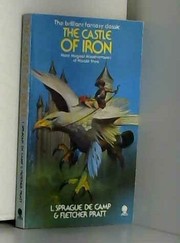
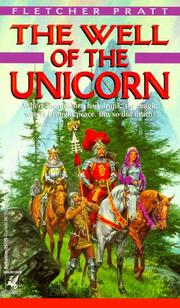
作品年表(2 本)
本站书库里署名弗莱彻·布拉特的书(Open Library 上至少 10 人加过书架的才收),按首版年份排(有本站书页的用 Wikidata 记的首版年,其余用 Open Library 的);年份偶尔记成后来的版本或译本,以原书为准。全部作品见 Open Library。
- 1969The Blue Star书架 34
- 1975The compleat enchanter书架 27