 书单
Toni Cade Bambara
- 生卒
- 1939 – 1995
- 国籍
- 美国
生平与创作
这个词条暂时没有中文维基百科条目,下面是英文维基百科的内容(英文原文):
Toni Cade Bambara, born Miltona Mirkin Cade (March 25, 1939 – December 9, 1995), was an African-American author, documentary film-maker, social activist and college professor.
Early life and education
Miltona Mirkin Cade was born in Harlem, New York, to parents Walter Cade and Helen Brent Henderson Cade. She lived with her mother and brother, Walter, growing up in the New York metropolitan area. They lived in Harlem, Bedford Stuyvesant (Brooklyn), Queens, and Jersey City. At the age of six, she changed her name from Miltona to Toni.
Bambara's mother had lived in Harlem during the Harlem Renaissance, and she encouraged her children to daydream, read, and write. As a child, Bambara spent a lot of time in the New York Public Library, and was inspired by poems from Gwendolyn Brooks and Langston Hughes there. She began writing stories as a child and cited her mother's support of her writing as a large influence on her career.
In 1970, Bambara changed her name to include the name of a West African ethnic group, Bambara, after finding the name written as part of a signature on a sketchbook discovered in a trunk among her great-grandmother's other belongings. She felt her new name represented "the accumulation of experiences", in which she had finally discovered her purpose in the world. In 1970, Bambara had a daughter, Karma Bene Bambara Smith, with her partner Gene Lewis, an actor and a family friend.
Bambara attended Queens College in 1954, where almost the entire undergraduate student population was white. At first, she planned to become a doctor, but her passion for arts directed her to become an English major. As Bambara had a passion for jazz and different forms of art in general, she became a member of the Dance Club of Queens College. She also took part in theater, where she was designated as stage manager and costume designer. Bambara was among those who participated in folk singing when it first emerged in the 1950s, when the songs had a political message inscribed in them. In January 1959, she published her first short story, "Sweet Town", in Vendome. She graduated from Queens College with a B.A. degree in Theater Arts/English Literature in 1959. Upon graduation, the college bestowed her with the John Golden Award for Fiction.
After college, Bambara enrolled in the City College of the City University of New York's graduate program to study modern American fiction. Her second short story, "Mississippi Ham Rider", was published in the summer 1960 issue of The Massachusetts Review. In 1961, she traveled to Europe to study theatrical arts. Bambara first studied Commedia dell'Arte at the University of Florence. She then studied mime at the Ecole de Mime Etienne Decroux in Paris, France. She also became interested in dance before completing her master's degree at City College in 1964.
Academic career
Bambara worked in social services to support herself through graduate school. From 1959 to 1961, she was a social investigator at the Harlem Welfare Center, working for the New York State Department of Welfare. After returning from her European studies, she was a recreation director in the psychiatric ward of Metropolitan Hospital, 1961-1962. From 1962 to 1965, she was program director of Colony House Settlement House in Brooklyn.
From 1965 to 1969, she worked with City College's "Search for Education, Elevation, Knowledge" (SEEK) program and helped with its development. She taught English, published material and directed and advised SEEK's black theatre group, the Theater of the Black Experience. She also served as the faculty advisor for student publications including Obsidian, Onyx, and The Paper.
Bambara became an English instructor for the New Careers Program of Newark, New Jersey, in 1969. She was made assistant professor of English at Rutgers University's new Livingston College that same year. She co-advised the Harambee Dancers, the Malcolm Players, and the Sisters in Consciousness. She became an associate professor at Livingston and left the school in 1974.
She was visiting professor in Afro-American Studies at Emory University and at Atlanta University (1977), where she also taught at the School of Social Work (until 1979). Bambara was production-artist-in-residence at Neighborhood Arts Center (1975–79), at Stephens College in Columbia, Missouri (1976), and at Atlanta's Spelman College (1978–79). From 1986, she taught film-script writing at Louis Massiah's Scribe Video Center in Philadelphia. Bambara also held lectures at the Library of Congress and the Smithsonian Institution, where she conducted literary readings.
Activism
Bambara worked within black communities to create consciousness around ideas such as feminism and black awareness. As Bambara had become part of the faculty of City College, she strived to make it more inclusive. To do this, she wanted to add more classes, such as a nutrition course, to teach students more about their culture. Bambara also wanted to see a creation of an academy that generated an environment in which students could become more involved in learning more about political and social problems in the community as well as their culture.
Bambara participated in several community and activist organizations, and her work was influenced by the Civil Rights and Black Nationalist movements of the 1960s. In the early to mid-1970s, she traveled to Cuba along with Robert Cole, Hattie Gossett, Barbara Webb, and Suzanne Ross to study how women's political organizations operated there. She put these experiences into practice in the late 1970s after moving with her daughter Karma Bene to Atlanta, Georgia, where Bambara co-founded the Southern Collective of African American Writers.
以上文字摘自英文维基百科「Toni Cade Bambara」(有删节,去掉了参考文献等尾部小节),按 CC BY-SA 4.0 使用,作者为维基百科的各位编者。
资料卡
- 母语名
- Toni Cade Bambara
- 本名
- Miltona Mirkin Cade
- 出生
- 1939 年 3 月 25 日
- 出生地
- 纽约
- 逝世
- 1995 年 12 月 9 日
- 逝世地
- 费城
- 职业
- 诗人、作者、小说家、大学教师、作家、纪录片摄影师、电影制片人、编剧
- 使用语言
- 英语
- 就读学校
- 纽约市立学院、皇后学院
- 文学运动 / 流派
- 黑人艺术运动
- 领域
- 诗歌、纪录电影
- 受谁影响
- Quincy Troupe、卡米儿·亚布鲁、艾达·贝尔·韦尔斯、迪齐·吉莱斯皮、巴德·鲍威尔、莎拉·沃恩、foolology、露西里·克列夫顿、Leslie Marmon Silko、Wendy Rose
- 代表作
- Blues Ain't No Mockin Bird、The Salt Eaters、Those bones are not my child
- 获奖
- 美国图书奖(1981);另有 1 项只有外文名
资料卡来自 Wikidata Q518455(CC0),众包数据,个别字段可能不全。
本站收录的作品(2)
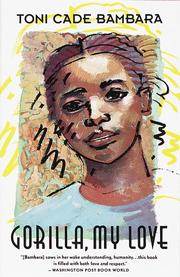
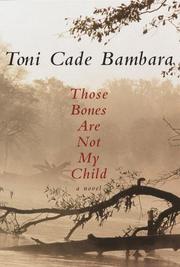
作品年表(5 本)
本站书库里署名Toni Cade Bambara的书(Open Library 上至少 10 人加过书架的才收),按首版年份排(有本站书页的用 Wikidata 记的首版年,其余用 Open Library 的);年份偶尔记成后来的版本或译本,以原书为准。全部作品见 Open Library。
- 1972Gorilla, my love书架 31
- 1977The sea birds are still alive书架 10
- 1980The salt eaters书架 49
- 1983This bridge called my back书架 16
- 1999Those bones are not my child书架 19