 书单
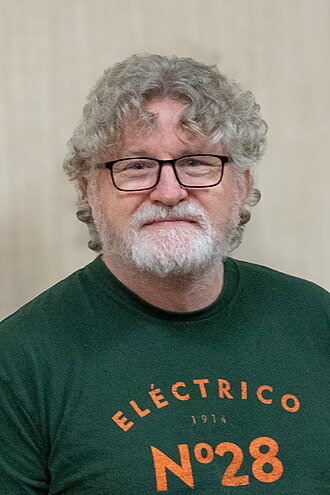
布赖恩·埃文森
- 生卒
- 1966 –
- 国籍
- 美国
- 外文名
- Brian Evenson
照片:Rosiestep,CC BY-SA 4.0,来自维基共享资源「Brian Evenson at World Fantasy Convention 2026.jpg」(经缩小)。
生平与创作
这个词条暂时没有中文维基百科条目,下面是英文维基百科的内容(英文原文):
Brian Evenson (born August 12, 1966) is an American academic and writer of both literary fiction and popular fiction, some of the latter being published under B. K. Evenson. His fiction is often described as literary minimalism, but who also draws inspiration from horror, weird fiction, detective fiction, science fiction and continental philosophy. Evenson makes frequent use of dark humor and often features characters struggling with the limits and consequences of knowledge. He has also written non-fiction, and translated several books by French-language writers into English.
Since 2016 he has taught in the School of Critical Studies at the California Institute of the Arts, both in the Creative Writing MFA program and in the Aesthetics and Politics MA Program.
Biography
Brian Evenson was born August 12, 1966, in Ames, Iowa. His father, William Evenson, was a longtime professor of physics at Brigham Young University (BYU) and later an administrator there. As a young man, Brian Evenson served a two-year mission for the Church of Jesus Christ of Latter-day Saints (LDS Church) in France and Switzerland.
He received degrees from BYU (BA) and the University of Washington (MA and PhD). After leaving a teaching position at BYU, he held positions at Oklahoma State University, Syracuse University, and the University of Denver before being hired at Brown University. He was Professor of Literary Arts at Brown from 2003 to 2015.
BYU controversy
While teaching at BYU, Evenson was involved in a controversy surrounding his first book Altmann's Tongue (1994).
While a newly hired professor of creative writing at Brigham Young University (BYU), Brian Evenson published the story collection Altmann's Tongue, which included scenes of violence such as characters who are forced to eat mutilated tongues and who attempt to cut off their own limbs. Evenson stated the publishing contract for this book was a "significant factor" in his being hired, and he included some stories from the collection in his application to BYU. A graduate student complained anonymously to church leaders, claiming the work promoted the "enjoyment" of violence; Evenson responded by saying his fiction accentuated violence in an attempt to show its horror and "thus allow it to be condemned." Evenson's ecclesiastical leaders became involved in what he felt was a university personnel matter, and a senior faculty member planned to tell church authorities Evenson understood similar publications would "bring repercussions," but Evenson denied making such a statement. Evenson resigned from BYU in 1995, and left the church formally in 2000.
His case, along with others, was included in a report by the American Association of University Professors, which argued academic freedom was stifled at BYU.
Writing style and influences
Evenson's Ph.D. is in both literature and critical theory, and his work is subtly philosophical, particularly influenced by continental philosophy. Many of Evenson's recurrent themes of virtuality and "sensation" are traceable to Deleuze & Guattari's Capitalism and Schizophrenia. Altmann's Tongue opened with an epigraph by Julia Kristeva; Dark Property featured quotes in untranslated German from Martin Heidegger; and several of Evenson's books have epigraphs from philosopher Alphonso Lingis. However, Evenson has stated that he intends any philosophical elements to be fully integrated into his fiction rather than promoting any particular viewpoint, and has argued that reading philosophical works directly is more rewarding than reading philosophy that is veiled as fiction.
Some of Evenson's work explores his Mormon heritage, often from a critical perspective or examining controversial subject matter. For example, the main character of The Open Curtain (2006) becomes preoccupied with a murder committed in the early 1900s by William Hooper Young, a grandson of 19th-century Mormon leader Brigham Young, while Immobility (2012) takes place in a post-apocalyptic Utah and features some esoteric elements of LDS theology. Nonetheless, Evenson has asserted that he maintains a measure of respect for devout believers in the LDS Church and does not intend to casually offend or provoke them.
Evenson's work has been compared to that of J. G. Ballard, Jorge Luis Borges, Paul Bowles, Franz Kafka, William S. Burroughs, Cormac McCarthy, Robert Coover and Edgar Allan Poe (among others). Evenson has expressed admiration for horror novelist Peter Straub, and for crime fiction in the hardboiled genre, both past masters like Dashiell Hammett and Jim Thompson, and contemporary practitioners like Andrew Vachss.
Awards
1995 National Endowment for the Arts Creative Writer's Fellowship
1998 O. Henry Award for "Two Brothers"
2007 Edgar Award finalist for The Open Curtain
2007 International Horror Guild Award for The Open Curtain
2007 Shirley Jackson Award nomination for Last Days
2010 ALA/RUSA prize for Best Horror novel of 2009 for Last Days
2010 World Fantasy Award finalist (for 2009) for short story collection Fugue State
2017 Shirley Jackson Award nomination for The Warren
2017 Guggenheim Fellowship
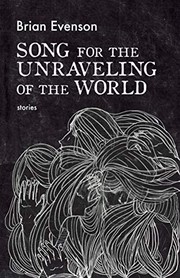
2019 Shirley Jackson Award for Song for the Unraveling of the World
2020 World Fantasy Award for Song for the Unraveling of the World
以上文字摘自英文维基百科「Brian Evenson」(去掉了参考文献等尾部小节),按 CC BY-SA 4.0 使用,作者为维基百科的各位编者。
资料卡
- 出生
- 1966 年 8 月 12 日
- 出生地
- 艾姆斯
- 职业
- 小说家、科幻作家、译者、大学教师、作家
- 使用语言
- 英语、法语
- 就读学校
- 杨百翰大学、华盛顿大学
- 文学运动 / 流派
- 后现代主义文学
- 代表作
- Father of Lies、Immobility、Last Days、The Warren
- 获奖
- 古根海姆学者奖(2017);另有 1 项只有外文名
资料卡来自 Wikidata Q4963691(CC0),众包数据,个别字段可能不全。
本站收录的作品(6)
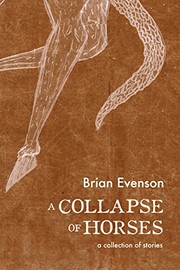
作品年表(3 本)
本站书库里署名布赖恩·埃文森的书(Open Library 上至少 10 人加过书架的才收),按首版年份排(有本站书页的用 Wikidata 记的首版年,其余用 Open Library 的);年份偶尔记成后来的版本或译本,以原书为准。全部作品见 Open Library。
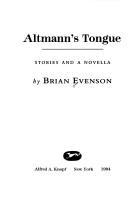
- 1994Altmann's tongue书架 15
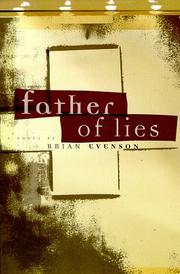
- 1998Father of lies书架 14
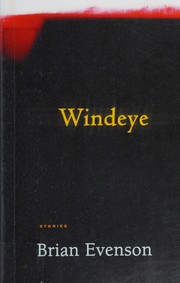
- 2012Windeye书架 13