 书单
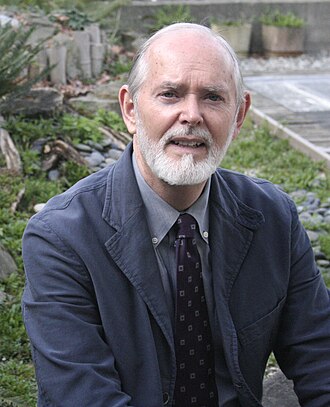
Kieran Egan
- 生卒
- 1942 – 2022
- 国籍
- 爱尔兰
照片:SFU Public Affairs and Media Relations,CC BY 2.0,来自维基共享资源「Kieran Egan educator.jpg」(经缩小)。
生平与创作
这个词条暂时没有中文维基百科条目,下面是英文维基百科的内容(英文原文):
Kieran Egan (1942 – 12 May 2022) was an Irish educational philosopher and a student of the classics, anthropology, cognitive psychology, and cultural history. He has written on issues in education and child development, with an emphasis on the uses of imagination and the stages (Egan called them "understandings") that occur during a person's intellectual development. He has questioned the work of Jean Piaget and progressive educators, notably Herbert Spencer and John Dewey.
He taught at Simon Fraser University. His major work is the 1997 book The Educated Mind.
Early life
Egan was born in 1942 in Clonmel, Ireland, and was raised and educated in England. After a brief period as a novice in a Franciscan monastery, he graduated from the University of London with a Bachelor of Arts degree in history in 1966. He subsequently worked as a research fellow at the Institute for Comparative Studies in Kingston upon Thames. He then moved to the United States and began a PhD in the philosophy of education at the Stanford Graduate School of Education. Egan completed his PhD at Cornell University in 1972.
Career
Kieran Egan was the director of the Imaginative Education Research Group, which was founded by the Faculty of Education at Simon Fraser University. The goal of this group is to improve education on a global scale by developing and proliferating the ideas of Imaginative Education.
Educated Mind
Criticism of previous education theories
Egan argued that beneath many of the debates around schools was a more fundamental disagreement: what should the goal of education be? He pointed to three major options:
to give students the same understandings and habits to help them succeed in society. (Egan called this the "socialization" goal, and suggested it may have been the original purpose of schools.)
to give students an understanding of truth, allowing them to change society. (Egan called this the "academic" goal, and suggested that this goal was introduced by Plato.)
to give students the chance to develop their own understandings and skills through a process of self-discovery, allowing them to create themselves as individuals. (Egan called this the "psychological" goal, and suggested it came from Rousseau.)
Egan argued that, when facing these three appealing goals, educational leaders often seek a compromise by combining them together. This, he wrote, was a mistake, the fundamental cause of why schools struggle to educate students well: "these three ideas are mutually incompatible, and this is the primary cause of our long-continuing educational crisis"; the present educational program in much of the West attempts to integrate all three of these incompatible ideas, resulting in a failure to effectively achieve any of the three. Throughout his career, he attempted to develop a new theoretical grounding for education.
"Cultural toolkits" theory
Egan suggested that people learn through specific cognitive tools. These tools can be helpfully grouped into five "cultural toolkits", which (excepting the first) don't develop "naturally". Each was the centuries-long creation of a culture; a student can adopt them as they struggle to understand the world.
Somatic toolkit: the innate ways of understanding the world that come even before a child acquires language, including bodily senses, emotions, imitation, and humor.
Mythic toolkit: the ways of understanding the world that come when a person first learns to speak, including stories, metaphors, binary opposites, mental imagery, jokes, and riddles.
Romantic toolkit: the ways of understanding the world that come when a person masters the skills of reading and writing, including wonder and mystery, a sense of the heroic, and a thirst for the limits of reality.
Philosophic toolkit: the ways of understanding the world that come when a person has already learned so much about a topic that they can think about it theoretically. These include the search for authority & truth, general schemes & anomalies, hypotheses & experiments, and metanarratives.
Ironic toolkit: the ways of understanding the world that come when a person has mastered all the previous toolkits, and finds them insufficient to describe the world. These tools include ambiguity, an appreciation for the limits of understanding, and a flexible, Socratic stance toward ideas.
Education, Egan argued, is the process of helping a student gain and wield these tools. Egan suggested that this approach provides an alternative to the traditional three contradictory goals of education.
Egan's lifelong work was to understand how these tools first developed in history, how they developed in the lives of individual learners, and how teachers could help students develop them to enrich their understanding of reality.
To do this, he drew from fields as diverse as evolutionary history, anthropology, cultural history, and cognitive psychology, and worked with students and teachers around the world.
Students, Egan observed, tend to add on these toolkits in the order they first developed. In sharp distinction from Recapitulation theory (common in the late 19th and early 20th century), Egan suggested that these types of understanding are not "stages" that are moved through, but toolkits to be added on: the mythic toolkit modifies the somatic, the romantic modifies the mythic and somatic, and so on. Also, there is no guarantee a person will gain all the toolkits — many people do not.
Personal life
Egan was an atheist, but described himself as a "Catholic atheist". He died on 12 May 2022.
Main works
1976 Structural Communication. Fearon Publishers, Belmont, Calif. ISBN 0-8224-6550-7
1979 Educational Development. Oxford University Press, New York. ISBN 0-19-502458-3
1983 Education and Psychology: Plato, Piaget, and Scientific Psychology. Teachers College Press, Columbia University, New York; London. ISBN 0-8077-2717-2
1988 Primary Understanding: Education in Early Childhood. Routledge, New York. ISBN 0-415-90003-4
1988 Imagination and Education. Teachers College Press, New York. ISBN 0-8077-2878-0
以上文字摘自英文维基百科「Kieran Egan (philosopher)」(有删节,去掉了参考文献等尾部小节),按 CC BY-SA 4.0 使用,作者为维基百科的各位编者。
资料卡
- 出生
- 1942 年 5 月 22 日
- 出生地
- 克郎莫尔
- 逝世
- 2022 年 5 月 12 日
- 职业
- 哲学家、教育学家
- 使用语言
- 英语
- 写作语言
- 英语
- 就读学校
- 斯坦福大学、伦敦大学、康奈尔大学、Stanford Graduate School of Education
- 所属团体
- 加拿大皇家学会
- 获奖
- 格文美奖(1991)、加拿大皇家学会院士
资料卡来自 Wikidata Q6405377(CC0),众包数据,个别字段可能不全。
本站收录的作品(1)
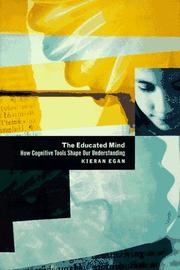
作品年表(1 本)
本站书库里署名Kieran Egan的书(Open Library 上至少 10 人加过书架的才收),按首版年份排(有本站书页的用 Wikidata 记的首版年,其余用 Open Library 的);年份偶尔记成后来的版本或译本,以原书为准。全部作品见 Open Library。
- 1997The educated mind书架 15