 书单
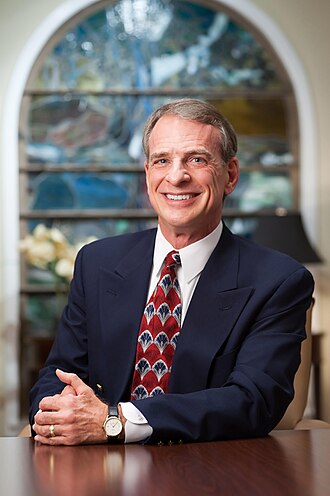
William Lane Craig
- 生卒
- 1949 –
- 国籍
- 美国
照片:ReasonableFaith.org,CC BY 3.0,来自维基共享资源「William Lane Craig.jpg」(经缩小)。
生平与创作
这个词条暂时没有中文维基百科条目,下面是英文维基百科的内容(英文原文):
William Lane Craig (born August 23, 1949) is an American analytic philosopher, Christian apologist, and theologian. He is a professor emeritus of philosophy at the Talbot School of Theology of Biola University.
Craig earned a doctorate in philosophy from the University of Birmingham in 1977 and a second doctorate in theology from LMU Munich in 1984. He was a professor of the philosophy of religion at Trinity Evangelical Divinity School from 1980 to 1986, a professor of religious studies at Westmont College from 1986 to 1987, and a researcher at KU Leuven from 1987 to 1994. After joining the faculty of the Talbot School of Theology, he also taught as a professor of philosophy at Houston Christian University from 2014 to 2024.
Craig has updated and defended the Kalam cosmological argument for the existence of God, a formulation that goes back to antiquity. He has also published work where he argues in favor of the historical plausibility of the resurrection of Jesus. His study of divine aseity and Platonism culminated with his book God Over All.
Early life and education
Craig was born on August 23, 1949, in Peoria, Illinois, to Mallory John Craig, a railway executive, and Doris Irene Walker, a homemaker. He was raised in Keokuk, Iowa. He attended East Peoria Community High School from 1963 to 1967, where he competed in debate and won the state championship in oratory. In September 1965, his junior year, he became a Christian.After high school, Craig attended Wheaton College, where he graduated with a Bachelor of Arts in communications in 1971 with high honors. He married his wife, Jan, whom he met on the staff of Campus Crusade for Christ, the next year. They have two grown children and reside in suburban Atlanta, Georgia.
In 1973, Craig entered the program in philosophy of religion at Trinity Evangelical Divinity School north of Chicago, where he studied under Norman Geisler. He graduated summa cum laude with two master's degrees: a Master of Arts in the philosophy of religion, and a second M.A. in church history and the history of Christian thought. In 1975, Craig began doctoral studies in philosophy at the University of Birmingham in England. He wrote his doctoral dissertation there on the cosmological argument under the direction of John Hick. He earned his Ph.D. in 1977. Out of this study came his first book, The Kalām Cosmological Argument (1979), a defense of the argument he first encountered in theologian Stuart Hackett's work on the same topic.
Craig was awarded a postdoctoral fellowship in 1978 from the Alexander von Humboldt Foundation to pursue research on the historicity of the resurrection of Jesus under the direction of Wolfhart Pannenberg at LMU Munich in Germany. He earned a second doctorate, a Doctor of Theology, under Pannenberg's supervision in 1984. His second doctoral thesis was titled, The Historical Argument for the Resurrection of Jesus During the Deist Controversy (1985).
Career
Craig joined the faculty of Trinity Evangelical Divinity School in Deerfield, Illinois, in 1980, where he taught philosophy of religion until 1986.
After a one-year stint at Westmont College on the outskirts of Santa Barbara, Craig moved in 1987 with his wife and two young children back to Europe, where he was a visiting scholar at the Katholieke Universiteit Leuven (Louvain) in Belgium until 1994. At that time, Craig joined the Department of Philosophy and Ethics at Talbot School of Theology in suburban Los Angeles as a research professor of philosophy, a position he currently holds, and he went on to become a professor of philosophy at Houston Christian University in 2014. In 2017, Biola University created a permanent faculty position and endowed chair, the William Lane Craig Endowed Chair in Philosophy, in honor of Craig's academic contributions.
Craig served as president of the Philosophy of Time Society from 1999 to 2006. He helped revitalize the Evangelical Philosophical Society and served as its president from 1996 to 2005. In the mid-2000s, Craig established the online Christian apologetics ministry ReasonableFaith.org.
Craig has authored or edited over forty books and over two hundred articles published in professional philosophy and theology journals, including: The Journal of Philosophy, British Journal for the Philosophy of Science, Philosophy and Phenomenological Research, Philosophical Studies, Australasian Journal of Philosophy, Faith and Philosophy, Erkenntnis, and American Philosophical Quarterly.
Philosophical and theological views
Kalam cosmological argument
Craig has written and spoken in defense of a version of the cosmological argument called the Kalam cosmological argument. While the Kalam originated in medieval Islamic philosophy, Craig added appeals to scientific and philosophical ideas in the argument's defense. Craig's work has resulted in contemporary interest in the argument, and in cosmological arguments in general.
Craig formulates his version of the argument as follows:
Everything that begins to exist has a cause of its existence.
The universe began to exist.
Therefore, the universe has a cause of its existence.
Craig's defense of the argument mainly focuses on the second premise, which he offers several arguments for. For example, Craig appeals to Hilbert's example of an infinite hotel to argue that actually infinite collections are impossible, and thus the past is finite and has a beginning. In another argument, Craig says that the series of events in time is formed by a process in which each moment is added to history in succession. According to Craig, this process can never produce an actually infinite collection of events, but at best a potentially infinite one. On this basis, he argues that the past is finite and has a beginning.
Craig also appeals to various physical theories to support the argument's second premise, such as the standard Big Bang model of cosmic origins and certain implications of the second law of thermodynamics.
以上文字摘自英文维基百科「William Lane Craig」(有删节,去掉了参考文献等尾部小节),按 CC BY-SA 4.0 使用,作者为维基百科的各位编者。
资料卡
- 出生
- 1949 年 8 月 23 日
- 出生地
- 皮奥里亚
- 职业
- 哲学家、大学教师、作家、神学家
- 使用语言
- 英语
- 写作语言
- 英语
- 就读学校
- 伯明翰大学、慕尼黑大学、三一福音神学院、伊利诺伊州惠顿学院、East Peoria Community High School
- 领域
- 哲学、神学、形而上学
- 获奖
- 洪堡奖
资料卡来自 Wikidata Q1233528(CC0),众包数据,个别字段可能不全。
本站收录的作品(1)
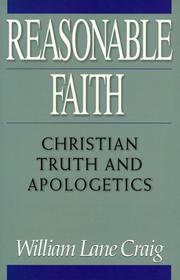
作品年表(3 本)
本站书库里署名William Lane Craig的书(Open Library 上至少 10 人加过书架的才收),按首版年份排(有本站书页的用 Wikidata 记的首版年,其余用 Open Library 的);年份偶尔记成后来的版本或译本,以原书为准。全部作品见 Open Library。
- 2003Philosophical foundations for a Christian worldview书架 19
- 2008Reasonable faith书架 28
- 2010On Guard书架 17