 书单
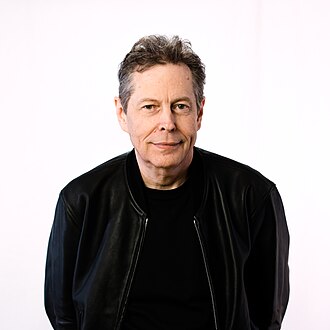
亚历山大·温特
- 生卒
- 1958 –
- 国籍
- 美国、德国
- 外文名
- Alexander Wendt
照片:Rion Hiun,CC0,来自维基共享资源「Alexander Wendt.jpg」(经缩小)。
生平与创作
亚历山大·温特(英语:Alexander Wendt,1958年—),国际关系之建构主义学者,现任美国俄亥俄州立大学讲座教授。温特与其他学者,诸如Nicholas Onuf、Peter J. Katzenstein、Emanuel Adler、Michael Barnett、Kathryn Sikkink、John Ruggie、Martha Finnemore等,在相当短的时间内,就将建构主义推上国际关系的主流学派。
著作
《国际政治的社会理论》(Social Theory of International Politics, 1999)
《量子心灵与社会科学:物理学与社会科学本体论的统一》(Quantum Mind and Social Science Unifying Physical and Social Ontology, 2015)
以上文字摘自维基百科「亚历山大·溫特」(去掉了参考文献等尾部小节),按 CC BY-SA 4.0 使用,作者为维基百科的各位编者。
中文维基百科的条目比较短,下面附上英文维基百科的内容(英文原文):
Alexander Wendt (born 12 June 1958) is an American political scientist and a founding figure of social constructivism in the field of international relations, and a key contributor to quantum social science. Wendt and academics such as Nicholas Onuf, Peter J. Katzenstein, Emanuel Adler, Michael Barnett, Kathryn Sikkink, John Ruggie, Martha Finnemore, Ted Hopf and others have, within a relatively short period, established constructivism as one of the major schools of thought in the field.
A 2017 Teaching, Research, and International Policy (TRIP) survey of 1,400 international relations scholars worldwide ranked Wendt as the most influential scholar in the field over the past 20 years. Earlier TRIP surveys in 2006 and 2011 also recognized his work as among the most impactful in the discipline. Wendt’s scholarship has garnered over 50,000 citations on Google Scholar, making him one of the most cited researchers in international relations, alongside figures like Joseph Nye and James Fearon.
Biography
Alexander Wendt was born in 1958 in Mainz in West Germany. His father, Dr. Hans Werner Wendt, served in the Third Reich’s DAK (Deutsches Afrikakorps) commanded by Gen. Erwin Rommel during World War Two. Alexander attended high school in St. Paul, Minnesota and studied political science and philosophy at Macalester College before receiving his Ph.D. in political science from the University of Minnesota in 1989, studying under Raymond "Bud" Duvall. Wendt taught at Yale University from 1989 to 1997, at Dartmouth College from 1997 to 1999, at the University of Chicago from 1999 to 2004, and is currently the Ralph D. Mershon Professor of International Security at the Ohio State University. Wendt was elected to the American Academy of Arts and Sciences in 2025. Wendt was formerly married to Prof. Jennifer Mitzen (Ph.D., University of Chicago). They filed for divorce in 2021.
Social Theory of International Politics
Wendt's most widely cited work to date is Social Theory of International Politics (Cambridge University Press, 1999), which builds on and goes beyond his 1992 article "Anarchy is What States Make of It". Social Theory of International Politics places itself as a response to Kenneth Waltz's 1979 work, Theory of International Politics, the canonical text of the neorealist school with Wendt centering states as the object of study and replicating Waltz's division between international relations and foreign policy. Like Waltz, Wendt believed that the actual production that individuates states happens through domestic processes that require a separate theory from international relations; thus: "Much of the construction is at the domestic level, as Liberals have emphasized, and a complete theory of state identity needs to have a domestic component."
Wendt's book advances an argument of critical realism, and the ontological and methodological claims of constructivism. Critical realism, drawing upon the work of Roy Bhaskar (amongst others), seeks to explain un-observables within the world and constitutive questions of the world.
Constructivism, as imagined by Wendt, builds upon the work of Nicholas Onuf and Anthony Giddens, and argues for the mutual constitution of agents and structures, the historical contingency of cultures of anarchy, the role of constitutive and regulative norms in state behavior, the role of intersubjective social structures in identity, and the power of ideas. Anarchy, for Wendt, "has no logic apart from process and that interaction is structured, albeit not at a macro-level." There are three empirical cultures of anarchy in international relations: Hobbesian (where enmity dominates), Lockean (where rivalry dominates), and Kantian (where friendship dominates).
以上文字摘自英文维基百科「Alexander Wendt」(有删节,去掉了参考文献等尾部小节),按 CC BY-SA 4.0 使用,作者为维基百科的各位编者。
资料卡
- 母语名
- Alexander Wendt
- 出生
- 1958 年 6 月 12 日
- 出生地
- 美因茨
- 职业
- 政治学家、大学教师
- 使用语言
- 德语、英语
- 写作语言
- 英语
- 就读学校
- 明尼苏达大学、麦卡利斯特学院
- 领域
- 国际关系
- 所属团体
- 美国文理科学院
- 受谁影响
- 安东尼·吉登斯
- 获奖
- 约翰·斯凯特政治学奖(2023)
资料卡来自 Wikidata Q68578(CC0),众包数据,个别字段可能不全。
本站收录的作品(1)
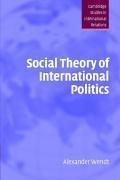
作品年表(1 本)
本站书库里署名亚历山大·温特的书(Open Library 上至少 10 人加过书架的才收),按首版年份排(有本站书页的用 Wikidata 记的首版年,其余用 Open Library 的);年份偶尔记成后来的版本或译本,以原书为准。全部作品见 Open Library。
- 1999国际政治的社会理论Social theory of international politics书架 12