 书单
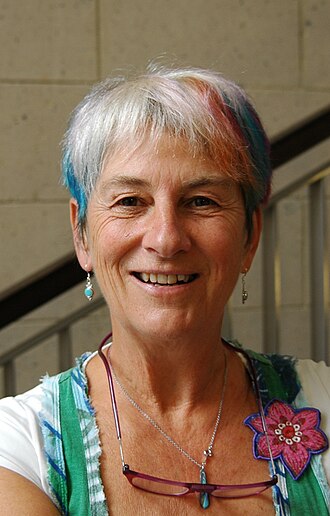
苏珊·布莱克莫尔
- 生卒
- 1951 –
- 国籍
- 英国
- 外文名
- Susan Blackmore
照片:StagiaireMGIMO,CC BY-SA 4.0,来自维基共享资源「Susan Blackmore (2014).jpg」(经缩小)。
生平与创作
这个词条暂时没有中文维基百科条目,下面是英文维基百科的内容(英文原文):
Susan Jane Blackmore (born 29 July 1951) is a British writer, lecturer, sceptic, broadcaster, and a visiting professor at the University of Plymouth. Her fields of research include memetics, parapsychology, consciousness, and she is best known for her book The Meme Machine. She has written or contributed to over 40 books and 60 scholarly articles and is a contributor to The Guardian newspaper.
Career
In 1973, Susan Blackmore graduated from St Hilda's College, Oxford, with a BA (Hons) degree in psychology and physiology. She received an MSc in environmental psychology in 1974 from the University of Surrey. In 1980, she earned a PhD in parapsychology from the same university; her doctoral thesis was titled "Extrasensory Perception as a Cognitive Process." In the 1980s, Blackmore conducted psychokinesis experiments to see if her baby daughter, Emily, could influence a random number generator. The experiments were mentioned in the book to accompany the TV series Arthur C. Clarke's World of Strange Powers. Blackmore taught at the University of the West of England in Bristol until 2001. After spending time in research on parapsychology and the paranormal, her attitude towards the field moved from belief to scepticism. In 1987, Blackmore wrote that she had an out-of-body experience shortly after she began running the Oxford University Society for Psychical Research (OUSPR):
Within a few weeks I had not only learned a lot about the occult and the paranormal, but I had an experience that was to have a lasting effect on me—an out-of-body experience (OBE). It happened while I was wide awake, sitting talking to friends. It lasted about three hours and included everything from a typical "astral projection," complete with a silver cord and duplicate body, to free-floating flying, and finally to a mystical experience.
It was clear to me that the doctrine of astral projection, with its astral bodies floating about on astral planes, was intellectually unsatisfactory. But to dismiss the experience as "just imagination" would be impossible without being dishonest about how it had felt at the time. It had felt quite real. Everything looked clear and vivid, and I was able to think and speak quite clearly.
In a New Scientist article in 2000, she again wrote of this:
It was just over thirty years ago that I had the dramatic out-of-body experience that convinced me of the reality of psychic phenomena and launched me on a crusade to show those closed-minded scientists that consciousness could reach beyond the body and that death was not the end. Just a few years of careful experiments changed all that. I found no psychic phenomena—only wishful thinking, self-deception, experimental error and, occasionally, fraud. I became a sceptic.
She is a Fellow of the Committee for Skeptical Inquiry (formerly CSICOP) and in 1991, was awarded the CSICOP Distinguished Skeptic Award.
In an article in The Observer on sleep paralysis Barbara Rowland wrote that Blackmore, "carried out a large study between 1996 and 1999 of 'paranormal' experiences, most of which clearly fell within the definition of sleep paralysis."
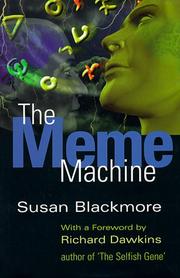
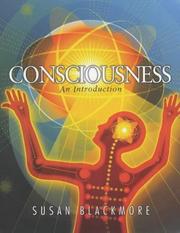
Blackmore has done research on memes (which she wrote about in her popular book The Meme Machine) and evolutionary theory. Her book Consciousness: An Introduction (2004), is a textbook that broadly covers the field of consciousness studies. She was on the editorial board for the Journal of Memetics (an electronic journal) from 1997 to 2001, and has been a consulting editor of the Skeptical Inquirer since 1998.
She acted as one of the psychologists who was featured on the British version of the television show Big Brother, speaking about the psychological state of the contestants. She is a Patron of Humanists UK.
Blackmore debated Christian apologist Alister McGrath in 2007, on the existence of God. In 2018 she debated Jordan Peterson on whether God is needed to make sense of life.
In 2017, Blackmore appeared at the 17th European Skeptics Congress (ESC) in Old Town Wrocław, Poland. This congress was organised by the Klub Sceptyków Polskich (Polish Skeptics Club) and Český klub skeptiků Sisyfos (Czech Skeptic's Club). At the congress she joined Scott Lilienfeld, Zbyněk Vybíral and Tomasz Witkowski on a panel on skeptical psychology which was chaired by Michael Heap.
Memetics and religious culture
Susan Blackmore has made contributions to the field of memetics. The term meme was coined by Richard Dawkins in his 1976 book The Selfish Gene. In his foreword to Blackmore's book The Meme Machine (1999), Dawkins said, "Any theory deserves to be given its best shot, and that is what Susan Blackmore has given the theory of the meme." Other treatments of memes, that cite Blackmore, can be found in the works of Robert Aunger: The Electric Meme, and Jonathan Whitty: A Memetic Paradigm of Project Management.
Blackmore's treatment of memetics insists that memes are true evolutionary replicators, a second replicator that like genetics is subject to the Darwinian algorithm and undergoes evolutionary change. Her prediction on the central role played by imitation as the cultural replicator and the neural structures that must be unique to humans in order to facilitate them have recently been given further support by research on mirror neurons and the differences in extent of these structures between humans and the presumed closest branch of simian ancestors.
At the February 2008 TED conference, Blackmore introduced a special category of memes called temes. Temes are memes which live in technological artifacts instead of the human mind.
Blackmore has written critically about both the flaws and redeeming qualities of religion, having said, All kinds of infectious memes thrive in religions, in spite of being false, such as the idea of a creator god, virgin births, the subservience of women, transubstantiation, and many more. In the major religions, they are backed up by admonitions to have faith not doubt, and by untestable but ferocious rewards and punishments.
以上文字摘自英文维基百科「Susan Blackmore」(有删节,去掉了参考文献等尾部小节),按 CC BY-SA 4.0 使用,作者为维基百科的各位编者。
资料卡
- 母语名
- Susan Blackmore
- 出生
- 1951 年 7 月 29 日
- 出生地
- 伦敦
- 职业
- 自由职业、讲师、电视主持、心理学家、作家、研究者、大学教师、主持人
- 使用语言
- 英语
- 就读学校
- 牛津大学圣希尔达学院、萨里大学
- 领域
- 模因学、心理学、超心理学
- 配偶
- 亚当·哈特-戴维斯(2010)
- 获奖
- 怀疑调查委员会会员
资料卡来自 Wikidata Q155199(CC0),众包数据,个别字段可能不全。
本站收录的作品(2)
作品年表(2 本)
本站书库里署名苏珊·布莱克莫尔的书(Open Library 上至少 10 人加过书架的才收),按首版年份排(有本站书页的用 Wikidata 记的首版年,其余用 Open Library 的);年份偶尔记成后来的版本或译本,以原书为准。全部作品见 Open Library。
- 1999The meme machine书架 15
- 2024Consciousness书架 31