 书单
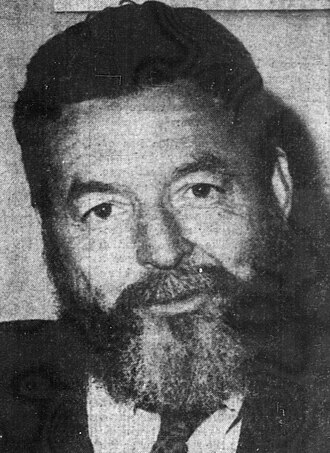
照片:作者不详,公有领域,来自维基共享资源「Randall Jarrell 1962.jpeg」(经缩小)。
生平与创作
这个词条暂时没有中文维基百科条目,下面是英文维基百科的内容(英文原文):
Randall Jarrell jə-REL (May 6, 1914 – October 14, 1965) was an American poet, literary critic, children's author, essayist, and novelist. He was the 11th Consultant in Poetry to the Library of Congress—a position that now bears the title Poet Laureate of the United States.
Among other honors, Jarrell was awarded a Guggenheim Fellowship for the years 1947–48; a grant from the National Institute of Arts and Letters, in 1951; and the National Book Award for Poetry, in 1961.
Biography
Youth and education
Jarrell was a native of Nashville, Tennessee. He attended Hume-Fogg High School where he "practiced tennis, starred in some school plays, and began his career as a critic with satirical essays in a school magazine." He received his B.A. from Vanderbilt University in 1935. While at Vanderbilt, he edited the student humor magazine The Masquerader, was captain of the tennis team, made Phi Beta Kappa and graduated magna cum laude. He studied there under Robert Penn Warren, who first published Jarrell's criticism; Allen Tate, who first published Jarrell's poetry; and John Crowe Ransom, who gave Jarrell his first teaching job as a Freshman Composition instructor at Kenyon College in Gambier, Ohio. Although all of these Vanderbilt tutors were involved with the conservative Southern Agrarian movement, Jarrell did not become a supporter of the Agrarians himself. According to Stephanie Burt, "Jarrell—a devotee of Marx and Auden— embraced his teachers' literary stances while rejecting their politics." He also completed his master's degree in English at Vanderbilt in 1937, beginning his thesis on A. E. Housman (which he completed in 1939).
When Ransom left Vanderbilt for Kenyon College in Ohio that same year, a number of his loyal students, including Jarrell, followed him to Kenyon. Jarrell taught English at Kenyon for two years, coached tennis, and served as the resident faculty member in an undergraduate dormitory that housed future writers Robie Macauley, Peter Taylor, and poet Robert Lowell. Lowell and Jarrell remained good friends and peers until Jarrell's death. According to Lowell biographer Paul Mariani, "Jarrell was the first person of [Lowell's] own generation [whom he] genuinely held in awe" due to Jarrell's brilliance and confidence even at the age of 23.
Career
Jarrell went on to teach at the University of Texas at Austin from 1939 to 1942, where he began to publish criticism and where he met his first wife, Mackie Langham. In 1942 he left the university to join the United States Army Air Forces. According to his obituary, he "[started] as a flying cadet, [then] he later became a celestial navigation tower operator, a job title he considered the most poetic in the Air Force." His early poetry, in particular “The Death of the Ball Turret Gunner”, principally concerned his wartime experiences in the Air Force.
The Jarrell obituary goes on to state that "after being discharged from the service he joined the faculty of Sarah Lawrence College in Bronxville, N.Y., for a year. During his time in New York, he also served as the temporary book review editor for The Nation magazine". Jarrell was uncomfortable living in the city and "claimed to hate New York's crowds, high cost of living, status-conscious sociability, and lack of greenery." He soon left the city for the Woman's College of the University of North Carolina where, as an associate professor of English, he taught modern poetry and "imaginative writing".
Jarrell divorced his first wife and married Mary von Schrader, a young woman whom he met at a summer writers' conference in Colorado, in 1952. They first lived together while Jarrell was teaching for a term at the University of Illinois Urbana-Champaign. The couple settled at Greensboro with Mary's daughters from her previous marriage. The couple also moved temporarily to Washington D.C. in 1956 when Jarrell served as the consultant in poetry at the Library of Congress (a position that later became titled Poet Laureate) for two years, returning to Greensboro and the University of North Carolina after his term ended.
Depression and death
Towards the end of his life, in 1963, Stephanie Burt notes, "Randall's behavior began to change. Approaching his fiftieth birthday, he seems to have worried deeply about his advancing age. . . After President Kennedy was shot, Randall spent days in front of the television weeping. Sad to the point of inertia, Randall sought help from a Cincinnati psychiatrist, who prescribed [the antidepressant drug] Elavil." The drug made him manic and in 1965, he was hospitalized and taken off Elavil. At this point, he was no longer manic, but he became depressed again. Burt also states that in April The New York Times published a "viciously condescending" review by Joseph Bennett of Jarrell's most recent book of poems, The Lost World, which said "his work is thoroughly dated; prodigiousness encouraged by an indulgent and sentimental Mama-ism; its overriding feature is doddering infantilism." Soon afterwards, Jarrell slashed a wrist and returned to the hospital. After leaving the hospital, he stayed at home that summer under his wife's care and returned to teaching at the University of North Carolina that fall.
Near dusk on October 14, 1965, while walking along U.S. highway 15-501 near Chapel Hill, N.C., where he had gone seeking medical treatment, Jarrell was struck by a motorist and killed. In trying to determine the cause of death, "[Jarrell's wife] Mary, the police, the coroner, and ultimately the state of North Carolina judged his death accidental, a verdict made credible by his apparent improvements in health ... and the odd, sidelong manner of the collision; medical professionals judged the injuries consistent with an accident and not with suicide." Nevertheless, because Jarrell had recently been treated for mental illness and a previous suicide attempt, some of the people closest to him were not entirely convinced that his death was accidental and suspected that he had taken his own life.
以上文字摘自英文维基百科「Randall Jarrell」(有删节,去掉了参考文献等尾部小节),按 CC BY-SA 4.0 使用,作者为维基百科的各位编者。
资料卡
- 出生
- 1914 年 5 月 6 日
- 出生地
- 纳什维尔
- 逝世
- 1965 年 10 月 14 日
- 逝世地
- 教堂山
- 职业
- 诗人、作家、文学评论家、大学教师、儿童文学作家、新闻工作者、译者
- 使用语言
- 英语
- 写作语言
- 英语
- 就读学校
- 凯尼恩学院、范德比尔特大学、Hume-Fogg High School
- 领域
- 美国文学、儿童与青年文学、文学批评
- 所属团体
- ΦΒΚ荣誉学会、美国艺术暨文学学会
- 代表作
- Pictures from an Institution
- 获奖
- 古根海姆学者奖(1946)、美国国家图书奖·诗歌(1961)
资料卡来自 Wikidata Q972676(CC0),众包数据,个别字段可能不全。
本站收录的作品(1)
作品年表(3 本)
本站书库里署名兰德尔·贾雷尔的书(Open Library 上至少 10 人加过书架的才收),按首版年份排(有本站书页的用 Wikidata 记的首版年,其余用 Open Library 的);年份偶尔记成后来的版本或译本,以原书为准。全部作品见 Open Library。
- 1954Pictures from an institution书架 17
- 1964The bat-poet书架 12
- 1965The animal family书架 41