 书单
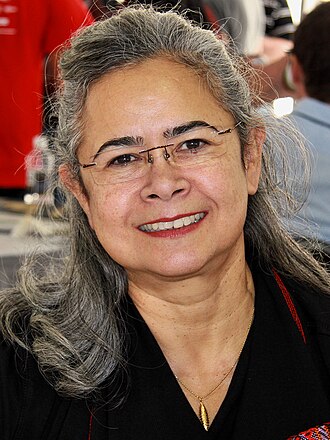
斯梅拉达·圣地亚哥
- 生卒
- 1948 –
- 国籍
- 美国
- 外文名
- Esmeralda Santiago
照片:Larry D. Moore,CC BY 4.0,来自维基共享资源「Esmeralda Santiago 2012.jpg」(经缩小)。
生平与创作
这个词条暂时没有中文维基百科条目,下面是英文维基百科的内容(英文原文):
Esmeralda Santiago (born May 17, 1948) is a Puerto Rican author known for her narrative memoirs and trans-cultural writing. Her impact extends beyond cultivating narratives as she paves the way for more coming-of-age stories about being a Latina in the United States, alongside navigating cultural dissonance through acculturation.
Personal life
Santiago was born on May 17, 1948, in the Macún neighborhood of Toa Baja, Puerto Rico. She was the eldest of eleven children, raised mostly by her mother and partly by her father, though they were never married. Her family lived in the countryside and was descended from poor, peasant farmers. In 1961, at age 13, she moved to the United States. Santiago attended junior high school in Brooklyn and learned English in two years, then attended New York City's prestigious Performing Arts High School. Upon graduating, Santiago attended community college and worked various jobs for eight years. After, she earned a full scholarship from Harvard, where she transferred and received her undergraduate degree and graduated Magna Cum Laude in 1976. She continued her graduate education at Sarah Lawrence College where she received a master's degree in Fine Arts degree in 1992. Santiago met and married Frank Cantor prior to graduating. The couple founded Cantomedia, a film and media production company, which has won numerous awards for excellence in documentaries. Santiago currently lives in Westchester County, New York with her husband.
Health
In 2008, Santiago noticed her manuscript, which she wrote the day before, was unintelligible and appeared like a foreign language. Her symptoms led her to believe she possibly suffered from a stroke, and after a doctor's visit and tests, her suspicions became confirmed. The stroke affected the Wernicke's area of the brain and made her unable to read and write in both Spanish, her native language, and English. Santiago relearned how to read and write English, as she did when she learned at age 13. Children's books with illustrations helped Santiago connect words to the images, teaching her brain to read again.
Today, her reading and writing ability remains partially unrecovered. When she suffered her stroke, her novel, Conquistadora, was unfinished and her main goal in relearning written English was to finish it. She improved enough to complete her novel, but remained unable to do the Spanish translation of her piece herself. Santiago continues to write today and can produce about 300 words per day post-stroke, whereas she completed 1000 words a day prior. Her stroke, its effects and her ability to relearn language are chronicled in neurology magazines and other medical pieces, making her a case study for strokes and stroke recovery.
Literature
When I was Puerto Rican
When I was Puerto Rican was published in 1993 and takes an autobiographical approach to Santiago's childhood. It details her life from early childhood and stops at her departure from Puerto Rico at age 13. She narrates growing up under imperialistic American ideologies that often conflict with her Puerto Rican culture. Aspects like familial relationships, food and coming-of-age are highlighted throughout the piece.
After receiving her degree from Harvard, Santiago returned to Puerto Rico to work. She experienced cultural dissonance as many Puerto Ricans considered her overly Americanized while Americans racially ostracized her for being Puerto Rican. Additionally, it became difficult for her to find employment, like other highly educated women in Puerto Rico. Santiago chose to return to the United States and began publishing short essays and stories in local press. She wrote When I was Puerto Rican after gaining attention and encouragement from an editor in the United States. Santiago's writing illustrates the important perspective of someone who experiences both Puerto Rican and American culture from an outside lens.
Santiago states that she chooses to "write for women. I don't care if men read my work... It's women's lives I'm interested in." Her intention in writing is to bring light to the patriarchal tendencies of Puerto Rican culture, both in the United States and on the island of Puerto Rico. In When I was Puerto Rican, Santiago illustrates sexist experiences from her own life, extending recognition to other women who experienced similar treatment.
以上文字摘自英文维基百科「Esmeralda Santiago」(有删节,去掉了参考文献等尾部小节),按 CC BY-SA 4.0 使用,作者为维基百科的各位编者。
资料卡
- 出生
- 1948 年 5 月 17 日
- 出生地
- 圣胡安
- 职业
- 作家
- 使用语言
- 西班牙语
- 写作语言
- 西班牙语
- 就读学校
- 哈佛大学、莎拉劳伦斯学院、纽约市曼哈顿演艺学院
资料卡来自 Wikidata Q5398539(CC0),众包数据,个别字段可能不全。
本站收录的作品(1)
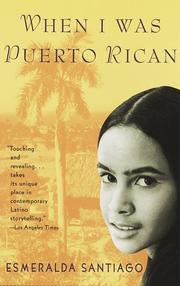
作品年表(2 本)
本站书库里署名斯梅拉达·圣地亚哥的书(Open Library 上至少 10 人加过书架的才收),按首版年份排(有本站书页的用 Wikidata 记的首版年,其余用 Open Library 的);年份偶尔记成后来的版本或译本,以原书为准。全部作品见 Open Library。
- 1994When I was Puerto Rican书架 296
- 1998Almost a woman书架 17