 书单
L. P. Hartley
- 生卒
- 1895 – 1972
- 国籍
- 英国
- 获奖
- 詹姆斯·泰特·布莱克纪念奖(1947)
生平与创作
这个词条暂时没有中文维基百科条目,下面是英文维基百科的内容(英文原文):
Leslie Poles Hartley (30 December 1895 – 13 December 1972) was an English novelist and short story writer. Although his first fiction was published in 1924, his best-known works are the Eustace and Hilda trilogy (1944–1947) and The Go-Between (1953). The latter was made into a film in 1971, as was his 1957 novel The Hireling in 1973.
Hartley began writing stories at the age of 11. He worked as an editor during his time at Oxford and spent many years afterwards writing book reviews. In his private life, Hartley spent much of his time rowing, swimming, and socializing, often traveling with friends. He made frequent visits to Venice for many years and enjoyed days out on the canals. His writing career began with short story collections, with his first novel, The Shrimp and the Anemone, published at age 49. He was known for writing about social codes, moral responsibility and family relationships, and many of his works portray passion as leading to disaster. Hartley died in December 1972 at the age of 76.
Early life
Leslie Poles Hartley was born on 30 December 1895 in Whittlesey, now in Cambridgeshire. He was named after Leslie Stephen, the father of the writer Virginia Woolf. His father, Harry Bark Hartley, was a solicitor and justice of the peace near Peterborough but later ran a brickworks. His mother was Mary Elizabeth née Thompson, and he had two sisters, Enid and Annie Norah. Hartley was raised in the Methodist faith. He was known to be a hypochondriac, particularly afraid of tetanus and a painful death. Many believe this fear of sickness came from his mother, who was known to be overly concerned about his health.
While he was young, his family moved to Fletton Tower, near Peterborough. Hartley began his education at home and particularly enjoyed the work of Edgar Allan Poe. He wrote his first story, a fairy tale about a prince and dwarf, when he was 11 years old. In 1908 he attended Northdown Hill Preparatory School in Cliftonville and then briefly Clifton College. It was there he likely first met C. H. B. Kitchin, who became a lifelong friend. In 1910, Hartley finally settled at Harrow School, where he was a Leaf Scholar and earned prizes in reading and English literature. Highly regarded by his peers, they saw him as civilized and mature with a "singular outward calm". While there, Hartley converted to Anglicanism but was still greatly influenced by his earlier Methodism.
In 1915, during the First World War, he went to Balliol College, Oxford, to read Modern History. This period was a time when most of his contemporaries were volunteering for the armed services instead of pursuing university careers. In 1916, with the arrival of conscription, Hartley joined the army, and in February 1917, he was commissioned as an officer in the Norfolk Regiment; however, he never saw active duty because of a weak heart. He returned to Oxford in 1919, with the intention of becoming a writer. While there, Hartley made a number of literary friends, including Lord David Cecil and Aldous Huxley. He left Oxford in 1921 with second-class honours in modern history.
Career
Editor and reviewer
Oxford Poetry first published Hartley's work in 1920 and 1922. During this time, he edited Oxford Outlook with Gerald Howard and A. B. B. Valentine, publishing work by L. A. G. Strong, Edmund Blunden, John Strachey, and Maurice Bowra. His essays, short stories, and reviews were included in its pages.
In this early part of his career, Hartley spent most of his time broadening his social life. He was introduced by Huxley to Lady Ottoline Morrell, who welcomed him into her famed literary circle. Kitchin, with whom he had been reunited at Oxford, introduced him to Cynthia Asquith, who became a lifelong friend. He also met the writer and socialite Elizabeth Bibesco, whose support and status catapulted Hartley into aristocratic British circles. Although he enjoyed rapid social success, his career as a writer was slow to take off.
After his years at Oxford, Hartley worked as a book reviewer. He wrote articles for multiple publications, such as The Spectator, Saturday Review, The Nation and Athenaeum, and The Sketch. Hartley was praised extensively for his critical, steady, and wise reviews. However, the large number of books he had to read distracted him from his goal to write novels.
Short stories and novels
In 1924, he met Constant Huntington of G. P. Putnam, who published his first volume of short stories, Night Fears, in that year, as well as his novella Simonetta Perkins in 1925. Night Fears was relatively unsuccessful, earning him no money. Simonetta Perkins brought him only £12, though it was written about favourably. The Saturday Review called the young writer "one of the most hopeful talents", and The Calendar of Modern Letters said that Simonetta Perkins was a "distinguished first novel". Modern critics have called it his most dangerous novel, as Hartley explored infatuation and sexuality in a way considered less respectable at the time. In 1932, Hartley published The Killing Bottle, a collection of ghost stories. Cynthia Asquith included some of them in an anthology, which increased his popularity with the public.
以上文字摘自英文维基百科「L. P. Hartley」(有删节,去掉了参考文献等尾部小节),按 CC BY-SA 4.0 使用,作者为维基百科的各位编者。
资料卡
- 母语名
- Leslie Poles Hartley
- 出生
- 1895 年 12 月 30 日
- 出生地
- 威图斯
- 逝世
- 1972 年 12 月 13 日
- 逝世地
- 伦敦
- 职业
- 作家、小说家、短篇故事作家
- 使用语言
- 英语
- 就读学校
- 贝利奥尔学院、哈罗公学、克利弗顿学院
- 领域
- 散文
- 代表作
- 一段情
- 获奖
- 大英帝国司令勋章、詹姆斯·泰特·布莱克纪念奖(1947)、Heinemann Award(1954)
资料卡来自 Wikidata Q654747(CC0),众包数据,个别字段可能不全。
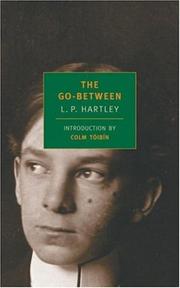
本站收录的作品(1)
同时代的英国作家
前后几届的詹姆斯·泰特·布莱克纪念奖得主
全部得主 ›Open Library 上的全部作品
正在读取…