 书单
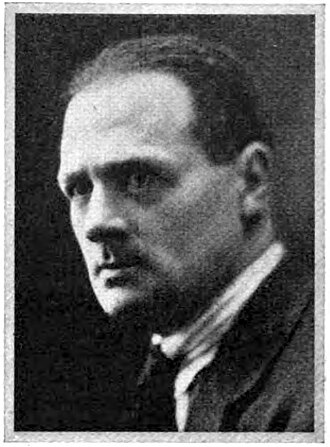
拉斐尔·萨巴提尼
- 生卒
- 1875 – 1950
- 国籍
- 英国、意大利
- 外文名
- Rafael Sabatini
照片:The Phelps Publishing Company,公有领域,来自维基共享资源「Good Housekeeping-Vol. 78-578.jpg」(经缩小)。
生平与创作
这个词条暂时没有中文维基百科条目,下面是英文维基百科的内容(英文原文):
Rafael Sabatini (29 April 1875 – 13 February 1950) was an Italian-born British writer of romance and adventure novels.
He is best known for his worldwide bestsellers: The Sea Hawk (1915), Scaramouche (1921), Captain Blood (a.k.a. Captain Blood: His Odyssey) (1922), and Bellarion the Fortunate (1926). Several of his novels have been made into films, both silent and sound.
In all, Sabatini produced 34 novels, eight short story collections, six non-fiction books, numerous uncollected short stories, and several plays.
Life as an author
After a brief stint in the business world, Sabatini went to work as a writer. His first published short story, "The Red Mask," was printed in 1898, and his first novel came out in 1902. It took Sabatini roughly a quarter of a century of hard work before he attained success in 1921 with Scaramouche. The novel, an historical romance set during the French Revolution, became an international bestseller. It was followed the next year by the equally successful Captain Blood. All of his earlier books were then rushed into reprints, the most popular of which was The Sea Hawk (originally published in 1915).
Sabatini was a frequent writer who published a new book approximately every year. With his high output and well-crafted stories he was able to maintain his popularity with the reading public through the decades that followed.
In the early 1940s illness from stomach cancer forced Sabatini to slow his prolific writing. He only published three more books before his death in 1950: King in Prussia (also known as The Birth of Mischief, 1944), Turbulent Tales (a collection of short stories, 1946), and The Gamester (1949).
Personal life
Rafael Sabatini was born in Jesi, Italy, to an English mother, Anna Trafford, and Italian father, Vincenzo Sabatini. His parents were opera singers who then became teachers.
At a young age Sabatini was exposed to many languages living with his grandfather in Britain. He attended school in Portugal, and as a teenager in Switzerland. By the time he was 17, when he returned to Britain to live permanently, he had become proficient in five languages. He quickly added a sixth language – English – to his linguistic collection. He consciously chose to write in his adopted language, because, he said, "all the best stories are written in English".
In 1905, he married Ruth Goad Dixon, the daughter of a Liverpool merchant. They had a son, Sabatini's only son, Rafael-Angelo (nicknamed Binkie). He was killed in a car crash on 1 April 1927. In 1931, Sabatini and Ruth divorced. Later that year he moved from London to Clifford, Herefordshire, near Hay-on-Wye.
In 1935, he married the sculptor Christine Dixon (née Wood), his former sister-in-law - she had been married previously to Ruth's brother, Hugh Wainwright Dixon. They suffered further tragedy when Christine and Hugh's son, Lancelot Steele Dixon, was killed aged 23 in a flying accident on the day he received his RAF wings, on 9 April 1940; he flew his aeroplane over his family's house, but the plane went out of control and crashed in flames right before the observers' eyes.
Sabatini died in Switzerland 13 February 1950. He was buried in Adelboden, Switzerland. On his headstone his wife had written, "He was born with a gift of laughter and a sense that the world was mad", the first line of Scaramouche.
Influence
Historical fiction writers who have been influenced by Sabatini's work include George MacDonald Fraser, Rosemary Rogers, Bernard Cornwell, James Reasoner, and Parris Afton Bonds.
Sabatini's work has also been an inspiration to science fiction and fantasy writers, including Robert E. Howard, Gordon R. Dickson, Michael Moorcock, Tim Powers and Adrian Cole.
Film adaptations
Sound films
Several of his novels were made into notable films in the sound era:
Scaramouche in 1952,
Captain Blood in 1935, and
The Black Swan in 1942.
The 1940 film The Sea Hawk, with Errol Flynn, is not an adaptation but a wholly new story which just used his novel's title.
Silent films
His novel Bardelys the Magnificent was made into a famous 1926 "lost" film of the same title, directed by King Vidor, starring John Gilbert, and long viewable only in a fragment excerpted in Vidor's silent comedy Show People (1928). All but one of the reels of Bardelys were rediscovered in France in 2006, and a restoration (with production stills standing in for the missing reel) was completed in 2008.
A silent version of The Tavern Knight (1920) was made in England.
A silent version of Captain Blood (1924), directed by David Smith and starring J. Warren Kerrigan, which was one of the last productions of the Vitagraph Company of America, survives in the Library of Congress, and two other silent adaptations of Sabatini novels which survive in other archives are Rex Ingram's Scaramouche (1923) starring Ramón Novarro at the George Eastman Museum, and Frank Lloyd's The Sea Hawk starring Milton Sills at the UCLA Film and Television Archive.
Works
Scaramouche
Scaramouche (1921), a tale of the French Revolution in which a fugitive hides out in a commedia dell'arte troupe and later becomes a fencing master.
Scaramouche the King-Maker (1931), Sabatini wrote this sequel after ten years.
Captain Blood
Tales of the Brethren of the Main (a series of short stories first published in Premier Magazine from 1920 to 1921)
Captain Blood (also known as Captain Blood: His Odyssey, 1922), in which the title character escapes from unjust slavery to become admiral of a fleet of pirate ships.
Captain Blood Returns (also known as The Chronicles of Captain Blood, 1931)
The Fortunes of Captain Blood (1936)
Other Novels
The Lovers of Yvonne (also known as The Suitors of Yvonne, 1902)
The Tavern Knight (1904)
Bardelys the Magnificent (1906)
The Trampling of the Lilies (1906)
Love-At-Arms: Being a narrative excerpted from the chronicles of Urbino during the dominion of the High and Mighty Messer Guidobaldo da Montefeltro (1907)
The Shame of Motley (1908)
St. Martin's Summer (also known as The Queen's Messenger, 1909)
Mistress Wilding (also known as Anthony Wilding, 1910)
The Lion's Skin (1911)
The Strolling Saint (1913)
以上文字摘自英文维基百科「Rafael Sabatini」(有删节,去掉了参考文献等尾部小节),按 CC BY-SA 4.0 使用,作者为维基百科的各位编者。
资料卡
- 母语名
- Rafael Sabatini
- 出生
- 1875 年 4 月 29 日
- 出生地
- 耶西
- 逝世
- 1950 年 2 月 13 日
- 逝世地
- 维孔
- 职业
- 作家、译者、小说家、编剧、科幻作家
- 使用语言
- 英语
- 写作语言
- 英语
- 代表作
- Scaramouche、铁血船长、The Sea Hawk、The Black Swan
资料卡来自 Wikidata Q345104(CC0),众包数据,个别字段可能不全。
本站收录的作品(1)
作品年表(5 本)
本站书库里署名拉斐尔·萨巴提尼的书(Open Library 上至少 10 人加过书架的才收),其中 1 本记的年份比作者去世晚 50 年以上或者早于他出生(多半是后世的版本、译本或占位年份),不列年份,按首版年份排(有本站书页的用 Wikidata 记的首版年,其余用 Open Library 的);年份偶尔记成后来的版本或译本,以原书为准。全部作品见 Open Library。
- 1900Scaramouche书架 40
- 1900The Sea-Hawk书架 35
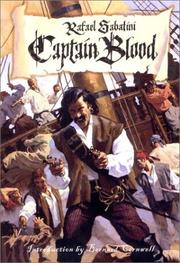
- 1922铁血船长Captain Blood书架 44
- 1932The black swan书架 11
- 年份不详Captain Blood书架 14