 书单
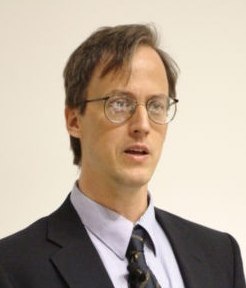
威廉·A·登布斯基
- 生卒
- 1960 –
- 国籍
- 美国
- 外文名
- William A. Dembski
照片:Kenosis at English Wikipedia,CC BY 2.5,来自维基共享资源「Dembski head shot.jpg」(经缩小)。
生平与创作
这个词条暂时没有中文维基百科条目,下面是英文维基百科的内容(英文原文):
William Albert Dembski (born July 18, 1960) is an American mathematician, philosopher, and theologian. He was a proponent of intelligent design (ID), a pseudoscientific argument for the existence of God. He coined the intelligent design argument of specified complexity.
After earning a doctorate in mathematics from the University of Chicago in 1988 and a second doctorate from the University of Illinois Chicago in philosophy in 1996, Dembski taught as a professor at the Michael Polanyi Center of Baylor University. He was a professor at the Southern Baptist Theological Seminary from 2006 to 2012, then a professor at Southern Evangelical Seminary from 2012 to 2013. He was also a senior fellow at the Center for Science and Culture (CSC) of the Discovery Institute, but officially retired from intelligent design and resigned from the CSC on September 23, 2016.
Dembski has written books about intelligent design, including The Design Inference (1998), Intelligent Design: The Bridge Between Science & Theology (1999), The Design Revolution (2004), The End of Christianity (2009), and Intelligent Design Uncensored (2010). He has postulated that probability theory can be used to prove both specified complexity and irreducible complexity. The scientific community sees intelligent design—and Dembski's concept of specified complexity—as a form of creationism.
Early life
William Albert Dembski was born in Chicago, Illinois, on July 18, 1960. He was the only child of Catholic parents. His mother, Ursula, was an art dealer, and his father, William J. Dembski, was a professor of evolutionary biology who earned a D.Sc. in biology from the University of Erlangen-Nuremberg after studying at the University of Illinois on the GI Bill. Dembski described his mother as having "lost any Christian belief" after she read the works of Hermann Hesse, and his father as a secularist who "was never a dogmatic Darwinist".
While growing up, Dembski was neither particularly religious nor did he question the theory of evolution. He received his first communion at age seven and was confirmed into the Catholic Church at age 13, but recalled that "I rejected many of the standard doctrines, such as the deity of Christ and the reality of hell". After being schooled in Evanston, Illinois, he attended Portsmouth Abbey School in Rhode Island. He finished high school a year early, excelling in math and finishing a calculus course in one summer. In his final year, Dembski marked down his religious affiliation as Hindu in a school questionnaire out of disdain for Catholicism and Christianity as a whole: "I had no intention of returning to Roman Catholicism, or to any form of Christianity for that matter".
After high school, Dembski enrolled at the College of the University of Chicago at age 17 and took advanced courses in mathematics there. Despite achieving higher than a 3.8 grade point average out of 4.0, he dropped out after experiencing personal and social difficulties at the school. He then began working at his mother's oil painting business, during which time he read works on creationism and the Bible. In May 1979, after having previously rejected organized religion, Dembski accepted Christianity and converted.
Education
Dembski later returned to college and graduated with honors from the University of Illinois Chicago (UIC) with a Bachelor of Arts in psychology in 1981 and a Master of Science in mathematical statistics in 1983. As an undergraduate, he won a memorial prize for the "best undergraduate research paper in psychology" and was awarded a three-year fellowship provided by the National Science Foundation. He then earned a second M.S. in pure mathematics in 1985 and a Ph.D. in mathematics from the University of Chicago in 1988. His doctoral dissertation at Chicago, completed under physicist Leo Kadanoff and mathematician Patrick Billingsley, was titled, "Chaos, uniform probability, and weak convergence". While obtaining his doctorate, Dembski taught undergraduate mathematics at the University of Chicago as a lecturer from 1987 to 1988.
After receiving his doctorate in mathematics, Dembski was a postdoctoral fellow in mathematics at the Massachusetts Institute of Technology (MIT), where he conducted research in probability theory in 1988. He became a postdoctoral fellow researching chaos theory and probability at the James Franck Institute in 1989, then a research associate in computer science at Princeton University in 1990 studying cryptography and complexity theory. While at Princeton on a NSF Grant, Dembski was supervised by computer scientist Andrew Yao. He then became a postdoctoral fellow in philosophy at Northwestern University, where he taught philosophy of religion, from 1992 to 1993. He returned to the University of Illinois Chicago and obtained a third master's degree, a Master of Arts in philosophy, in 1993.
In 1996, Dembski earned both a Master of Divinity (M.Div.) from Princeton Theological Seminary and his second doctorate, a Ph.D. in philosophy, from the University of Illinois at Chicago. His second doctoral dissertation, completed under Dorothy Grover, was titled, "The design inference: Eliminating chance through small probabilities". The thesis won a university award for the most "outstanding dissertation in fine arts and humanities". Afterwards, Dembski once again became a postdoctoral fellow, this time at the University of Notre Dame, where he taught philosophy and religion from 1996 to 1997.
以上文字摘自英文维基百科「William A. Dembski」(有删节,去掉了参考文献等尾部小节),按 CC BY-SA 4.0 使用,作者为维基百科的各位编者。
资料卡
- 出生
- 1960 年 7 月 18 日
- 出生地
- 芝加哥
- 职业
- 数学家、神学家、计算机科学家、作家、哲学家
- 使用语言
- 英语
- 就读学校
- 伊利诺伊大学芝加哥分校、普林斯顿神学院、芝加哥大学、Portsmouth Abbey School
资料卡来自 Wikidata Q560878(CC0),众包数据,个别字段可能不全。
本站收录的作品(1)
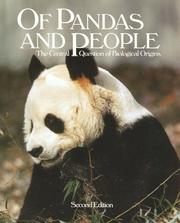
同时代的美国作家
Open Library 上的全部作品
正在读取…