 书单
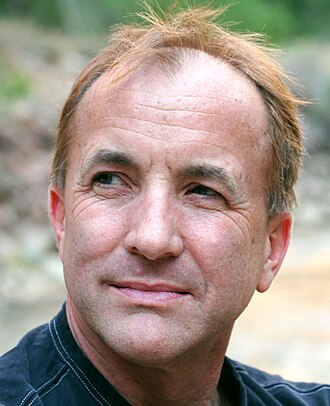
迈克尔·舍默
- 生卒
- 1954 –
- 国籍
- 美国
- 外文名
- Michael Shermer
照片:David Patton,CC BY 3.0,来自维基共享资源「Michael Shermer wiki portrait4.jpg」(经缩小)。
生平与创作
迈克尔·布兰特·舍默(Michael Brant Shermer,1954年9月8日—)是一位美国科普和科学史学家 ,迈克尔·舍默经常写文章抨击伪科学以及戳穿超自然现象。 他还强调不存在上帝,迈克尔·舍默支持科学怀疑论。
生平
迈克尔·舍默十几岁时一度皈依基督教基要主义。 不过在他在读研究生期间他不再信仰上帝, 此后他表示自己是一名不可知论者和无神论以及怀疑论者。
迈克尔·舍默认为乔治·沃克·布什的外交政策让世界变得更加危险。 2004年,他投票支持约翰·克里。
迈克尔·舍默曾一度怀疑全球变暖的说法,2006年6月,迈克尔·舍默表示随着越来越多的证据浮现,全球变暖已无法否认。
以上文字摘自维基百科「迈克尔·舍默」(去掉了参考文献等尾部小节),按 CC BY-SA 4.0 使用,作者为维基百科的各位编者。
中文维基百科的条目比较短,下面附上英文维基百科的内容(英文原文):
Michael Brant Shermer (born September 8, 1954) is an American science writer, historian of science, executive director of The Skeptics Society, and founding publisher of Skeptic magazine, a publication focused on investigating pseudoscientific and supernatural claims. The author of over a dozen books, Shermer is known for engaging in debates on pseudoscience and religion in which he emphasizes scientific skepticism.
Shermer was the co-producer and co-host of Exploring the Unknown, a 13-hour Fox Family television series broadcast in 1999. From April 2001 to January 2019, he contributed a monthly Skeptic column to Scientific American magazine.
Shermer was raised in a non-religious household, before converting to Christian fundamentalism as a teenager. He stopped believing in God during graduate school, influenced by a traumatic accident that left his then-girlfriend paralyzed. He identifies as an agnostic and an atheist, but prefers "skeptic". He also advocates for humanism. Shermer became an Internet-ordained clergyman in the Universal Life Church and has performed weddings.
Early life and education
Michael Brant Shermer was born on September 8, 1954, in Los Angeles, California. He is partly of Greek and German ancestry. Shermer was raised in Southern California, primarily in the La Cañada Flintridge area. His parents divorced when he was four and later remarried. He has a step-sister, two step-brothers, and two half-sisters.
Shermer attended Sunday school but said he was otherwise raised in a nonreligious household. He began his senior year of high school in 1971, when the evangelical movement in the United States was growing in popularity. At the behest of a friend, Shermer embraced Christianity. He attended the Presbyterian Church in Glendale, California and observed a sermon delivered by a "dynamic and histrionic preacher" who encouraged him to come forward to be saved. For seven years, Shermer evangelized door-to-door. He also attended an informal Christian fellowship at "The Barn" in La Crescenta, California, where he described enjoying the social aspects of religion, especially the theological debates.
In 1972, he graduated from Crescenta Valley High School and enrolled at Pepperdine University, intending to pursue Christian theology. Shermer changed majors to psychology once he learned that a doctorate in theology required proficiency in Hebrew, Greek, Latin, and Aramaic. He completed his BA in psychology at Pepperdine in 1976.
Shermer went on to study experimental psychology at California State University, Fullerton. Discussions with his professors, along with studies in the natural and social sciences, led him to question his religious beliefs. Fueled by what he perceived to be the intolerance generated by the absolute morality taught in his religious studies; the hypocrisy in what many believers preached and what they practiced; and a growing awareness of other religious beliefs that were determined by the temporal, geographic, and cultural circumstances in which their adherents were born, he abandoned his religious views halfway through graduate school.
Shermer attributed the paralysis of his college girlfriend as a key point when he lost faith. After she was in an automobile accident that broke her back and rendered her paralyzed from the waist down, Shermer relayed, "If anyone deserved to be healed it was her, and nothing happened, so I just thought there was probably no God at all."
He earned an MA degree in psychology from California State University, Fullerton in 1978.
Career
Cycling
After earning his MA in experimental psychology in 1978, Shermer worked as a writer for a bicycle magazine in Irvine, California. He took up bicycle racing after his first assignment, a Cycles Peugeot press conference. He completed a century ride (100 miles) and started to ride hundreds of miles a week.
以上文字摘自英文维基百科「Michael Shermer」(有删节,去掉了参考文献等尾部小节),按 CC BY-SA 4.0 使用,作者为维基百科的各位编者。
资料卡
- 母语名
- Michael Shermer
- 出生
- 1954 年 9 月 8 日
- 出生地
- 格伦代尔
- 职业
- 科学史学家、新闻工作者、自行车运动员、心理学家、哲学家、专栏作家、作者
- 使用语言
- 英语
- 就读学校
- 佩珀代因大学、加州州立大学,富勒顿
- 文学运动 / 流派
- 科学怀疑论
资料卡来自 Wikidata Q126225(CC0),众包数据,个别字段可能不全。
本站收录的作品(1)
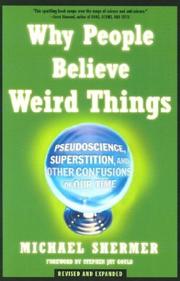
作品年表(6 本)
本站书库里署名迈克尔·舍默的书(Open Library 上至少 10 人加过书架的才收),按首版年份排(有本站书页的用 Wikidata 记的首版年,其余用 Open Library 的);年份偶尔记成后来的版本或译本,以原书为准。全部作品见 Open Library。
- 1997为什么人们轻信奇谈怪论Why people believe weird things书架 60
- 1999How We Believe书架 16
- 2006Secrets of Mental Math书架 62
- 2006Think like a math genius书架 16
- 2008Think Like a Maths Genius书架 31
- 2011The believing brain书架 15