 书单
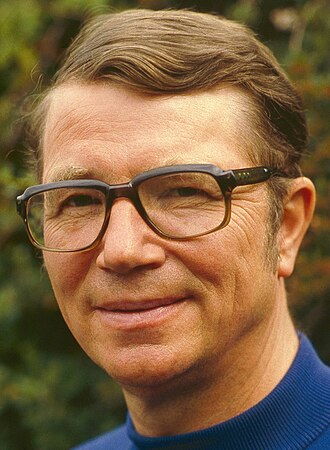
科林·亨利·威尔逊
- 生卒
- 1931 – 2013
- 国籍
- 英国
- 外文名
- Colin Wilson
照片:Tom Ordelman Thor NL,CC BY-SA 3.0,来自维基共享资源「Colin Wilson.jpg」(经缩小)。
生平与创作
这个词条暂时没有中文维基百科条目,下面是英文维基百科的内容(英文原文):
Colin Henry Wilson (26 June 1931 – 5 December 2013) was an English existentialist philosopher-novelist. He also wrote widely on true crime, mysticism and the paranormal, eventually writing more than a hundred books. Wilson called his philosophy "new existentialism" or "phenomenological existentialism", and maintained his life work was "that of a philosopher, and (his) purpose to create a new and optimistic existentialism".
Early life
Wilson was born on 26 June 1931 in Leicester, the first child of Arthur and Annetta Wilson. His father worked in a shoe factory. At the age of eleven he attended Gateway Secondary Technical School, where his interest in science began to blossom. By the age of 14 he had compiled a multi-volume work of essays covering many aspects of science entitled A Manual of General Science. But by the time he left school at sixteen, his interests were already switching to literature. His discovery of George Bernard Shaw's work, particularly Man and Superman, was a landmark. He started to write stories, plays, and essays in earnest – a long "sequel" to Man and Superman made him consider himself to be 'Shaw's natural successor.' After two unfulfilling jobs – one as a laboratory assistant at his old school – he drifted into the Civil Service, but found little to occupy his time.
In the autumn of 1949, he was conscripted into the Royal Air Force but soon found himself clashing with authority, eventually feigning homosexuality in order to be dismissed. Upon leaving he took up a succession of menial jobs, spent some time wandering around Europe, and finally returned to Leicester in 1951. There he married his first wife, (Dorothy) Betty Troop, and moved to London, where a son was born. He later wrote a semi-autobiographical novel, Adrift in Soho, that was based on his time in London. But the marriage rapidly disintegrated as he drifted in and out of several jobs. During this traumatic period, Wilson was continually working and reworking the novel that was eventually published as Ritual in the Dark (1960). He also met three young writers who became close friends – Bill Hopkins, Stuart Holroyd and Laura Del-Rivo. Another trip to Europe followed, and he spent some time in Paris attempting to sell magazine subscriptions. Returning to Leicester again, he met Joy Stewart – later to become his second wife and mother of their three children – who accompanied him to London. There he continued to work on Ritual in the Dark, receiving some advice from Angus Wilson (no relation) – then deputy superintendent of the British Museum's Reading Room – and slept rough (in a sleeping bag) on Hampstead Heath to save money.
On Christmas Day, 1954, alone in his room, he sat down on his bed and began to write in his journal. He described his feelings as follows:
It struck me that I was in the position of so many of my favourite characters in fiction: Dostoyevsky's Raskolnikov, Rilke's Malte Laurids Brigge, the young writer in Hamsun's Hunger: alone in my room, feeling totally cut off from the rest of society. It was not a position I relished . . . Yet an inner compulsion had forced me into this position of isolation. I began writing about it in my journal, trying to pin it down. And then, quite suddenly, I saw that I had the makings of a book. I turned to the back of my journal and wrote at the head of the page: 'Notes for a book The Outsider in Literature'
The Outsider
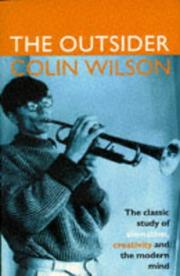
Gollancz published the 24-year-old Wilson's The Outsider in 1956. The work examines the role of the social "outsider" in seminal works by various key literary and cultural figures – such as Albert Camus, Jean-Paul Sartre, Ernest Hemingway, Hermann Hesse, Fyodor Dostoyevsky, William James, T. E. Lawrence, Vaslav Nijinsky and Vincent van Gogh – and discusses Wilson's perception of social alienation in their work. The book became a best-seller and helped popularise existentialism in Britain. It has never been out of print and has been translated into more than thirty languages.
Career
Non-fiction writing
Wilson became associated with the "angry young men" of British literature. He contributed to Declaration, an anthology of manifestos by writers associated with the movement, and was also anthologised in a popular paperback sampler, Protest: The Beat Generation and the Angry Young Men. Some viewed Wilson and his friends Bill Hopkins and Stuart Holroyd as a sub-group of the "Angries", more concerned with "religious values" than with liberal or socialist politics. Critics on the left swiftly labelled them as fascist; commentator Kenneth Allsop called them "the law givers". Controversially, during the 1950s Wilson expressed critical support for some of the ideas of Oswald Mosley the leader of Union Movement and after Mosley's death in December 1980, Wilson contributed articles to Mosley's former secretary Jeffrey Hamm's Lodestar magazine.
Wilson's second book, Religion and the Rebel (1957), was universally panned by critics although Wilson himself claimed it was a more comprehensive book than the first one. While The Outsider was focused on documenting the subject of mental strain and near-insanity, Religion and the Rebel was focused on how to expand our consciousness and transform us into visionaries. Time magazine published a review, headlined "Scrambled Egghead", that pilloried the book. Undaunted, Wilson continued to expound his positive "new" existentialism in the six philosophical books known as the Outsider Cycle, all written within the first ten years of his literary career. These books were summarised by Introduction to the New Existentialism (1966). When the book was re-printed in 1980 as The New Existentialism, Wilson wrote: "If I have contributed anything to existentialism – or, for that matter, to twentieth century thought in general, here it is. I am willing to stand or fall by it."
以上文字摘自英文维基百科「Colin Wilson」(有删节,去掉了参考文献等尾部小节),按 CC BY-SA 4.0 使用,作者为维基百科的各位编者。
资料卡
- 母语名
- Colin Henry Wilson
- 本名
- Colin Henry Wilson
- 出生
- 1931 年 6 月 26 日
- 出生地
- 莱斯特
- 逝世
- 2013 年 12 月 5 日
- 逝世地
- 圣奥斯特尔
- 职业
- 作家、幽浮学家、自传作者、小说家、编剧、传记作家、科幻作家、哲学家 等 9 项
- 使用语言
- 英语
- 写作语言
- 英语
- 创作体裁
- 愤怒的青年、非虚构文学
- 领域
- 哲学、心理学、犯罪学、神秘学
- 受谁影响
- 让-保罗·萨特
- 代表作
- The Outsider、The Occult: A History、The Book of Time
资料卡来自 Wikidata Q368831(CC0),众包数据,个别字段可能不全。
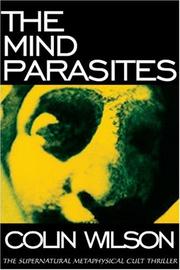
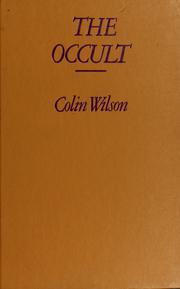
本站收录的作品(3)
作品年表(18 本)
本站书库里署名科林·亨利·威尔逊的书(Open Library 上至少 10 人加过书架的才收),按首版年份排(有本站书页的用 Wikidata 记的首版年,其余用 Open Library 的);年份偶尔记成后来的版本或译本,以原书为准。全部作品见 Open Library。
- 1956The outsider书架 68
- 1956The Outsider书架 15
- 1963Origins of the sexual impulse书架 11
- 1964Rasputin and the fall of the Romanovs书架 13
- 1967The mind parasites书架 26
- 1969The philosopher's stone书架 11
- 1971The occult书架 53
- 1971The Occult书架 21
- 1973Strange powers书架 11
- 1981Poltergeist书架 18
- 1981The Directory of possibilities书架 12
- 1987The encyclopedia of unsolved mysteries书架 11
- 1988The mammoth book of true crime书架 44
- 1988Aleister Crowley书架 13
- 1989Written in blood书架 11
- 1990A Criminal History of Mankind书架 12
- 2005The encyclopedia of crime书架 14
- 2006Serial killer investigations书架 23