 书单
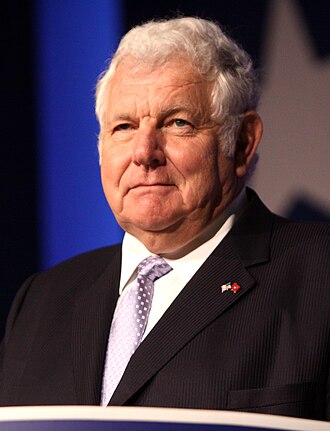
威廉·贝内特
- 生卒
- 1943 –
- 国籍
- 美国
- 外文名
- William J. Bennett
照片:Gage Skidmore,CC BY-SA 3.0,来自维基共享资源「Bill Bennett by Gage Skidmore.jpg」(经缩小)。
生平与创作
这个词条暂时没有中文维基百科条目,下面是英文维基百科的内容(英文原文):
William John Bennett (born July 31, 1943) is an American conservative politician and political commentator who served as the third United States secretary of education from 1985 to 1988 under President Ronald Reagan. He also held the post of director of the Office of National Drug Control Policy under George H. W. Bush.
Early life and education
Bennett was born July 31, 1943, to a Catholic family in Brooklyn, the son of Nancy (née Walsh), a medical secretary, and F. Robert Bennett, a banker. His family moved to Washington, D.C., where he attended Gonzaga College High School. He graduated from Williams College in 1965, where he was a member of the Kappa Alpha Society, and received a Ph.D. from the University of Texas at Austin in political philosophy in 1970. He also has a J.D. from Harvard Law School, graduating in 1971.
Career
Educational institutions
Bennett was an associate dean of the College of Liberal Arts at Boston University from 1971 to 1972 and then became an assistant professor of philosophy and an assistant to John Silber, the president of the college, from 1972 to 1976. In May 1979, Bennett became the director of the National Humanities Center, an independent institute in North Carolina, after the death of its founder Charles Frankel.
Federal offices
In 1981 President Reagan appointed Bennett to chair the National Endowment for the Humanities (NEH), where he served until Reagan appointed him Secretary of Education in 1985. Reagan initially nominated Mel Bradford to the position, but due to Bradford's pro-Confederate views, Bennett was appointed. This event was later marked as the watershed in the divergence between paleoconservatives, who backed Bradford, and neoconservatives, led by Irving Kristol, who supported Bennett.
While at NEH, Bennett published "To Reclaim a Legacy: A Report on the Humanities in Higher Education", a 63-page report. It was based on an assessment of the teaching and learning of the humanities at the baccalaureate level, conducted by a blue-ribbon study group of 31 nationally prominent authorities on higher education convened by NEH.
In May 1986, Bennett switched from the Democratic to the Republican Party. In September 1988, Bennett resigned as Sectetary of Education, to join the Washington law firm of Dunnels, Duvall, Bennett, and Porter. In March 1989, he returned to the federal government, becoming the first Director of the Office of National Drug Control Policy, appointed by President George H. W. Bush. He was confirmed by the Senate in a 97–2 vote. He left that position in December 1990.
Radio and television
In April 2004, Bennett began hosting Morning in America, a nationally syndicated radio program produced and distributed by Dallas, Texas-based Salem Communications. The show aired live weekdays from 6:00 to 9:00 a.m. Eastern Time, and was one of the only syndicated conservative talk shows in the morning drive time slot. However, few stations carried the show due to a preference for local shows in this slot, and the show was mainly broadcast on Salem-owned outlets. Morning in America was also carried on Sirius Satellite Radio, on Channel 144, also known as the Patriot Channel. Bennett retired from full-time radio on March 31, 2016.
In 2008, Bennett became the host of a CNN weekly talk show, Beyond the Politics. The show did not have a long run, but Bennett remained a CNN contributor until he was fired in 2013 by then-new CNN president Jeff Zucker.
Bennett has been moderating The Wise Guys, a Sunday night show on Fox News, since January 2018. Carried on Fox Nation as well, participants include Tyrus, Byron York, Ari Fleischer, Victor Davis Hanson, and others.
Author, speaker, and pundit
Bennett writes for National Review Online, National Review and Commentary, and is a former senior editor of National Review.
Bennett is a member of the National Security Advisory Council of the Center for Security Policy (CSP). He was co-director of Empower America and was a Distinguished Fellow in Cultural Policy Studies at The Heritage Foundation. Long active in United States Republican Party politics, he is now an author and speaker.
Bennett was the Washington Fellow of the Claremont Institute. He was also a commentator for CNN until 2013.
He is an advisor to Project Lead The Way and Beanstalk Innovation. He is on the advisory board of Udacity, Inc., Viridis Learning, Inc. and the board of directors of Vocefy, Inc. and Webtab, Inc.
In 2017, Bennett launched a podcast, The Bill Bennett Show.
According to internal White House records from January 6, 2021, Bennett spoke on the phone with then-President Donald Trump just before Trump went to the "Save America" rally that preceded the attack on the Capitol.
Foreign Agent
On July 3, 2025, Bennett registered as a foreign agent with the U.S. Department of Justice under the Foreign Agents Registration Act (FARA), representing the interests of the State of Qatar. According to his filing, he is expected to disseminate information through newspapers, magazines, lectures, speeches, emails, press releases, letters, and telegrams, and to influence public officials, legislators, government agencies, editors, newspapers, and educational groups. His Exhibit B disclosure states he is compensated $30,000 per month for these services.
Political views
Bennett tends to take a conservative position on affirmative action, school vouchers, curriculum reform, and religion in education. As education secretary, he asked colleges for stronger enforcement of drug laws and supported a classical education. He frequently criticized schools for low standards. In 1987 he called the Chicago Public Schools system "the worst in the nation." He coined the term "the blob" to describe the state education bureaucracy, a derogation which was later taken up in Britain by Michael Gove.
Bennett is a staunch supporter of the war on drugs and has been criticized for his views. On Larry King Live, he said that a viewer's suggestion of beheading drug dealers would be "morally plausible." He also "lamented that we still grant them [drug dealers] habeas corpus rights."
以上文字摘自英文维基百科「William Bennett」(有删节,去掉了参考文献等尾部小节),按 CC BY-SA 4.0 使用,作者为维基百科的各位编者。
资料卡
- 母语名
- William John Bennett
- 出生
- 1943 年 7 月 31 日
- 出生地
- 布鲁克林区
- 职业
- 电台主持、政治人物、舆论记者、时事评论员、律师、非虚构文学作家
- 使用语言
- 英语
- 就读学校
- 威廉姆斯学院、哈佛法学院、得克萨斯大学奥斯汀分校、冈萨加学院高中
- 领域
- 政治、政治学、舆论新闻业
- 所属团体
- 当前危险委员会(2019)
资料卡来自 Wikidata Q1251932(CC0),众包数据,个别字段可能不全。
本站收录的作品(1)
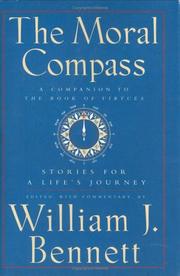
作品年表(4 本)
本站书库里署名威廉·贝内特的书(Open Library 上至少 10 人加过书架的才收),按首版年份排(有本站书页的用 Wikidata 记的首版年,其余用 Open Library 的);年份偶尔记成后来的版本或译本,以原书为准。全部作品见 Open Library。
- 1993The Book of Virtues书架 58
- 1995Children's Book of Virtues Audio Treasury书架 53
- 1995The Book of Virtues for Young People书架 14
- 1995The Moral Compass书架 12