 书单
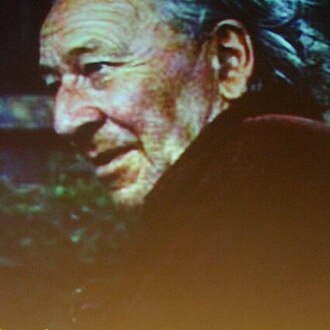
格雷戈里·贝特森
- 生卒
- 1904 – 1980
- 国籍
- 英国、美国
- 外文名
- Gregory Bateson
照片:Festival della Scienza,CC BY-SA 2.0,来自维基共享资源「Mary Catherine Bateson & Sergio Manghi at a conference, 2004 (cropped - Gregory Bateson).jpg」(经缩小)。
生平与创作
格雷戈里·贝特森(Gregory Bateson,1904年5月9日—1980年7月4日)是一位英国人类学家、社会科学家、语言学家、视觉人类学家、符号学家、控制论学者,他的著作还贯穿了许多其他学科。1940年代他帮助将系统论/控制论扩散至社会/行为科学领域,晚年致力于发展一种认识论的“元科学”,统一系统论的各种早期形式。他的主要言论包含在《迈向心智生态学之路》(1972)和《心灵与自然》(1979)中。《天使的恐惧》(1987年格雷戈里死后出版)是与女儿玛丽·凯瑟琳·贝特森合写。
以上文字摘自维基百科「格雷戈里·贝特森」(去掉了参考文献等尾部小节),按 CC BY-SA 4.0 使用,作者为维基百科的各位编者。
中文维基百科的条目比较短,下面附上英文维基百科的内容(英文原文):
Gregory Bateson (9 May 1904 – 4 July 1980) was an English anthropologist, social scientist, linguist, visual anthropologist, semiotician, and cyberneticist whose work intersected that of many other fields. His writings include Steps to an Ecology of Mind (1972) and Mind and Nature (1979).
In Palo Alto, California, Bateson and his colleagues developed the double-bind theory of schizophrenia.
Bateson's interest in systems theory forms a thread running through his work. He was one of the original members of the core group of the Macy conferences in Cybernetics (1941–1960), and the later set on Group Processes (1954–1960), where he represented the social and behavioral sciences. He was interested in the relationship of these fields to epistemology. His association with the editor and author Stewart Brand helped widen his influence.
Early life and education
Bateson was born in Grantchester in Cambridgeshire, England, on 9 May 1904. He was the third and youngest son of (Caroline) Beatrice Durham and the distinguished geneticist William Bateson. He was named Gregory after Gregor Mendel, the Austrian monk who founded the modern science of genetics.
The younger Bateson attended Charterhouse School from 1917 to 1921, obtained a Bachelor of Arts in biology at St. John's College, Cambridge, in 1925, and continued at Cambridge from 1927 to 1929.
According to Lipset (1982), Bateson's life was greatly affected by the death of his two brothers. John Bateson (1898–1918), the eldest of the three, was killed in World War I. Martin Bateson (1900–1922), the second brother, was then expected to follow in his father's footsteps as a scientist, but came into conflict with his father over his ambition to become a poet and playwright. The resulting stress, combined with a disappointment in love, resulted in Martin's public suicide by gunshot under the statue of Anteros in Piccadilly Circus on 22 April 1922, which was John's birthday. After this event, which transformed a private family tragedy into a public scandal, the parents' ambitious expectations fell on Gregory.
Career
In 1928, Bateson lectured in linguistics at the University of Sydney.
From 1931 to 1937, he was a Fellow of St. John's College, Cambridge. He spent the years before World War II in the South Pacific in New Guinea and Bali doing anthropology.
In the 1940s, he helped extend systems theory and cybernetics to the social and behavioral sciences.
Although initially reluctant to join the intelligence services, Bateson served in the OSS during World War II along with dozens of other anthropologists. He was stationed in the same offices as Julia Child (then Julia McWilliams), Paul Cushing Child, and others. He spent much of the war designing 'black propaganda' radio broadcasts. He was deployed on covert operations in Burma and Thailand, and worked in China, India, and Ceylon as well. Bateson used his theory of schismogenesis to help foster discord among enemy fighters. He was upset by his wartime experience and disagreed with his wife over whether science should be applied to social planning or used only to foster understanding rather than action.
In Palo Alto, California, Bateson developed the double-bind theory, together with his non-colleagues Donald Jackson, Jay Haley and John H. Weakland, also known as the Bateson Project (1953–1963).
In 1956, he became a naturalised citizen of the United States.
Bateson was one of the original members of the core group of the Macy conferences in cybernetics (1941–1960), and the later set on Group Processes (1954–1960), where he represented the social and behavioral sciences.
In the 1970s, he taught at the Humanistic Psychology Institute in San Francisco, which was renamed the Saybrook University, and in 1972 joined the faculty of Kresge College at the University of California, Santa Cruz.
In 1976, he was elected a Fellow of the American Academy of Arts and Sciences.
以上文字摘自英文维基百科「Gregory Bateson」(有删节,去掉了参考文献等尾部小节),按 CC BY-SA 4.0 使用,作者为维基百科的各位编者。
资料卡
- 母语名
- Gregory Bateson
- 出生
- 1904 年 5 月 9 日
- 出生地
- Grantchester
- 逝世
- 1980 年 7 月 4 日
- 逝世地
- 旧金山
- 职业
- 人类学家、哲学家、社会学家、语言学家、生物学家、电影导演、心理学家、民族学家 等 11 项
- 使用语言
- 英语
- 就读学校
- 查特豪斯公学、剑桥大学圣约翰学院
- 领域
- 人类学、控制论、民族学、生态学、系统科学 等 7 项
- 所属团体
- 美国文理科学院;另有 1 项只有外文名
- 配偶
- 玛格丽特·米德(1936)
- 受谁影响
- 玛格丽特·米德
- 获奖
- 古根海姆学者奖(1946)、加利福尼亚名人堂(2012)、美国文理科学院院士
资料卡来自 Wikidata Q314252(CC0),众包数据,个别字段可能不全。
本站收录的作品(1)
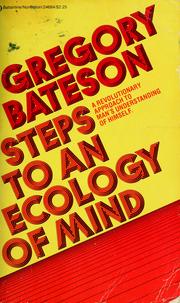
作品年表(2 本)
本站书库里署名格雷戈里·贝特森的书(Open Library 上至少 10 人加过书架的才收),按首版年份排(有本站书页的用 Wikidata 记的首版年,其余用 Open Library 的);年份偶尔记成后来的版本或译本,以原书为准。全部作品见 Open Library。
- 1972Steps to an ecology of mind书架 41
- 1979Mind and Nature书架 20