 书单
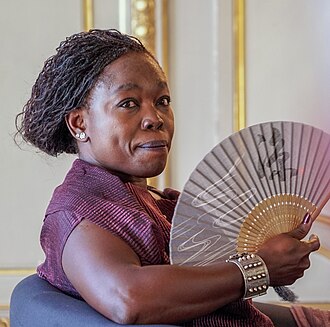
法图·迪奥梅
- 生卒
- 1968 –
- 国籍
- 塞内加尔、法国
- 外文名
- Fatou Diome
照片:G.Garitan,CC BY-SA 4.0,来自维基共享资源「Fatou diome LSlaP 101533.jpg」(经缩小)。
生平与创作
这个词条暂时没有中文维基百科条目,下面是英文维基百科的内容(英文原文):
Fatou Diome (born 1968) is a French-Senegalese writer known for her best-selling novel The Belly of the Atlantic, which was published in 2003. Her work explores immigrant life in France, and the relationship between France and Africa. Fatou Diome lives in Strasbourg, France.
Biography
Fatou Diome was born in Niodior on the island of the same name in the Sine-Saloum Delta. She was raised by her grandmother and grandfather and went to school and became passionate about French literature. At the age of 13 she left Niodior and continued her education in M'Bour. Later she moved to Dakar to study at the university, supporting herself by working as a housekeeper.
In 1990, she married a Frenchman and moved to France. Rejected by her traditional Serer family and by his family, she divorced two years later. In 1994, Diome moved to Strasbourg to study at the University of Strasbourg. The title of her Ph.D. thesis was Le Voyage, les échanges et la formation dans l'œuvre littéraire et cinématographique de Ousmane Sembène (Voyage, Exchanges, and Education in the Literary and Cinematographic Work of Ousmane Sembène).
From 2002 to 2003, Diome was a part-time lecturer at Marc Bloch University, Strasbourg, and at the Institute of Pedagogy of Karlsruhe (Germany). From September 2004 to November 2006, she presented the cultural and literary television program Nuit Blanche (Sleepless night) on the French channel France 3 Alsace.
Works
Diome published a collection of short stories, La Préférence nationale, in 2001. Her first novel, The Belly of the Atlantic (French: Le Ventre de l'Atlantique) became a bestseller in France and is published in English by Serpent's Tail. Her first novel was partly autobiographical and is about Salie, a Senegalese immigrant living in Strasbourg, and her younger brother Madicke, who stayed behind in Senegal. After years of struggle Salie has finally arrived and settled in France. Her younger brother dreams of following her to France and becoming a successful football player. The Belly of the Atlantic was translated into English, German and Spanish. Her second novel, Kétala, was published in 2006 in France.
Diome's work explores France and Senegal, and the relationship between the two countries. Her style is influenced by the traditional oral literature of Africa. Her language is authentic and vivid, and it traces a portrait of the difficulties of integrating in France as an immigrant, mixed with nostalgia and memories of a childhood in Senegal.
Political views
Fatou Diome rebels against intolerant people, she defends the role of the school and Republicanism.
Faced with the rise of populism, Fatou Diome is regularly invited to share her point of view on political and social issues on television media or press. In particular, she takes a strong position against the rise of populism in France with the National Rally (RN). As a writer, in her books, she wishes to remind people of the importance of republican and human values because she believes that "when facing people who are obsessed with national identity, we must no longer remain silent."
Diome pursues the subject of debt and neoliberalization in The Belly of the Atlantic (2003) and Celles qui attendent (2010). In both works, debt is used to defend austerity measures and drive immigrants to pursue jobs in other countries under precarious conditions.
Diome also runs messages for a more egalitarian cooperation between Europe and Africa. She believes that, at the moment, Europe is controlling an unequal cooperation where Africa has no control on its assets. She also defends the idea that the former colonial power relationship remains persistent on each African and European people, which prevents this cooperation from being more egalitarian. She thinks that everyone, regardless of their origin, "should feel human being when facing another human being." Therefore, without placing more responsibility on one continent than on the other, Fatou Diome proclaims the need for Africans to free themselves from their victim status and for Europeans to give up their dominant position in order to put an end to exploiting/exploited, donor/recipient schemes. Finally, the author specifies that helping people means helping them not to need you any longer, denouncing the development aid set up by Western countries in Africa among others.
以上文字摘自英文维基百科「Fatou Diome」(去掉了参考文献等尾部小节),按 CC BY-SA 4.0 使用,作者为维基百科的各位编者。
资料卡
- 母语名
- Fatou Diome
- 出生
- 1968 年
- 出生地
- 尼奥焦尔岛
- 职业
- 作家、诗人、大学教师、文学学者
- 使用语言
- 法语
- 就读学校
- 斯特拉斯堡大学、达喀尔大学
- 创作体裁
- 随笔
- 领域
- 纯文学
- 代表作
- Le Ventre de l'Atlantique,、Celles qui attendent
- 获奖
- 国家功绩勋章骑士(2022);另有 4 项只有外文名
资料卡来自 Wikidata Q295004(CC0),众包数据,个别字段可能不全。
本站收录的作品(1)
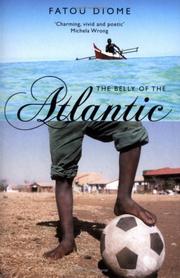
作品年表(2 本)
本站书库里署名法图·迪奥梅的书(Open Library 上至少 10 人加过书架的才收),按首版年份排(有本站书页的用 Wikidata 记的首版年,其余用 Open Library 的);年份偶尔记成后来的版本或译本,以原书为准。全部作品见 Open Library。
- 2003Le Ventre de l'Atlantique书架 51
- 2008Inassouvies, nos vies书架 10