 书单
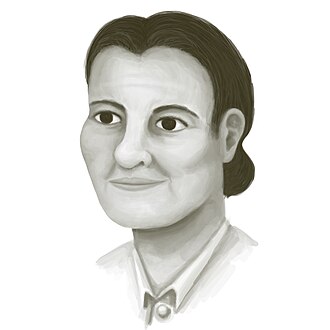
伊丽莎白·安斯康姆
- 生卒
- 1919 – 2001
- 国籍
- 英国
- 外文名
- G. E. M. Anscombe
照片:Albarluque,CC BY-SA 3.0,来自维基共享资源「Elisabeth Anscombe.jpg」(经缩小)。
生平与创作
伊丽莎白·安斯康姆(英语:Gertrude Elizabeth Margaret Anscombe;1919年3月18日—2001年1月5日),英国著名分析哲学家。她在心灵哲学、行动理论、逻辑学、语言哲学和伦理学等领域均有著述,是分析托马斯主义的重要代表人物,是剑桥大学的哲学教授。
安斯康姆是维特根斯坦的学生,也是其学说研究的权威,深受其作品《哲学研究》影响。
思想
伦理学
安斯康姆于1958年发表论文《现代道德哲学》,将“结果主义”一词引入分析伦理学讨论,并重新激发西方学界对德行伦理学的关注和讨论。
以上文字摘自维基百科「伊莉莎白·安斯康姆」(去掉了参考文献等尾部小节),按 CC BY-SA 4.0 使用,作者为维基百科的各位编者。
中文维基百科的条目比较短,下面附上英文维基百科的内容(英文原文):
Gertrude Elizabeth Margaret Anscombe (18 March 1919 – 5 January 2001), usually cited as G. E. M. Anscombe or Elizabeth Anscombe, was a British analytic philosopher. She wrote on the philosophy of mind, philosophy of action, philosophical logic, philosophy of language, and ethics. She was a prominent figure of analytical Thomism, a fellow of Somerville College, Oxford, and a professor of philosophy at the University of Cambridge.
Anscombe was a student of Ludwig Wittgenstein and became an authority on his work and edited and translated many books drawn from his writings, above all his Philosophical Investigations. Anscombe's 1958 article "Modern Moral Philosophy" introduced the term consequentialism into the language of analytic philosophy, and had a seminal influence on contemporary virtue ethics. Her monograph Intention (1957) was described by Donald Davidson as "the most important treatment of action since Aristotle". It is "widely considered a foundational text in contemporary philosophy of action" and has also had influence in the philosophy of practical reason."
Life
Anscombe was born to Captain Allen Wells Anscombe and Gertrude Elizabeth (née Thomas) on 18 March 1919 in Limerick, Ireland, where her father had been stationed with the Royal Welch Fusiliers during the Irish War of Independence. Both her mother and father were involved with education. Her mother was a headmistress and her father headed the science and engineering side at Dulwich College.
Anscombe attended Sydenham High School and then, in 1937, went on to read literae humaniores ("Greats") at St Hugh's College, Oxford, where her tutor was the archaeologist Dorothea Gray. She was awarded a second class in her honour moderations in 1939 and (albeit it with reservations on the part of her Ancient History examiners) a first in her degree finals in 1941.
While still at Sydenham High School, Anscombe converted to Catholicism. During her first year at St Hugh's, she was received into the Church, and was a practising Catholic thereafter.
In 1941 she married Peter Geach. Like her, Geach was a Catholic convert who became a student of Ludwig Wittgenstein and a distinguished academic philosopher. Together they had three sons and four daughters.
After graduating from Oxford, Anscombe was awarded a research fellowship for postgraduate study at Newnham College, Cambridge, from 1942 to 1945. Her purpose was to attend Wittgenstein's lectures. Her interest in Wittgenstein's philosophy arose from reading the Tractatus Logico-Philosophicus as an undergraduate. She claimed to have conceived the idea of studying with Wittgenstein as soon as she opened the book in Blackwell's and read section 5.53, "Identity of object I express by identity of sign, and not by using a sign for identity. Difference of objects I express by difference of signs." She became an enthusiastic student, feeling that Wittgenstein's therapeutic method helped to free her from philosophical difficulties in ways that her training in traditional systematic philosophy could not. As she wrote:
For years, I would spend time, in cafés, for example, staring at objects saying to myself: 'I see a packet. But what do I really see? How can I say that I see here anything more than a yellow expanse?' ... I always hated phenomenalism and felt trapped by it. I couldn't see my way out of it but I didn't believe it. It was no good pointing to difficulties about it, things which Russell found wrong with it, for example. The strength, the central nerve of it remained alive and raged achingly. It was only in Wittgenstein's classes in 1944 that I saw the nerve being extracted, the central thought "I have got this, and I define 'yellow' (say) as this" being effectively attacked.
以上文字摘自英文维基百科「G. E. M. Anscombe」(有删节,去掉了参考文献等尾部小节),按 CC BY-SA 4.0 使用,作者为维基百科的各位编者。
资料卡
- 本名
- Gertrude Elizabeth Margaret Anscombe
- 出生
- 1919 年 3 月 18 日
- 出生地
- 利默里克
- 逝世
- 2001 年 1 月 5 日
- 逝世地
- 剑桥
- 职业
- 哲学家、神学家、译者、作家、大学教师、语言哲学家
- 使用语言
- 英语、德语
- 就读学校
- 牛津大学圣休学院、Sydenham High School、剑桥大学纽纳姆学院
- 领域
- 哲学
- 所属团体
- 美国文理科学院、英国科学院
- 配偶
- 彼得·积奇
- 受谁影响
- 亚里士多德、托马斯·阿奎那、路德维希·维特根斯坦
- 获奖
- 英国科学院院士、美国文理科学院院士;另有 2 项只有外文名
资料卡来自 Wikidata Q229646(CC0),众包数据,个别字段可能不全。
本站收录的作品(1)
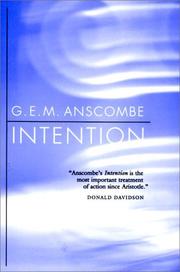
作品年表(1 本)
本站书库里署名伊丽莎白·安斯康姆的书(Open Library 上至少 10 人加过书架的才收),按首版年份排(有本站书页的用 Wikidata 记的首版年,其余用 Open Library 的);年份偶尔记成后来的版本或译本,以原书为准。全部作品见 Open Library。
- 1957Intention书架 12