 书单
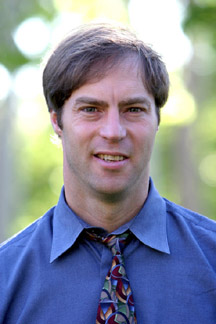
史蒂芬·梅尔
- 生卒
- 1958 –
- 国籍
- 美国
- 外文名
- Stephen C. Meyer
照片:Discovery Institute press photo offered on website for any purpose and without c 等,CC0,来自维基共享资源「Stephen C Meyer.jpg」(经缩小)。
生平与创作
这个词条暂时没有中文维基百科条目,下面是英文维基百科的内容(英文原文):
Stephen Charles Meyer (born 1958) is an American philosopher of science and historian. He is an advocate of intelligent design, a pseudoscientific creationist argument for the existence of God. Meyer was a founder of the Center for Science and Culture (CSC) of the Discovery Institute (DI), which is the main organization behind the intelligent design movement. Before joining the institute, Meyer was a professor at Whitworth College. He is a senior fellow of the DI and the director of the CSC.
Early life and education
Meyer was born in 1958, and grew up near Seattle, Washington. He was raised as a Catholic. He graduated with honors, cum laude, from Whitworth College in 1981 with two bachelor's degrees: a Bachelor of Science in earth science and a Bachelor of Arts in physics. He then was employed as a geophysicist at the Atlantic Richfield Company (ARCO) in Dallas from November 1981 to December 1985. While working for ARCO, Meyer specialized in digital signal processing and seismic survey interpretation.
In 1986, Meyer was awarded a scholarship by Rotary International to pursue graduate studies in England. He earned a Master of Philosophy (M.Phil.) in 1987 and his Doctor of Philosophy (Ph.D.) in the history of science and philosophy of science in 1991 from the University of Cambridge. His doctoral dissertation at Cambridge was titled, "Of Clues and Causes: A Methodological Interpretation of Origin-of-Life Research".
Academic career
Meyer is an expert on the history of science. After receiving his doctorate, he became an assistant professor of philosophy at Whitworth College in the fall of 1990. He was promoted to an associate professorship there in 1995, and was awarded tenure in 1996. In fall 2002, he moved to the position of professor, Conceptual Foundations of Science, at the Christian Palm Beach Atlantic University. He continued there up until spring 2005, then ceased teaching to devote his time to the intelligent design movement.
Work
Creation science
As an undergraduate, Meyer had been "quite comfortable accepting the standard evolutionary story, although I put a bit of a theistic spin on it – that (evolution) is how God operated", but during his work with ARCO in Dallas, he was influenced by a conference: "I remember being especially fascinated with the origins debate at this conference. It impressed me to see that scientists who had always accepted the standard evolutionary story were now defending a theistic belief, not on the basis that it makes them feel good or provides some form of subjective contentment, but because the scientific evidence suggests an activity of mind that is beyond nature. I was really taken with this." Charles Thaxton organised the conference held in Dallas on 9–10 February 1985, featuring Antony Flew, and Dean H. Kenyon who spoke on "Going Beyond the Naturalistic Mindset: Origin of Life Studies".
Meyer became part of Thaxton's circle, and joined the debate with two articles published in March 1986: in one, he discussed The Mystery of Life's Origin which Thaxton had recently co-authored, commenting that the book had "done well to intimate that 'we are not alone.' Only revelation can now identify the Who that is with us." The other article discussed the 1981 McLean v. Arkansas and 1985 Aguillard v. Treen district court case rulings that teaching creation science in public schools was unconstitutional as creationism originated in religious conviction, and its reliance on "tenets of faith" implied it was not scientific. Meyer argued that modern scientific method equally relied on "foundational assumptions" based on faith in naturalism, which "assumed all events to be exclusively the result of physical or natural causes", so on the definition used in the court cases "science itself does not qualify as legitimate science". He proposed that "scientists and philosophers" could turn to Biblical presupposition to explain "the ultimate source of human reason, the existence of a real and uniformly ordered universe, and the ability present in a creative and ordered human intellect to know that universe. Both the Old and New Testaments define these relationships such that the presuppositional base necessary to modern science is not only explicable but also meaningful." Meyer's argument on epistemological presuppositions and accusation that evolution is based on an assumption of naturalism became central to the design movement.
At the University of Cambridge in England, he met theology student Mark Labberton. In the Fall of 1987 Labberton introduced Meyer to Phillip E. Johnson who was on a sabbatical at University College London, and having become "obsessed with evolution" had begun writing a book on what he saw as its problems. Meyer says "We walked around Cambridge kicking the pea gravel and talking over all the issues."
An article co-authored by Meyer and Thaxton published on 27 December 1987 asserted that "human rights depend upon the Creator who made man with dignity, not upon the state." They contrasted this with "purely material, scientific" ideas which equated humans to animals, and restated their central thesis that "Only if man is (in fact) a product of special Divine purposes can his claim to distinctive or intrinsic dignity be sustained." The terminology and concepts later featured in the Wedge strategy and theistic realism.
以上文字摘自英文维基百科「Stephen C. Meyer」(有删节,去掉了参考文献等尾部小节),按 CC BY-SA 4.0 使用,作者为维基百科的各位编者。
资料卡
- 出生
- 1958 年
- 出生地
- 美国
- 职业
- 作家、生物学家、哲学家、历史学家、地球物理学家、大学教师
- 使用语言
- 英语
- 就读学校
- 剑桥大学、惠特沃斯大学
- 领域
- 哲学、历史、地球物理学
资料卡来自 Wikidata Q926941(CC0),众包数据,个别字段可能不全。
本站收录的作品(1)
作品年表(3 本)
本站书库里署名史蒂芬·梅尔的书(Open Library 上至少 10 人加过书架的才收),其中 1 本记的年份比作者去世晚 50 年以上或者早于他出生(多半是后世的版本、译本或占位年份),不列年份,按首版年份排(有本站书页的用 Wikidata 记的首版年,其余用 Open Library 的);年份偶尔记成后来的版本或译本,以原书为准。全部作品见 Open Library。
- 2009Signature in the cell书架 12
- 2013Darwin's Doubt书架 11
- 年份不详Return of the God Hypothesis书架 19