 书单
罗伯特·梅纳瑟
- 生卒
- 1954 –
- 国籍
- 奥地利
- 外文名
- Robert Menasse
生平与创作
这个词条暂时没有中文维基百科条目,下面是英文维基百科的内容(英文原文):
Robert Menasse (born 21 June 1954) is an Austrian writer.
Biography
Menasse was born in Vienna. As an undergraduate, he studied German studies, philosophy and political science in Vienna, Salzburg and Messina. In 1980 he completed his PhD thesis "Der Typus des Außenseiters im Literaturbetrieb. Am Beispiel Hermann Schürrer" ("The outsider phenotype within literature").
Between 1981 and 1988 Menasse worked as a junior lecturer at the Institute of Literature Theory at the University of São Paulo, Brazil. He has been working as a freelance publicist, columnist and translator of novels from Portuguese into German ever since.
His first novel Sinnliche Gewissheit, published in 1988, is a semi-autobiographical tale of Austrians living in exile in Brazil.
The magazine Literatur und Kritik published Menasse's first poem ("Kopfwehmut") in 1989.
His later novels were Selige Zeiten, brüchige Welt (1991, translated into English as Wings of Stone ISBN 0-7145-4295-4), Schubumkehr (1995, Engl. Reverse Thrust) and Die Vertreibung aus der Hölle (2001, Engl. Expulsion from Hell).
Menasse's language is at times playful and at times subtly sarcastic. Recurring themes in his
novels are loneliness and alienation within human relationships and as a result of his character's lives' circumstances. In his work Menasse often criticises what he sees as the latent form of antisemitism still widespread in the German-speaking world today.
Menasse has also written some essays on Austria (especially on Austrian identity and history; "Land ohne Eigenschaften" (1992) a.o.). More recently, he wrote about the future of Europe and the European Union, criticizing tendencies of re-nationalization (especially in Germany, but also elsewhere) and anti-European integration movements, which he interprets as a reaction to the 2008 financial crisis and the Euro area crisis ("Der europäische Landbote", 2012).
Since returning to Europe from Brazil, Menasse has mainly lived in the cities of Berlin, Vienna and Amsterdam. He currently lives in Vienna and is married. Since 2011 Menasse has been curating a writer in residence programme with the one world foundation in Sri Lanka.
His books have been translated in over twenty languages, among others: Arabic, Bask, Bulgarian, Chinese, Croatian, Czech, Danish, Dutch, English, French, Greek, Hindi, Italian, Norwegian, Polish, Portuguese, Russian, Serbian, Slovenian, Spanish, and Swedish.
Today, Menasse lives alternately in Vienna, in the Waldviertel (Forest Quarter) in Lower Austria, and in Brussels. He is the son of the footballer Hans Menasse and the brother of the journalist and writer Eva Menasse.
Novels
Robert Menasse's first short story Nägelbeißen (Engl. Nail-Biting) was published in the journal Neue Wege in 1973. From 1975 to 1980 he worked on his unfinished and unpublished novel Kopfwehmut (Engl. Mind's Melancholy), a social novel set in 1970s Vienna. His first published novel, Sinnliche Gewißheit (Engl. Sensual Certainty) appeared in 1988 as the first part of a trilogy started in Brazil Trilogie der Entgeisterung (Engl. Trilogy of Dismay), which also includes the 1991 novel Selige Zeiten, brüchige Welt (Engl. Wings of Stone, 2000), which is at once a crime story, a philosophical novel and a Jewish family saga, and finally the 1995 novel Schubumkehr (Engl. Reverse Thrust, 2000) as well as the postscript Phänomenologie der Entgeisterung (1995, Engl. Phenomenology of Dismay).
In Schubumkehr, against the background of the private life of the literature teacher Roman, who was already introduced in Selige Zeiten, brüchige Welt, Menasse describes the fall of the Iron Curtain in 1989 and the breakdown of the familiar order in a small Austrian village. This novel, which is not least an artistic treatment of the spirit of the age, was awarded the Grimmelshausen Prize in 1999 and made the author a household name. As suggested already by the title of the novel Schubumkehr and in the Trilogie der Entgeisterung Menasse turns Hegel's Phenomenology of Spirit on its head. In contrast to Hegel, who assumes a development of human consciousness to all-embracing spirit, Menasse postulates a regressive development, whose final stage will be "sensual certainty", according to Hegel the most naïve form of consciousness.
In his novel Die Vertreibung aus der Hölle (2001; Engl. Expulsion from Hell) Menasse casts doubt on the objectivity of history, coupled with the personal history of the author and his Jewish roots. As a spin-off of his researches on the character and real person Menasseh Ben Israel for his novel Die Vertreibung aus der Hölle translated in ten languages, Menasse formulated the hypothesis of Abaelard‘s influence on Menasseh Ben Israel and Spinoza, published among others in his essay Enlightenment as Harmonious Strategy. In 2007 he published Don Juan de la Mancha, where he tells of more or less fictitious events from the (love) life of the newspaper editor Nathan – a mixture of listlessness, drive, lust and the search for the fulfilment of love. As a character, Nathan stands for the generation that was socialised in the 1970s with the claim for the “sexual revolution".
以上文字摘自英文维基百科「Robert Menasse」(有删节,去掉了参考文献等尾部小节),按 CC BY-SA 4.0 使用,作者为维基百科的各位编者。
资料卡
- 出生
- 1954 年 6 月 21 日
- 出生地
- 维也纳
- 职业
- 译者、作家、散文家、文学学者
- 使用语言
- 德语
- 就读学校
- 圣保罗大学、维也纳大学
- 创作体裁
- 散文
- 所属团体
- 德国语言文学科学院
- 配偶
- 伊丽莎白·梅娜瑟-薇瑟鲍尔
- 获奖
- Erich Fried Prize(2003)、Decoration of Merit in Gold of the State of Vienna(2010)、Marie Luise Kaschnitz Prize(2002)、Heinrich Mann Prize(2013)、Heimito von Doderer-Literaturpreis(1990)、Theodor Körner Prize(1992)、Max Frisch Prize(2014)、Lion-Feuchtwanger-Preis(2002)、艺术与文学勋章骑士勋位(2006)、Grimmelshausen-Preis(1999)、德国图书奖(2017)、Walter-Hasenclever-Literaturpreis(2018)、Joseph-Breitbach-Preis(2002)、Österreichischer Kunstpreis für Literatur(2012) 等 22 项
资料卡来自 Wikidata Q78772(CC0),众包数据,个别字段可能不全。
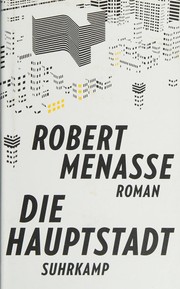
本站收录的作品(1)
同时代的奥地利作家
Open Library 上的全部作品
正在读取…